


In industrial HMI design, there is one constraint that immediately changes how a membrane switch behaves in real use: gloves.
A keypad that feels responsive during lab evaluation can become frustrating on the production floor. Thick nitrile gloves, leather work gloves, or even double-layer protective gloves reduce tactile sensitivity and spread applied force over a larger area. Operators compensate by pressing harder, sometimes repeatedly, which introduces fatigue and error risk over time.
That is why glove-friendly membrane switch design is less about aesthetics and more about force transmission, geometry, and feedback.
At XINBIXI Electronic Technology Co., Ltd. (Bx-Panel), where we manufacture industrial interfaces in Xiamen, glove usability is one of the most common optimization requests we receive. Over multiple projects, a few consistent engineering patterns have emerged.
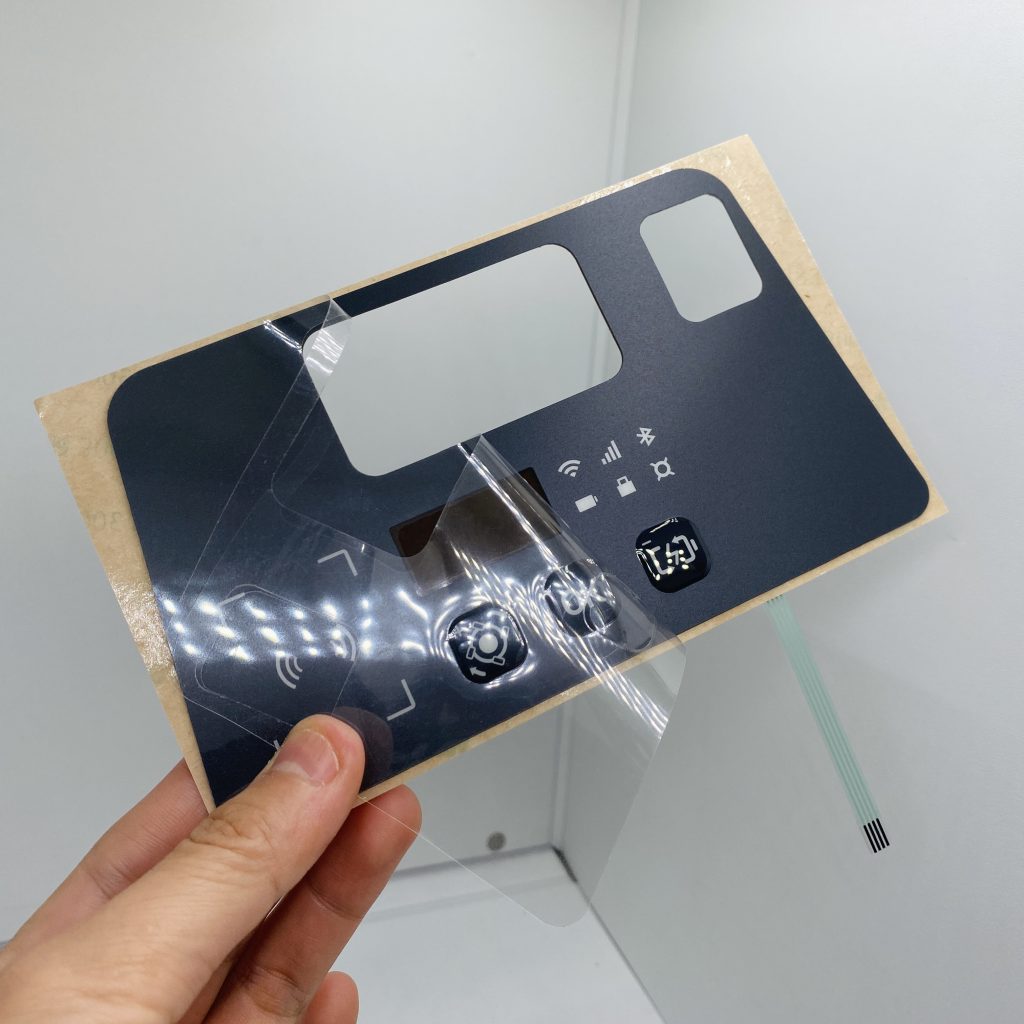
The Reality of Glove Operation on Industrial Panels
Operators rarely interact with industrial equipment under ideal conditions. Surfaces may be dusty, oily, wet, or vibrating, while visibility can be limited by lighting or protective eyewear.
In that context, gloves introduce three practical challenges:
First, reduced tactile sensitivity. The operator cannot easily feel when the dome collapses, which creates uncertainty about whether a command was registered.
Second, increased contact area. A gloved finger distributes force more broadly, making it harder to concentrate pressure directly above the dome center.
Third, surface slip. Smooth overlays that work well for bare fingers often provide insufficient friction for glove materials.
When these factors combine, missed actuations and repeated presses become common feedback from field deployments.
Actuation Force Is the First Lever to Adjust
If glove usability has a single dominant parameter, it is actuation force.
Standard commercial membrane switches typically fall in the 180g–350g range. In industrial environments, this often proves too light. Operators resting their hands near the panel may trigger unintended inputs, while insufficient resistance reduces perceived feedback.
In practice, most glove-friendly designs move into the 300g–500g range. The goal is not simply increasing force, but finding a balance where:
- accidental activation is minimized
- feedback is perceptible through glove material
- sustained operation does not create fatigue
From a design standpoint, this tuning happens through dome specification, spacer thickness, and adhesive behavior rather than overlay material alone.
It is also worth noting that different glove types may shift the optimal range. Thin nitrile gloves tolerate lower force than thick leather or cut-resistant gloves.
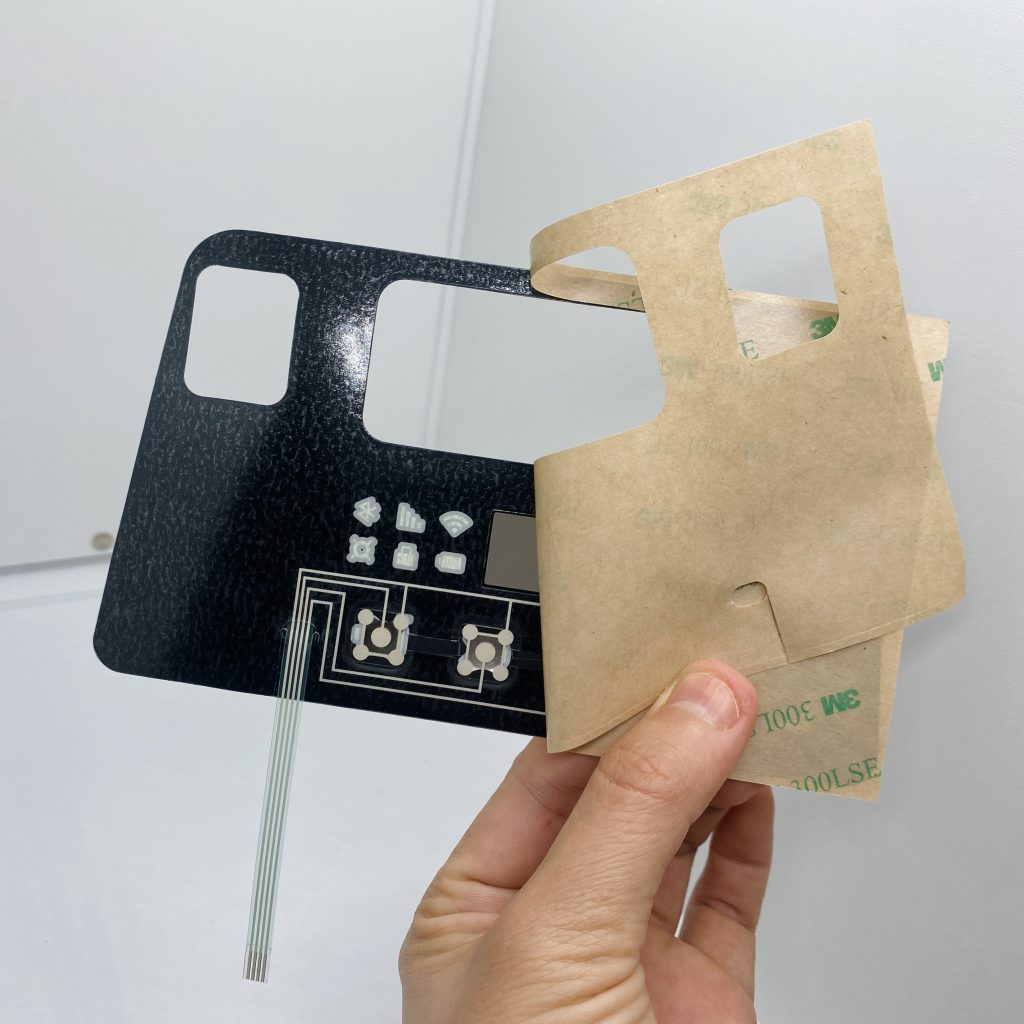
Emboss Geometry Often Matters More Than Force
While force adjustment is important, geometry frequently delivers the largest usability improvement.
A completely flat surface offers no positional guidance. Operators must rely entirely on visual targeting, which is inefficient in fast-paced environments.
Embossing introduces tactile landmarks that allow operators to locate keys without looking directly at the panel.
In real industrial projects, three patterns repeatedly prove effective:
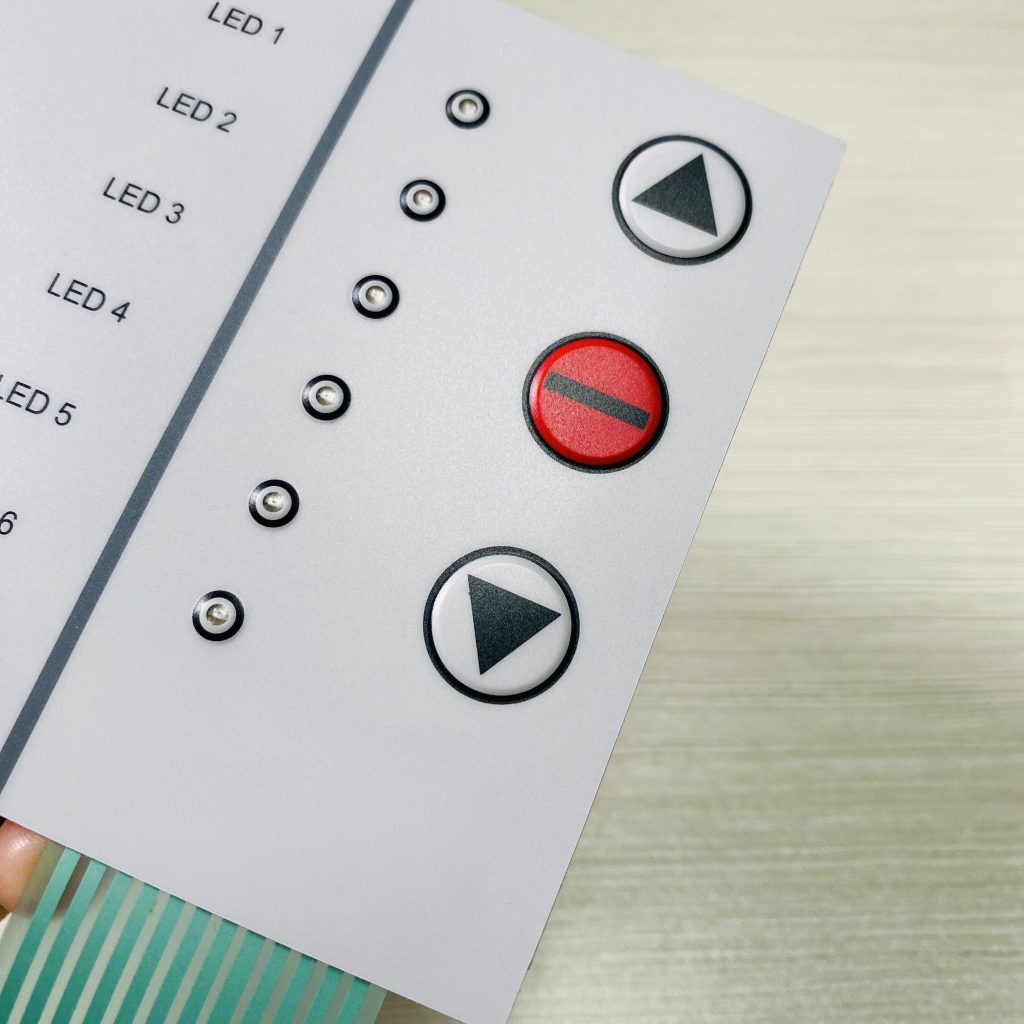
A soft pillow emboss provides subtle positioning feedback and works well for moderate glove thickness.
Rim emboss structures create a boundary that physically catches the glove finger, preventing lateral slip during actuation. This is particularly effective in oily environments.
Full emboss designs raise the entire key surface, enabling concave or convex shaping that better concentrates applied force.
Depth selection becomes important here. Too shallow and the feature disappears under glove material; too deep and overlay durability may suffer. Typical industrial ranges between 0.4 mm and 1.0 mm tend to provide reliable results.
Dome Selection Defines Feedback Quality
Force alone does not guarantee confidence during operation. Feedback consistency matters equally.
Non-tactile polyester dome designs generally struggle in glove scenarios because operators cannot easily detect switching events.
Metal domes, on the other hand, introduce a defined snap response that remains perceptible through gloves.
Diameter selection plays a subtle but meaningful role. Larger domes distribute load across a wider area, making them easier to actuate with broad glove contact surfaces. Smaller domes may require more precise targeting than gloved operation allows.
Lifecycle also becomes relevant, as glove operation typically involves higher applied force and more aggressive press dynamics.
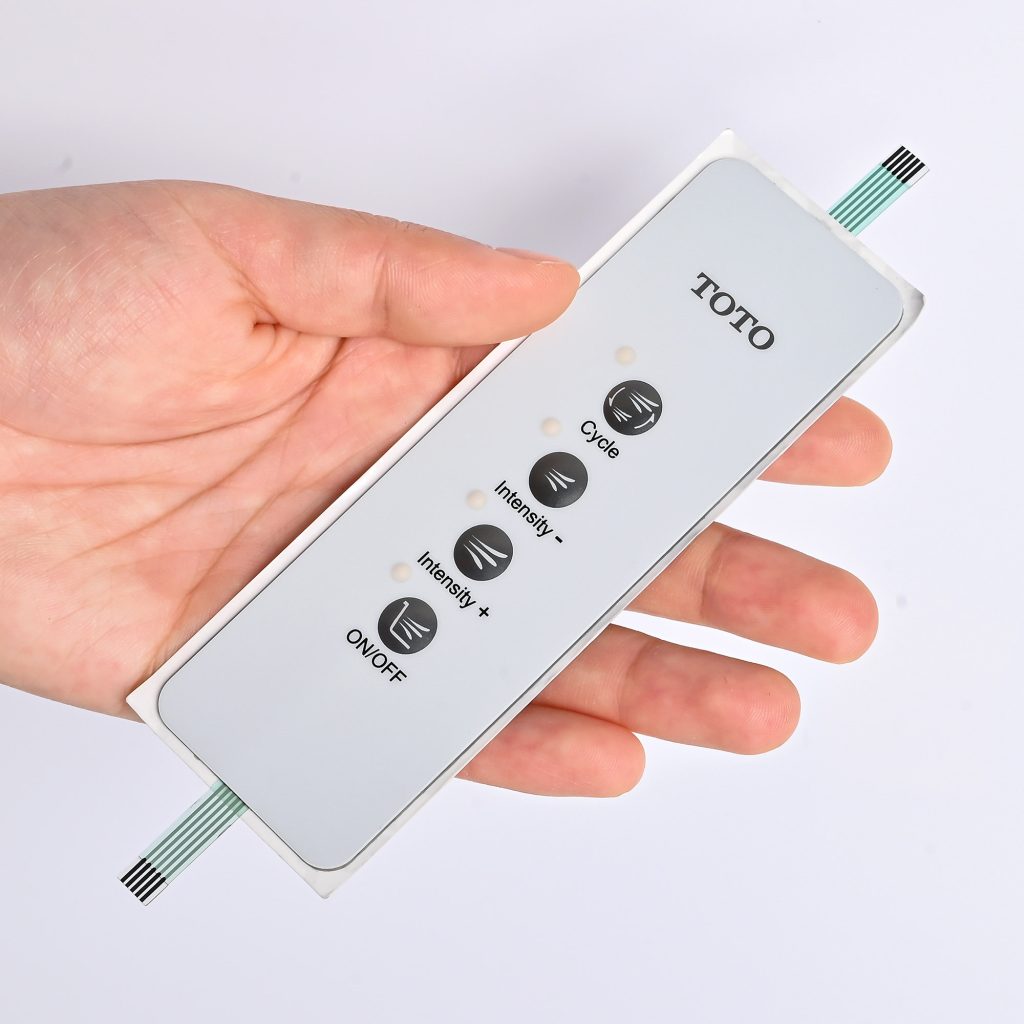
A Field Example: Mining Controller Panel Optimization
One project illustrates how small design changes can transform usability.
A mining equipment client reported high mis-press rates during site trials. Operators wore layered gloves, and the initial panel used a flat overlay with moderate force tactile keys.
Instead of redesigning the entire interface, adjustments focused on three areas:
Actuation force was increased to approximately 420g to provide stronger feedback and prevent resting-hand activation.
A pronounced rim emboss was added around keys, improving finger positioning and reducing slip.
Overlay texture was shifted toward a matte finish, improving grip and reducing glare under harsh lighting.
Following these modifications, error frequency dropped significantly, and operators reported greater confidence during interaction.
Practical Checklist for Glove-Friendly Designs
Across projects, several recurring design considerations help prevent usability issues:
Adequate actuation force specification during early design discussions
Emboss features that provide physical targeting rather than purely visual cues
Larger key dimensions and sufficient spacing to prevent adjacent activation
Dome sizing aligned with key geometry rather than selected independently
High-contrast graphics that remain legible under PPE constraints
These elements are rarely critical individually but collectively define user experience.
Closing Thoughts
Designing membrane switches for industrial gloves is ultimately an exercise in empathy toward the operator’s environment.
The difference between a frustrating panel and a reliable one often lies in subtle mechanical and geometric details rather than major structural changes.
By treating actuation force, emboss geometry, dome selection, and surface characteristics as an integrated system, engineers can create interfaces that remain responsive even under the constraints of protective equipment.
For teams currently developing industrial control panels or refining existing designs, early usability evaluation with real gloves—not bare-finger testing—often reveals opportunities that are otherwise overlooked.
If you are evaluating a glove-operable interface or planning a new industrial panel, our engineering team is available for discussion and sample support.
Website: www.bx-panel.com
Email: [email protected]