


Structure Breakdown, Functional Layers, and Customization Options
Bx-Panel Electronics Technology
Membrane switches are widely used in modern electronic devices due to their compact structure, reliability, and high customization potential. However, their performance is not determined by a single element, but by the precise integration of multiple functional layers.
This page explains the main components of a membrane switch, focusing on layer structure, functional roles, and optional enhancements. It is designed to help engineers, designers, and procurement professionals evaluate membrane switch designs and choose the right manufacturing partner.
With over 10 years of manufacturing experience, Bx-Panel Electronics Technology provides customized membrane switch solutions supported by in-house production and engineering expertise.
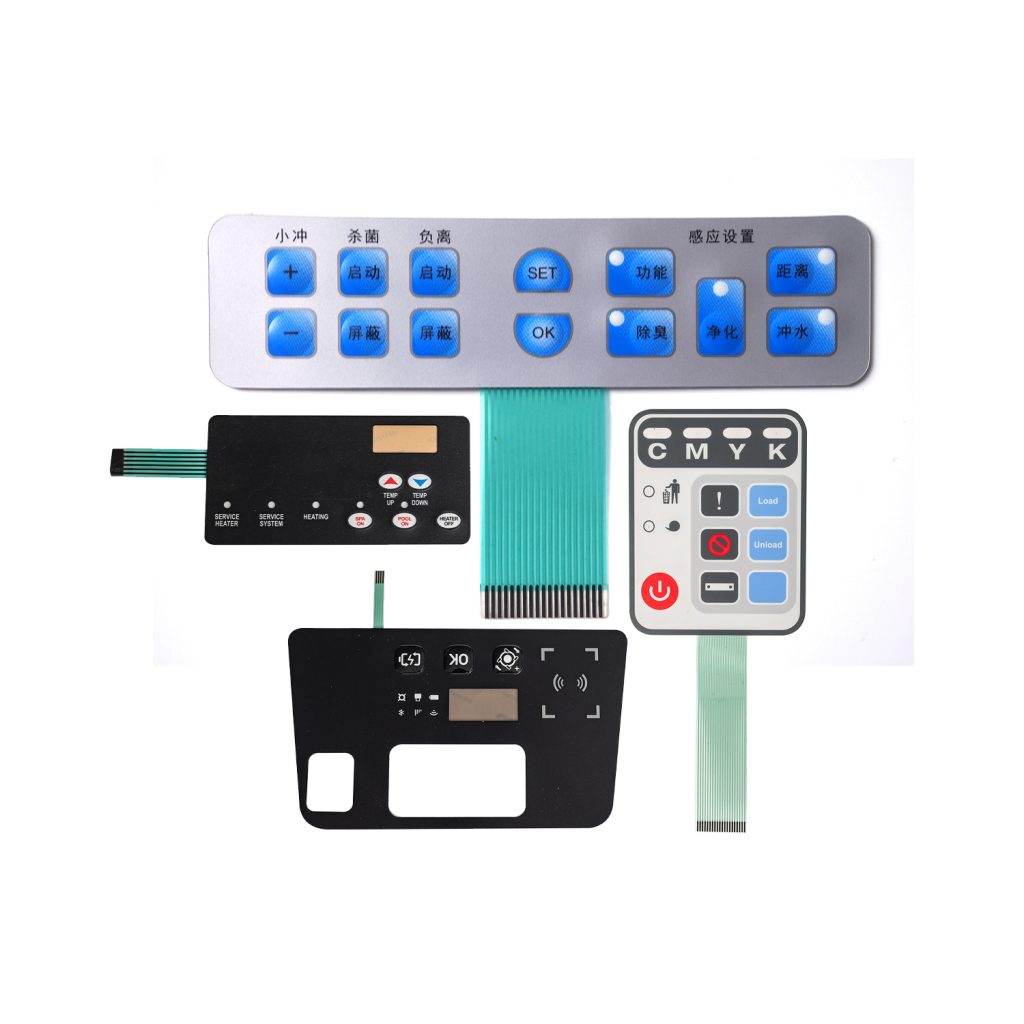
What Are the Main Components of a Membrane Switch?
A membrane switch is a laminated, multi-layer interface assembly that converts user input into an electrical signal through pressure contact. Each layer performs a defined function, and the overall performance depends on their material selection, structural design, and manufacturing accuracy.
The typical membrane switch structure includes:
- Graphic overlay (user interface layer)
- Spacer layer (separation layer)
- Circuit layer (conductive layer)
- Adhesive layer (mounting layer)
- Optional functional layers (tactile, shielding, backlighting)
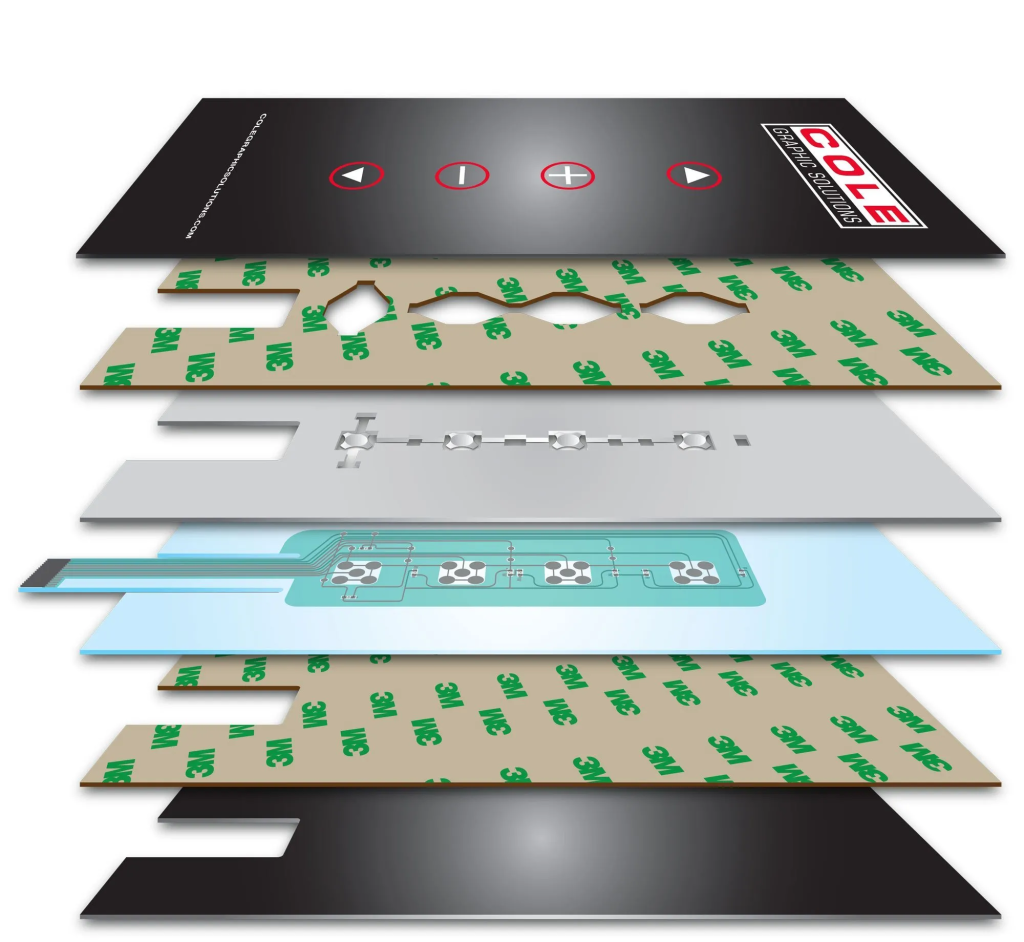
Detailed Breakdown of Membrane Switch Components
Graphic Overlay – User Interface Layer
The graphic overlay is the topmost layer and the primary point of user interaction. It is usually produced from PET (polyester) or PC (polycarbonate) film and printed with functional symbols, indicators, and branding elements.
Customization options include:
- Embossed buttons or borders
- Matte, glossy, or anti-glare finishes
- Hard-coated surfaces for wear resistance
A well-designed graphic overlay directly affects usability, visual clarity, and product lifespan.
Spacer Layer – Circuit Isolation Layer
The spacer layer is a die-cut polyester film positioned between conductive layers. It creates a controlled gap that keeps the circuit normally open.
Key functions include:
- Preventing accidental circuit contact
- Defining actuation force and travel
- Ensuring consistent switching performance
Spacer thickness and hole alignment are critical parameters in membrane switch design.
Circuit Layer – Conductive Layer
The circuit layer forms the electrical pathway of the membrane switch. Conductive traces are typically printed using silver paste or carbon ink on a flexible polyester substrate.
This layer determines:
- Electrical reliability
- Contact resistance
- Long-term signal stability
For demanding environments, additional insulation gaskets or protective layers can be incorporated.
Rear Adhesive Layer – Mounting and Fixation
The rear adhesive layer enables secure installation of the membrane switch onto the device housing or panel. Industrial-grade adhesives, such as 3M pressure-sensitive adhesives, are commonly used.
This layer ensures:
- Stable bonding
- Resistance to temperature changes
- Long-term structural integrity
Optional Functional Enhancements for Membrane Switches
Depending on application requirements, membrane switches can integrate additional functional layers:
- Tactile Dome Layer
Metal or polyester domes provide a clear tactile “click” response. - EMI / RFI Shielding Layer
Reduces electromagnetic interference in sensitive electronic systems. - Backlighting System
LED backlighting, light guide films, or acrylic panels improve visibility in low-light environments. - Crystal Dome Labels
Raised, glossy button surfaces enhance both appearance and tactile feedback.
These options allow membrane switches to adapt to industrial, medical, automotive, and consumer applications.
Why Component Structure Matters in Membrane Switch Design
The performance of a membrane switch depends on how accurately each component is designed and assembled. Poor alignment or material mismatch can lead to:
- Inconsistent actuation
- Reduced lifespan
- Electrical instability
A well-engineered structure ensures:
- Stable electrical performance
- Long service life
- Consistent user experience
This is why component-level understanding is essential during design and supplier selection.
Why Choose Bx-Panel as Your Membrane Switch Manufacturer?
Bx-Panel Electronics Technology operates a 3,000㎡ self-owned factory in Xiamen, China, with a professional team of over 100 engineers and skilled workers.
Our Capabilities
- One-stop manufacturing: membrane switches, graphic overlays, nameplates, insulation gaskets, acrylic panels, and related interface components
- In-house design support for structure, materials, and graphics
- Stable production capacity for prototypes and mass orders
- Strict quality control throughout the production process
We support customers not only with manufacturing, but also with design optimization and long-term reliability assurance.
Get Your Customized Membrane Switch Solution
Understanding the main components of a membrane switch is the foundation for building reliable and cost-effective interface solutions.
If you are developing a new product or optimizing an existing design, Bx-Panel Electronics Technology is ready to support your project with professional insight and proven manufacturing capability.
Contact us today:
- 🌐 Website: www.bx-panel.com
- ✉ Email: [email protected]
Our team will respond within 24 hours with technical support, samples, or a customized quotation.