


In membrane switch manufacturing, quality control is often misunderstood as a final inspection step. In reality, most failures don’t originate at the end—they build up quietly during earlier stages of production.
Dead keys, lifting overlays, or unstable circuits are rarely caused by design mistakes alone. More often, they trace back to inconsistencies in printing, lamination, or material handling.
For engineers and sourcing teams, the real challenge is not just designing a functional switch, but ensuring that every unit coming off the line performs the same way over time.
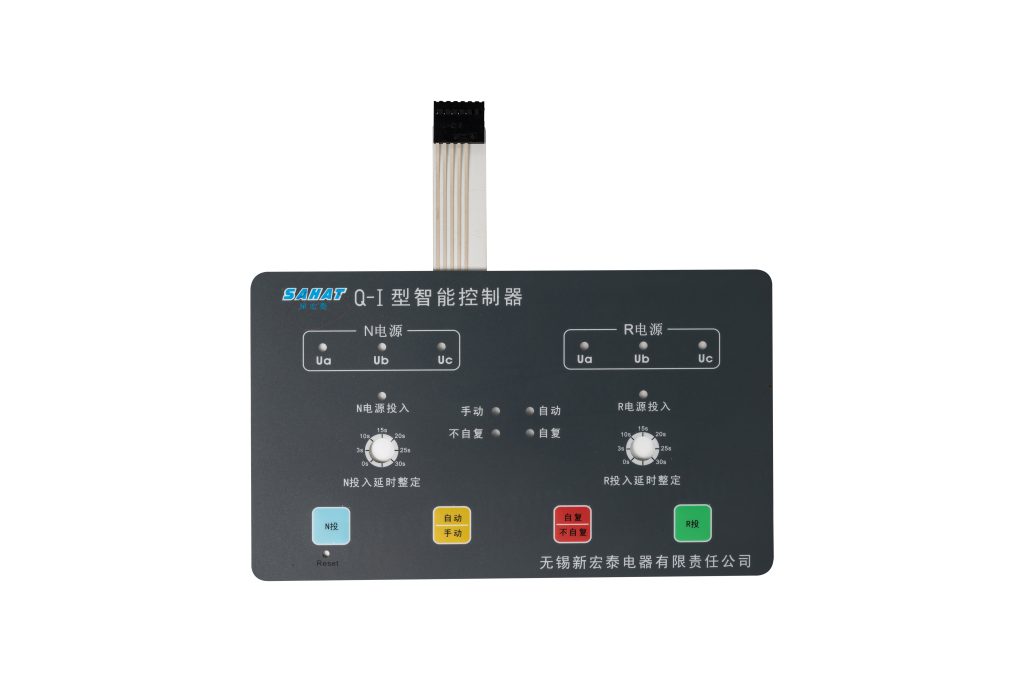
Why Quality Control Matters in Membrane Switch Manufacturing
A membrane switch is a multilayer assembly where each layer depends on the others to function correctly. Unlike rigid PCBs, small variations in soft materials can quickly translate into performance issues.
- Layer interaction is critical
Conductive traces must align precisely with spacer openings. Adhesives must bond securely without flowing into contact areas. Even minor deviations can affect actuation reliability. - Defects scale quickly in production
Screen printing and lamination are batch processes. If a parameter drifts—ink viscosity, curing temperature, or pressure—defects can repeat across an entire lot before being detected. - End-use environments leave little margin for error
In industrial or medical applications, switches may face humidity, chemicals, or repeated mechanical stress. Without robust quality control, early failures are almost inevitable.
In practice, membrane switch quality control is less about catching defects at the end and more about preventing them at every step.
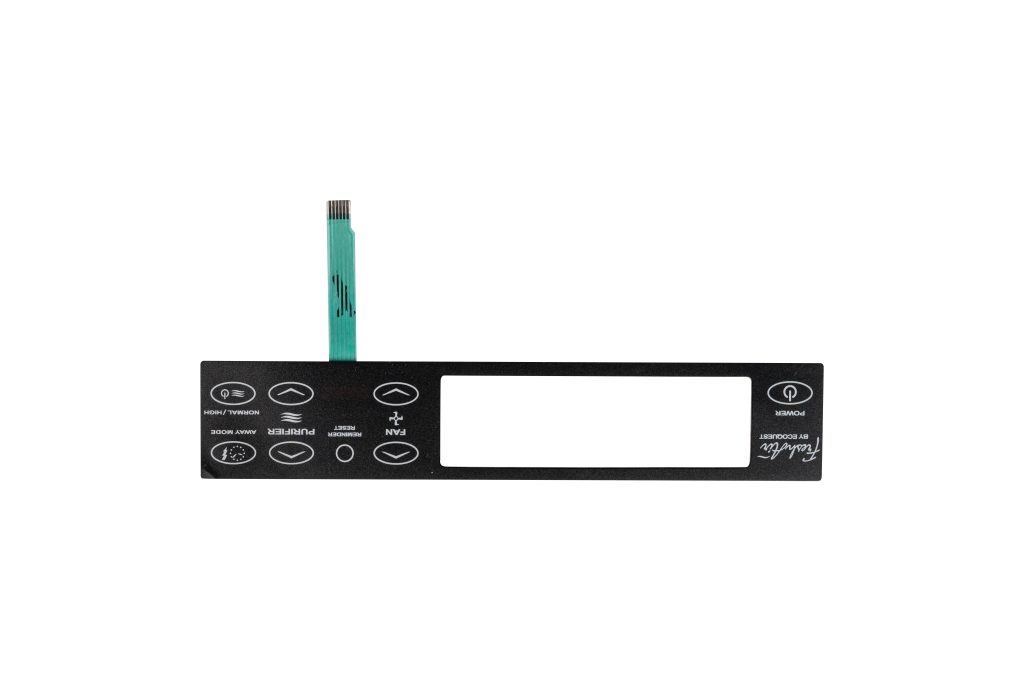
Critical QC Points Across Each Layer
Effective control starts by breaking the product down into its functional layers and managing risk at each stage.
1. Graphic Overlay Inspection
This is the most visible layer, but also one of the most vulnerable to environmental wear.
- Check print registration and color consistency against approved artwork
- Inspect for surface defects such as scratches, bubbles, or contamination
- Verify hard-coating performance where abrasion or chemical exposure is expected
A visually acceptable overlay can still fail early if coating or curing is inconsistent.
2. Circuit Layer Testing
Printed circuits form the electrical backbone and are sensitive to both material and process variation.
- Test for continuity and shorts using automated systems
- Measure trace resistance to ensure signal stability
- Perform adhesion tests to confirm conductive ink bonding
Cracking or delamination at this stage often leads to intermittent failures later in the field.
3. Spacer and Adhesive Control
These layers are easy to overlook but directly affect both tactile feel and long-term reliability.
- Maintain consistent spacer thickness to control actuation force
- Prevent adhesive bleed into contact areas
- Verify peel strength under normal and elevated temperatures
Many “mystery failures” in membrane switches can be traced back to adhesive behavior.
4. Assembly Alignment
Even when individual layers pass inspection, misalignment during lamination can compromise the entire assembly.
- Use tooling or vision systems to ensure accurate registration
- Check tactile response after lamination for consistency across keys
At this stage, defects are harder to correct without rework.
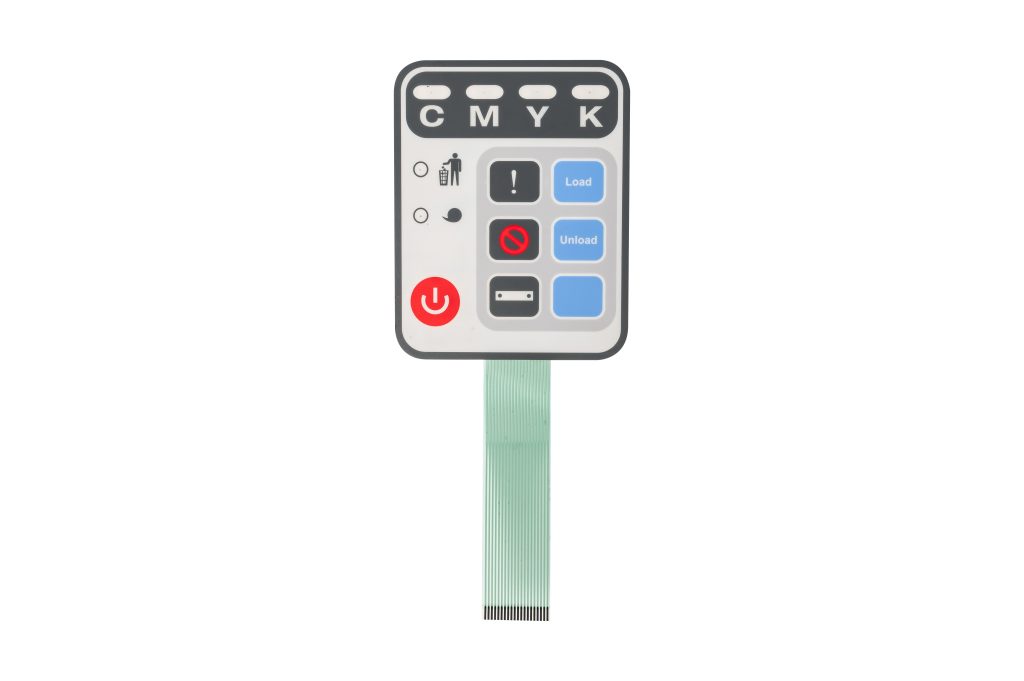
Functional Testing Standards
Layer-level inspection alone is not enough. A membrane switch must also prove that it performs reliably under real-world conditions.
- Actuation force testing
Confirms that each key responds within a defined force range - Life cycle testing
Repeated actuation (often up to 1 million cycles) reveals wear-related failures - Environmental testing
- Temperature cycling exposes material expansion mismatch
- High humidity testing (e.g., 85°C / 85% RH) identifies risks like silver migration
- UV exposure checks long-term stability of overlays
- Electrical isolation testing
Ensures circuits remain stable under voltage stress
Standards such as IPC guidelines are often used as references, but many projects rely on application-specific requirements.
Common Quality Issues and Their Root Causes
In production, certain defects appear repeatedly. What matters is how quickly they can be traced back to the source.
| Issue | Likely Cause |
|---|---|
| Intermittent key | Spacer thickness variation or misalignment |
| Overlay lifting | Incorrect adhesive selection or poor bonding |
| Circuit failure | Ink cracking due to flex or weak adhesion |
| Visual defects | Dust contamination during printing |
| Inconsistent feel | Dome variation or adhesive interference |
| Early failure | Insufficient validation testing |
The key is not just detection, but linking each issue to a specific process variable.
How a Reliable QC System Is Built
Most experienced manufacturers structure quality control into three stages:
- Incoming Quality Control (IQC)
Verifies raw materials before they enter production - In-Process Quality Control (IPQC)
Monitors key parameters during printing, curing, and lamination - Outgoing Quality Control (OQC)
Confirms electrical performance and final product consistency
In addition, tools like statistical process control (SPC) are increasingly used to identify trends before they turn into defects.
A stable process is always more effective than relying on final inspection alone.
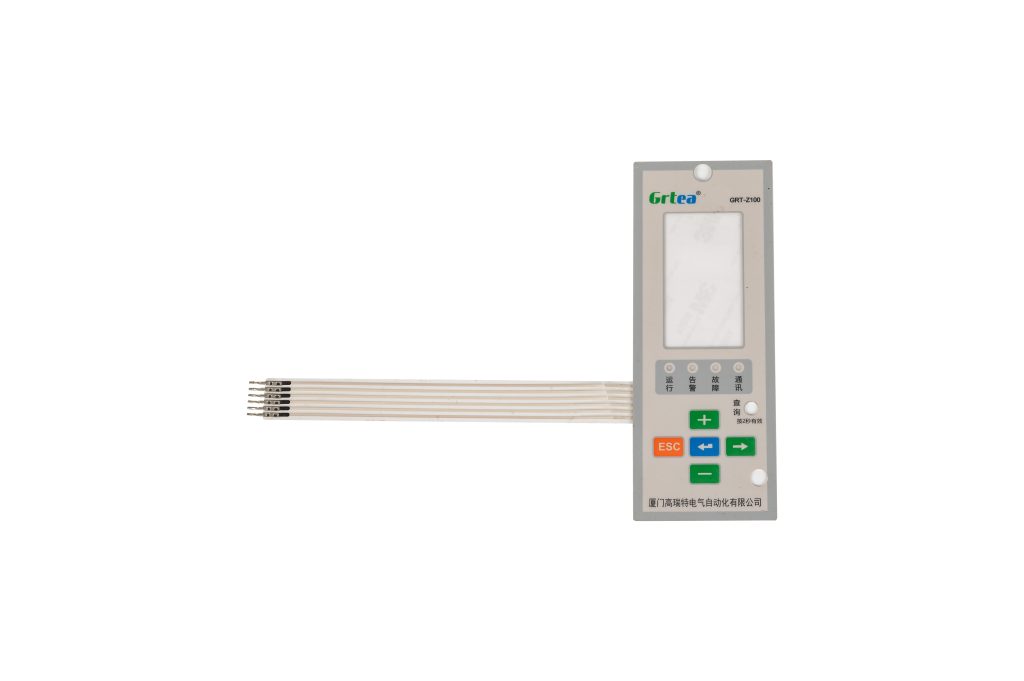
Conclusion
A membrane switch may look simple on the surface, but its reliability depends on how consistently each hidden layer is controlled.
In practice, quality is not defined by a single test result. It is the outcome of stable materials, controlled processes, and repeatable results across every batch.
For engineers and buyers, understanding these quality control standards is not just about evaluation—it is about reducing long-term risk in the field.