


Outdoor equipment often looks straightforward.
A control panel mounted on a charging station.
A membrane keypad on agricultural machinery.
A flat interface installed on a generator enclosure.
But once equipment leaves the factory and operates outdoors year-round, the environment begins testing every design decision behind it.
The real question is not whether membrane switches can be used outdoors.
The real question is whether they were engineered specifically for outdoor conditions.
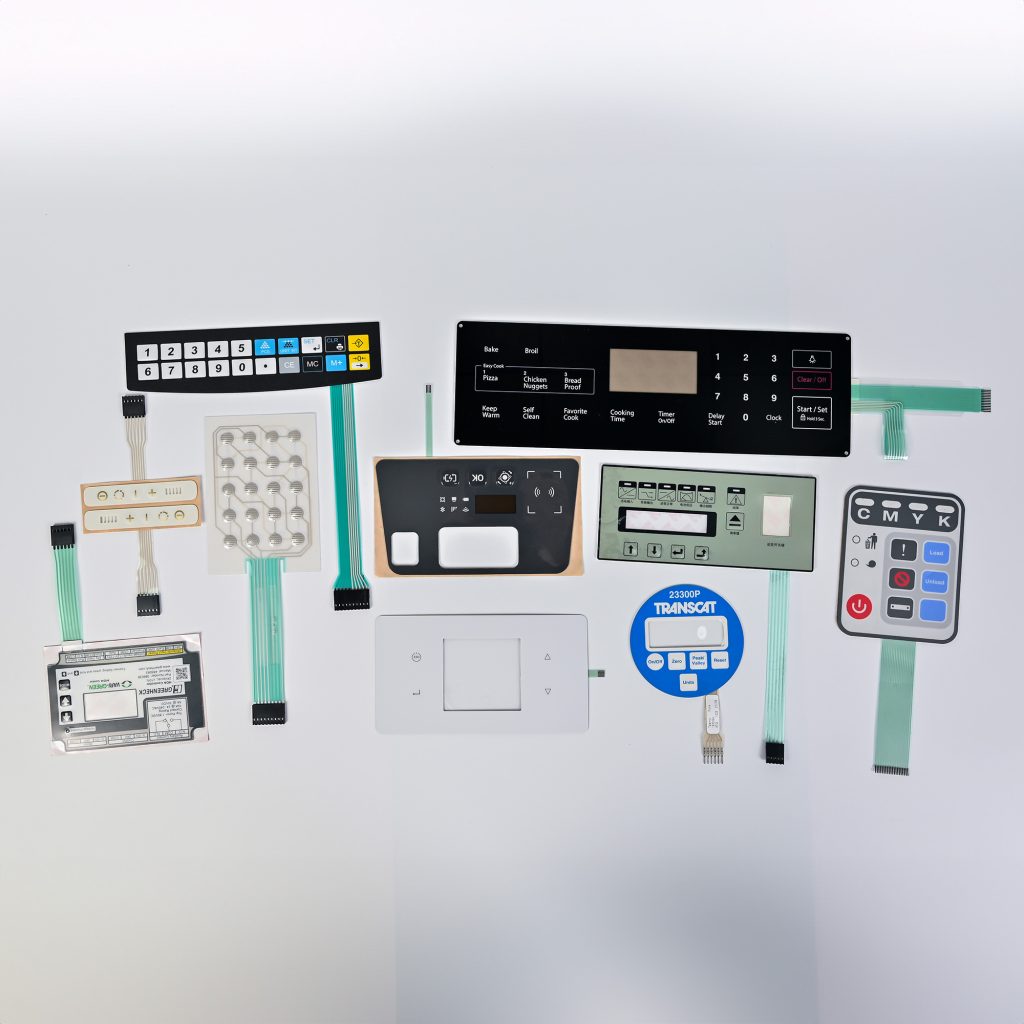
What “Harsh Environment” Really Means
In engineering conversations, the term “harsh environment” is frequently used. Outdoors, however, the stress factors are very specific:
- Continuous UV exposure
- Daily temperature cycling
- Rain and humidity
- Dust and sand abrasion
- Occasional chemical contact
Each factor affects membrane switches differently.
Prolonged UV exposure can cause standard polyester overlays to discolor or become brittle.
Temperature cycling leads to expansion and contraction, gradually stressing adhesive layers.
If moisture penetrates from the edges, conductive traces may eventually corrode.
Outdoor failures rarely happen overnight. They develop over time.
Where Outdoor Failures Actually Come From
From practical project experience, most outdoor issues are not caused by the switching mechanism itself.
They are usually related to material selection or incomplete sealing strategies.
Typical problems include:
- Overlay discoloration after long-term sun exposure
- Adhesive softening under high temperatures
- Edge lifting caused by thermal expansion and contraction
- Silver trace oxidation after moisture ingress
- Layer delamination
A membrane switch designed for indoor industrial panels will not automatically perform well outdoors.
That distinction matters.
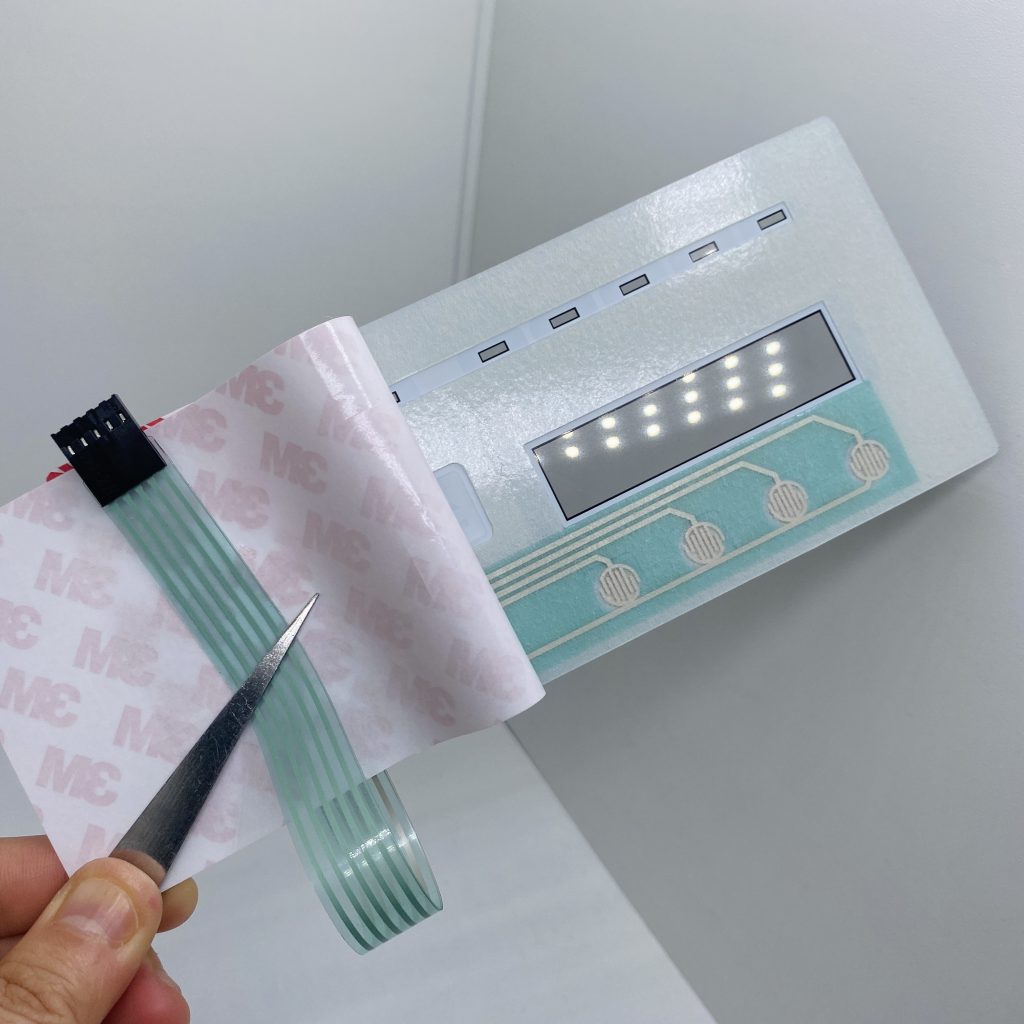
When an Outdoor Membrane Switch Makes Sense
In many applications, membrane switches are actually well suited for outdoor equipment.
They provide:
- A flat, sealed surface
- Fewer mechanical penetration points
- Minimal panel depth requirements
- Integrated graphics without separate nameplates
For charging stations, agricultural controllers, parking systems, and outdoor monitoring devices, a sealed membrane interface can reduce ingress risk compared to multiple mechanical cutouts.
But performance depends on the engineering details.
Design Considerations for Outdoor Use
An outdoor membrane switch is not simply a standard panel installed outside.
Several design adjustments are typically required:
UV-Resistant Overlays
Using UV-stable polyester or hard-coated materials helps prevent surface degradation and color fading.
High-Performance Adhesives
Rear adhesives must maintain bond strength through repeated heat cycling.
Edge Sealing Strategy
Moisture usually enters from the perimeter. Proper bonding and enclosure interface design are critical.
IP-Aligned Structural Design
If the enclosure targets IP65 or IP67 protection, the switch design must align with that sealing concept.
Condensation Awareness
In certain climates, internal condensation may present a greater risk than direct rain exposure.
These factors are structural decisions, not cosmetic upgrades.
When Membrane Switches May Not Be Ideal
There are environments where membrane switches may not be the best interface solution.
For example:
- Extremely low-temperature conditions without heating support
- Public installations with high vandalism risk
- Equipment exposed to constant abrasive contact
In such cases, alternative interface technologies may be more appropriate.
Engineering decisions should always be application-driven.
Practical Industry Perspective
At Xiamen XINBIXI Electronic Technology Co., Ltd. (BX-PANEL), we have supported outdoor equipment manufacturers across industrial, energy, and agricultural sectors.
Our experience is straightforward:
Outdoor membrane switches are not inherently fragile.
They simply require the correct materials and structural planning from the beginning.
Our team operates from a 3,000㎡ manufacturing facility in Xiamen, focusing on membrane switches, graphic overlays, acrylic panels, nameplates, insulation gaskets, crystal dome labels, and related interface components.
For outdoor projects, discussing environmental conditions early in the design phase consistently leads to better long-term results.
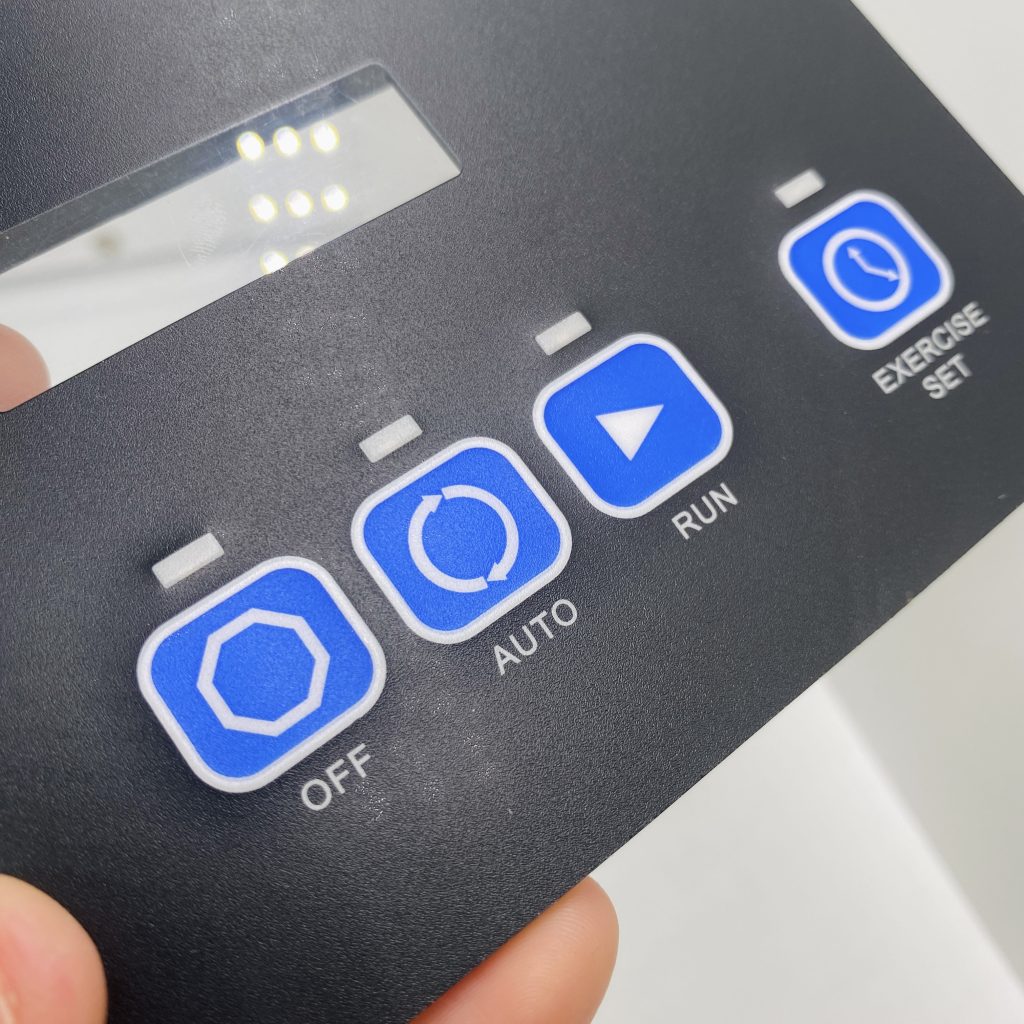
Final Thoughts
Can membrane switches handle harsh outdoor environments?
Yes — when they are designed for it.
No — when indoor specifications are assumed to be sufficient.
The difference lies in material selection, sealing strategy, and a realistic understanding of environmental exposure.
If you are developing outdoor equipment and evaluating interface options, reviewing environmental assumptions early in the design process can prevent costly redesign later.
Website: www.bx-panel.com
Email: [email protected]
Outdoor durability does not begin at installation.
It begins at the design stage.