


When designing a printed circuit membrane switch, one of the most important decisions engineers and product designers need to make is the choice of conductive material for the membrane switch circuit layer.
Selecting silver conductive ink or carbon conductive ink doesn’t just affect electrical performance—it also influences durability, long-term reliability, production cost, and overall application suitability.
At Bx-Panel, a professional custom membrane switch manufacturer based in Xiamen, China, we work closely with engineers and purchasing teams to make sure this membrane switch ink selection aligns with real-world usage conditions. In this article, we’ll break down the practical differences between silver ink and carbon ink, so you can choose with confidence for your next project.


Understanding the Circuit Layer: The Heart of a Membrane Switch
The circuit layer is the functional core of any membrane switch. It consists of printed conductive traces that close an electrical circuit when pressure is applied.
While the structure may look simple, the choice of conductive ink—silver or carbon—has a direct impact on electrical behavior, mechanical wear, and long-term stability.
Silver Conductive Ink: Designed for Performance and Precision
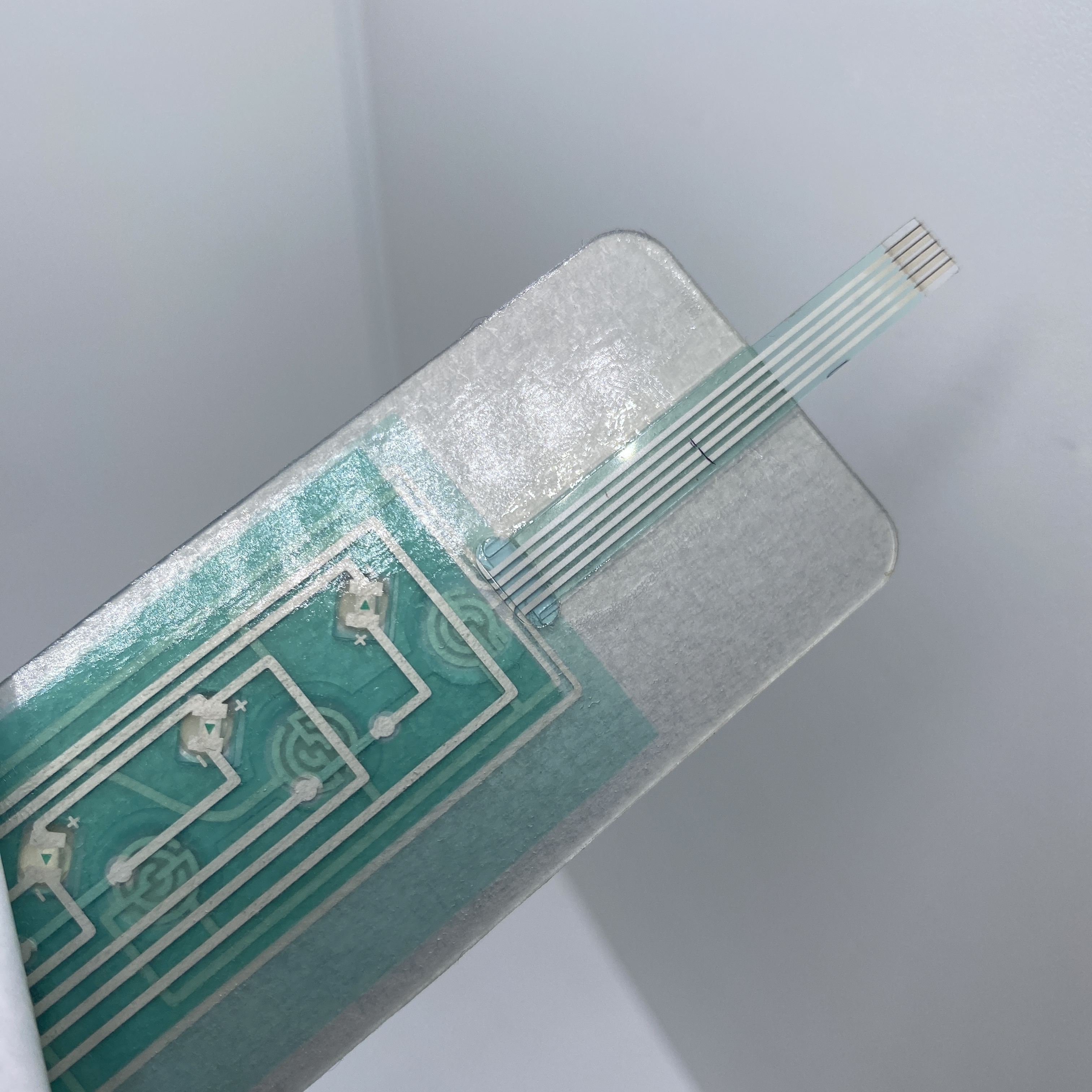
Silver ink is widely used in membrane switch designs where electrical performance and compact layouts are critical.
Key Characteristics and Advantages
Excellent conductivity
Silver offers very low electrical resistance, making it ideal for low-voltage signals, fast response requirements, and high-frequency applications.
Fine-line printing capability
Silver ink supports very fine and precise circuit traces, allowing engineers to design compact layouts and more complex circuit paths.
Stable electrical performance
Silver is naturally resistant to oxidation, which helps maintain consistent conductivity over time in normal operating environments.
Points to Consider
Higher material cost
As a precious metal, silver ink is more expensive than carbon ink, which can impact overall project cost—especially for large circuit areas.
Silver migration risk
In high-humidity environments combined with electrical potential, silver ions may migrate over extended periods. This can be managed through proper circuit design, spacing, and protective layers, but it’s an important factor to consider.
Carbon Conductive Ink: Built for Durability and Cost Control
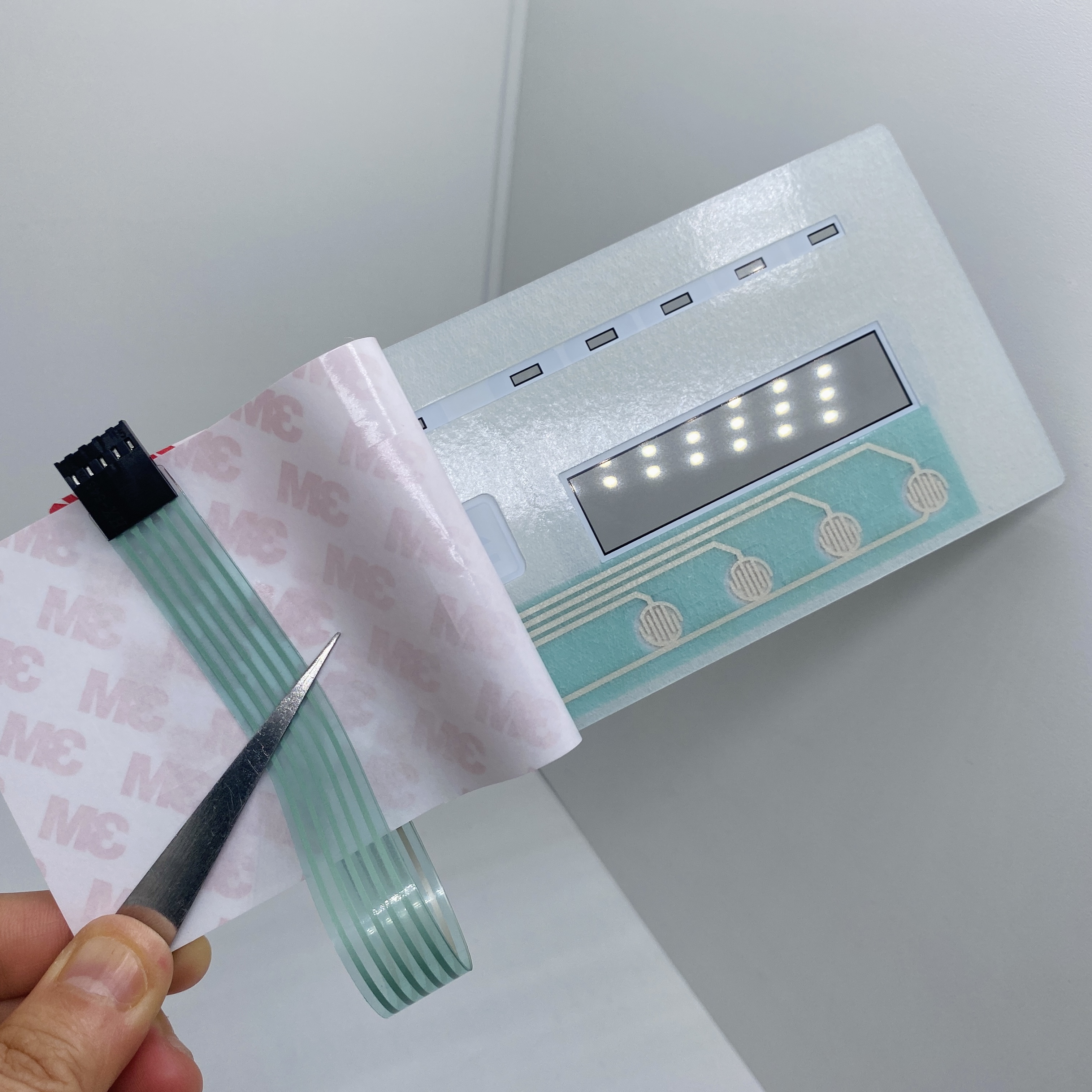
Carbon ink is often chosen for applications where mechanical durability, long life, and cost efficiency are top priorities.
Key Characteristics and Advantages
Outstanding wear resistance
Carbon ink performs extremely well in high-cycle applications. It resists abrasion caused by repeated contact with domes or spacer layers, even after millions of actuations.
Cost-effective solution
Carbon ink is significantly less expensive than silver, making it a practical choice for cost-sensitive projects or large-volume production.
Excellent environmental stability
Carbon is chemically inert and does not suffer from migration issues, making it reliable across a wide range of operating environments.
Points to Consider
Higher electrical resistance
Carbon ink has higher sheet resistance than silver, which may require wider traces to meet electrical requirements.
Less suitable for ultra-fine circuits
While modern printing technology has improved, carbon ink generally cannot achieve the same ultra-fine line definition as silver ink.
Silver Ink vs Carbon Ink: A Direct Comparison
| Feature | Silver Conductive Ink | Carbon Conductive Ink |
|---|---|---|
| Conductivity | Very high | Moderate |
| Wear resistance | Good | Excellent |
| Cost | Higher | Lower |
| Fine-line capability | Excellent | Good |
| Environmental stability | Good (design needed in humidity) | Excellent |
| Typical applications | Precision electronics, complex circuits, low-voltage designs | Industrial controls, appliances, high-cycle interfaces |
How to Choose the Right Ink for Your Application
There’s no universal “best” choice—only the right choice for your specific application.
Choose silver ink if your design requires very fine circuit traces, minimal resistance, or supports high-performance electronic functions. In these cases, understanding the full membrane switch structure is essential to properly protect and optimize the circuit layer.
Choose carbon ink if your application demands long-term durability, frequent actuation, larger circuit areas, or strict cost control—common in industrial equipment and consumer appliances.
In practice, many high-quality membrane switches use a hybrid approach. Silver ink is used for the main circuit traces, while carbon ink is overprinted on contact areas. This combination takes advantage of silver’s conductivity and carbon’s exceptional wear resistance.
Circuit Ink Selection Is Only Part of Long-Term Reliability
While silver and carbon inks define the electrical behavior of a membrane switch, circuit reliability does not depend on conductive ink alone.
In real applications, spacer layers and adhesive systems play a critical role in protecting printed circuits, controlling key travel, and preventing premature wear.
Even with properly selected silver or carbon ink, incorrect spacer thickness or unsuitable adhesive choices can lead to issues such as circuit damage, inconsistent key response, or reduced service life. For this reason, conductive ink selection should always be evaluated together with spacer and adhesive design—especially in high-cycle or demanding environments.
In the next article, we’ll take a closer look at how spacer layers and adhesive selection influence membrane switch lifespan and long-term reliability.

Bx-Panel’s Approach to Circuit Ink Selection
At Bx-Panel, we don’t simply manufacture membrane switches—we engineer them. With our 3000㎡ in-house factory and experienced design team in Xiamen, we manage every step of the process, from graphic overlay design to final circuit printing.
When developing a custom membrane switch, our engineers evaluate factors such as operating environment, expected lifecycle, electrical requirements, and budget constraints. Based on this analysis, we recommend the most reliable ink solution—silver, carbon, or a hybrid system—and ensure consistent quality through full production control.
Conclusion
The choice between silver ink and carbon ink in membrane switch circuit layers isn’t about which material is better overall—it’s about which one fits your application best. By understanding the trade-offs between conductivity, durability, cost, and environmental performance, you can make a well-informed design decision that ensures long-term reliability.
Planning a membrane switch project and unsure which circuit ink to choose?
Let Bx-Panel help you turn technical requirements into a dependable, production-ready solution.
👉 Custom Membrane Switch
📩 [email protected]