


Many products are engineered to perform well, yet fail to deliver a premium look and feel. The internal structure is solid, the components are reliable—but when a customer first interacts with the product, something feels off.
In many cases, the problem is not inside the product.
It lies on the surface—specifically, in the graphic overlay quality.
As the primary interface between the user and the device, the overlay plays a critical role in both perception and performance. When it falls short in color, texture, or durability, the entire product feels compromised.

The Overlay Defines First Impression
Before users experience functionality, they judge what they see and touch.
Whether it’s a medical device, an industrial control panel, or a consumer product, the graphic overlay is the first point of contact. Subtle inconsistencies—slight color mismatches, uneven textures, or poor finishing—can immediately lower perceived value.
In practice, graphic overlay quality often determines whether a product feels precise and reliable—or cheap and unfinished.
Small Defects Become Big Visual Problems
In internal components, minor imperfections may go unnoticed.
On the surface, they are impossible to hide.
Even small issues can significantly impact graphic overlay quality, such as:
- Color inconsistency: Visible mismatch between overlay and housing
- Printing misalignment: Icons or buttons slightly off-position
- Surface scratches: Damage during handling or assembly
- Edge lifting: Early-stage peeling that suggests poor durability
What seems like a minor production deviation quickly becomes a visible flaw in the end product. Poor graphic overlay quality is often the most direct reason a product appears low-end.
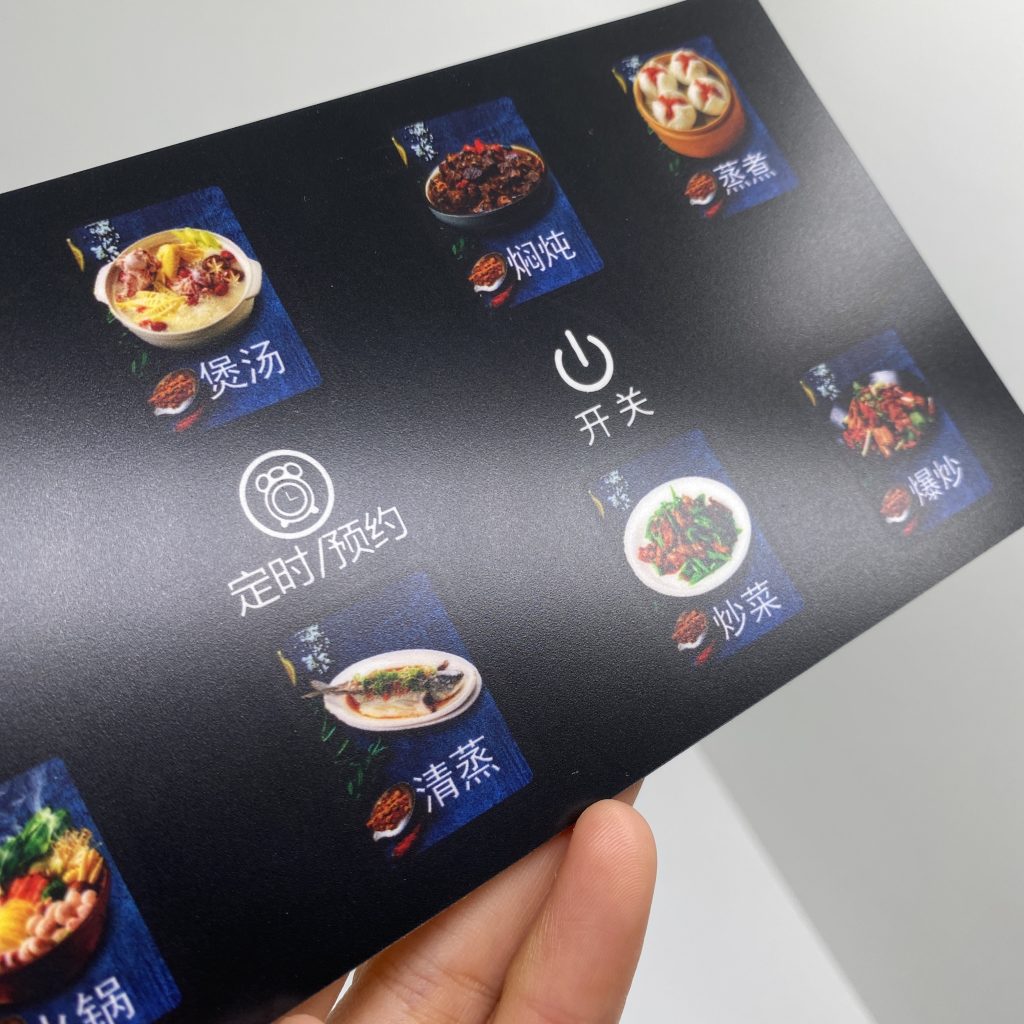
Material Selection Is Often the Root Cause
Many appearance-related issues originate from material choices made early in development.
Different materials behave very differently:
- PET (Polyester): Good chemical resistance, but relatively rigid with lower visual depth
- Polycarbonate (PC): Better flexibility and impact resistance, suitable for embossing and high-end finishes
Material selection directly influences not only durability, but also surface clarity, gloss level, and tactile feel.
In many cases, graphic overlay quality is limited not by design—but by the material itself.
Surface Finishing Determines Perceived Quality
Two overlays made from the same material can look completely different depending on surface treatment.
Finishing plays a major role in defining graphic overlay quality:
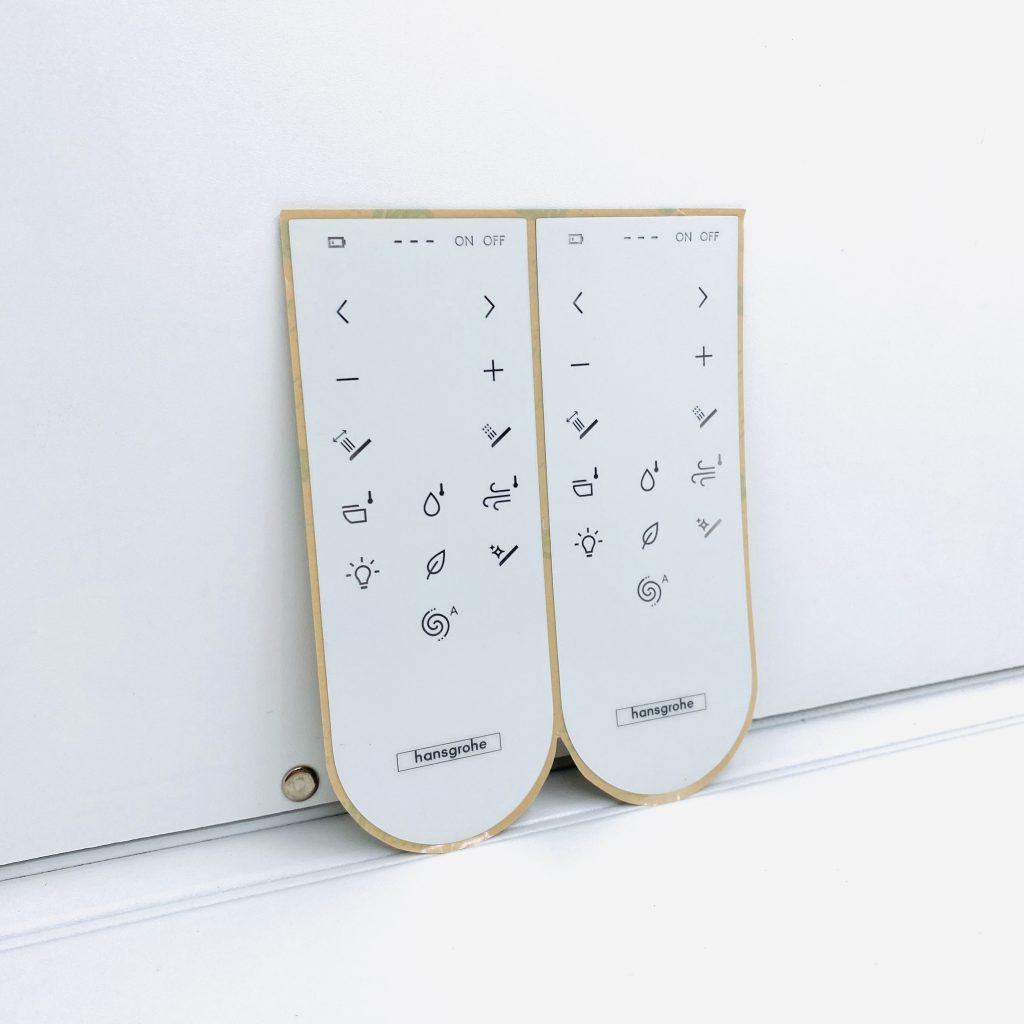
- Matte finishes: Reduce glare and fingerprints, offering a clean and professional look
- Glossy finishes: Enhance color vibrancy but are more sensitive to scratches
- Textured finishes: Improve grip and add a sense of durability
What users describe as “premium” is often the result of controlled surface engineering, not just visual design.
Adhesive and Edge Design Are Often Overlooked
While the visible surface gets most of the attention, long-term performance often depends on what is not immediately seen.
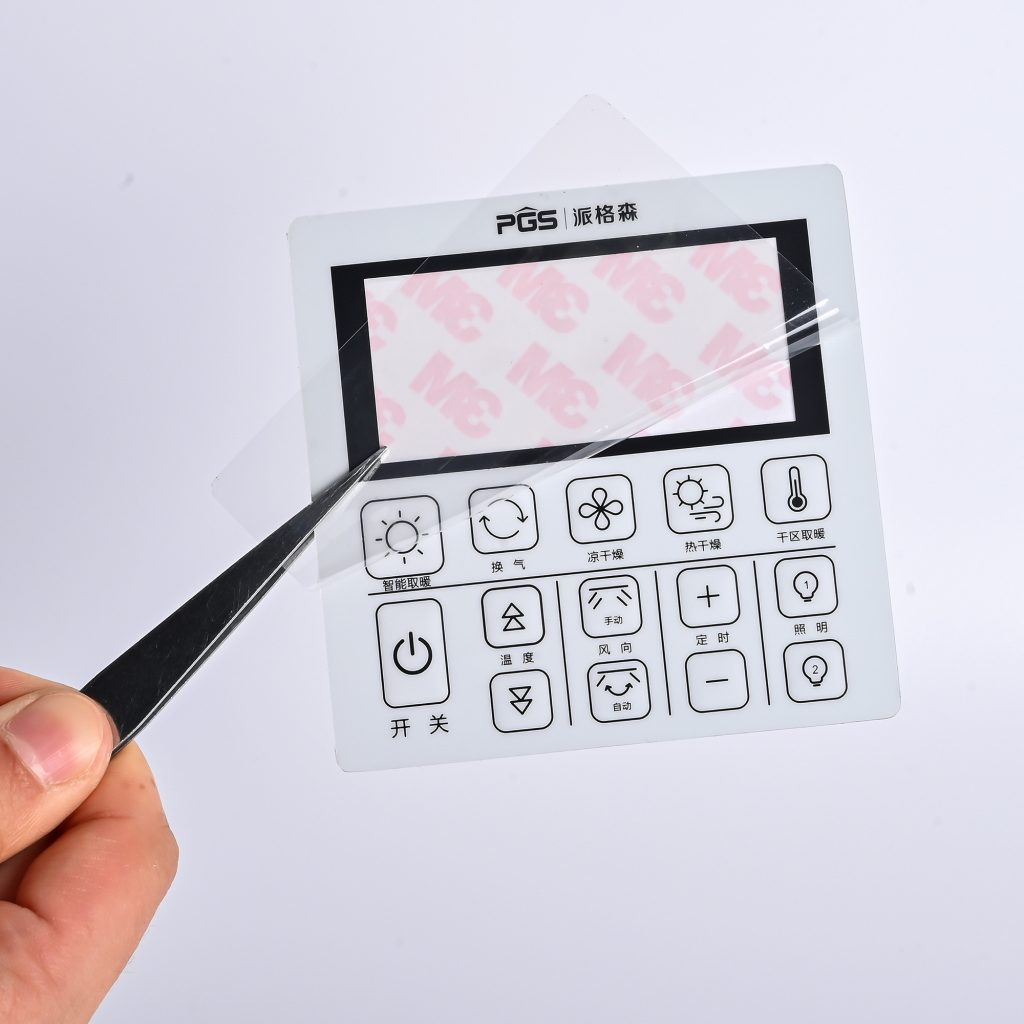
Common failures related to poor graphic overlay quality include:
- Edge lifting: Caused by weak adhesive or improper bonding surfaces
- Air bubbles: Resulting from poor application or design flaws
- Uneven adhesion: Leading to a distorted or raised appearance
These issues may not appear immediately, but once they do, they quickly degrade the overall product image.
Real-World Insight from Manufacturing
In real production environments, appearance failures are rarely random.
Most graphic overlay quality issues originate early—during design or material selection—not during final assembly.
In long-term manufacturing projects, the most common causes include:
- Design decisions that ignore environmental conditions
- Material choices driven by cost rather than performance
- Inconsistent process control during printing or die-cutting
Once these factors are set incorrectly, problems tend to scale during mass production.
Conclusion
A graphic overlay is not just a decorative layer—it is a critical part of how a product is perceived and experienced.
When product appearance fails, the root cause is often not hidden inside the device, but visible on its surface. Improving graphic overlay quality requires attention to material selection, surface finishing, and structural details from the earliest stages of development.
For engineers and OEM buyers, getting the overlay right is not optional—it is essential to delivering a product that looks as good as it performs.
About BX-PANEL
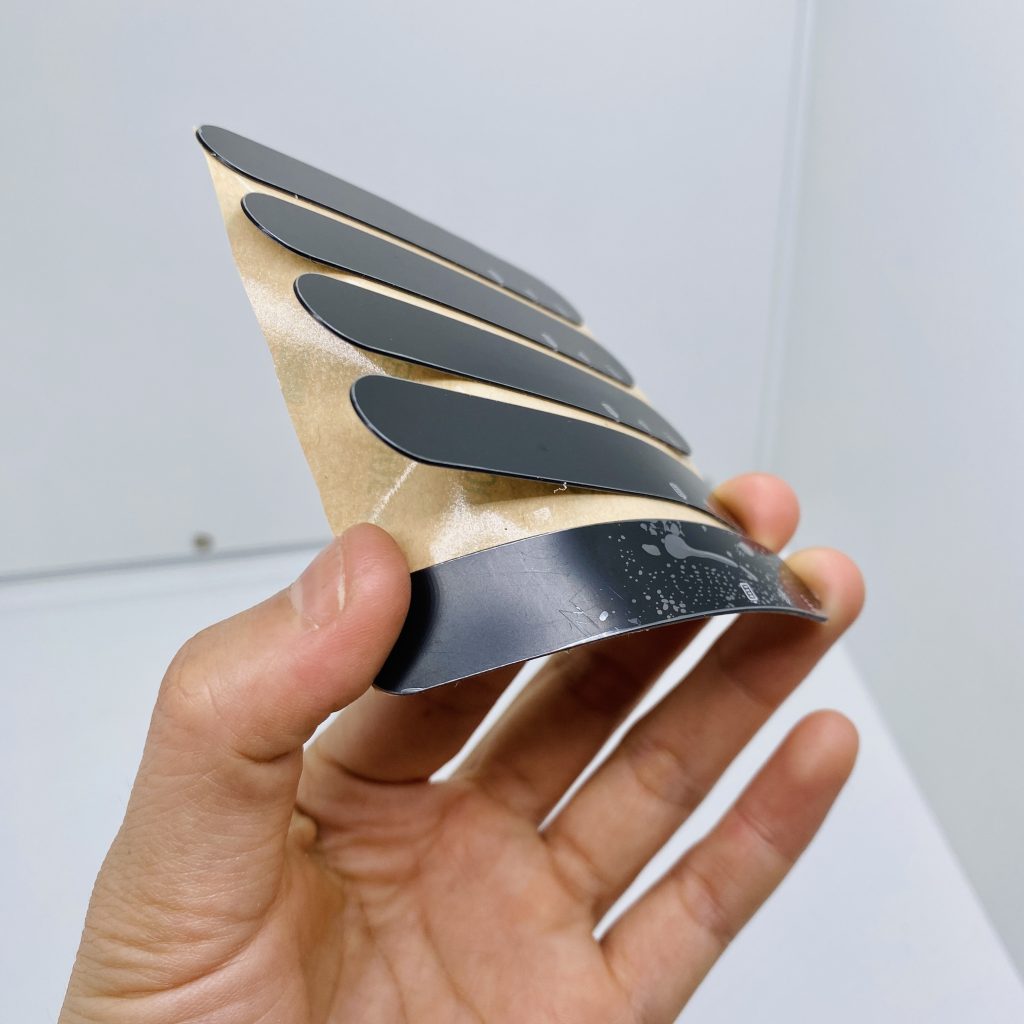
Xiamen XINBIXI Electronic Technology Co., Ltd. (BX-PANEL) is a custom manufacturer based in Xiamen, China, operating a 3,000㎡ production facility with over 100 skilled workers and an in-house engineering team.
The company provides:
- Membrane switches
- Graphic overlays
- Acrylic panels
- Nameplates
- Insulation gaskets
- Crystal dome labels and stickers
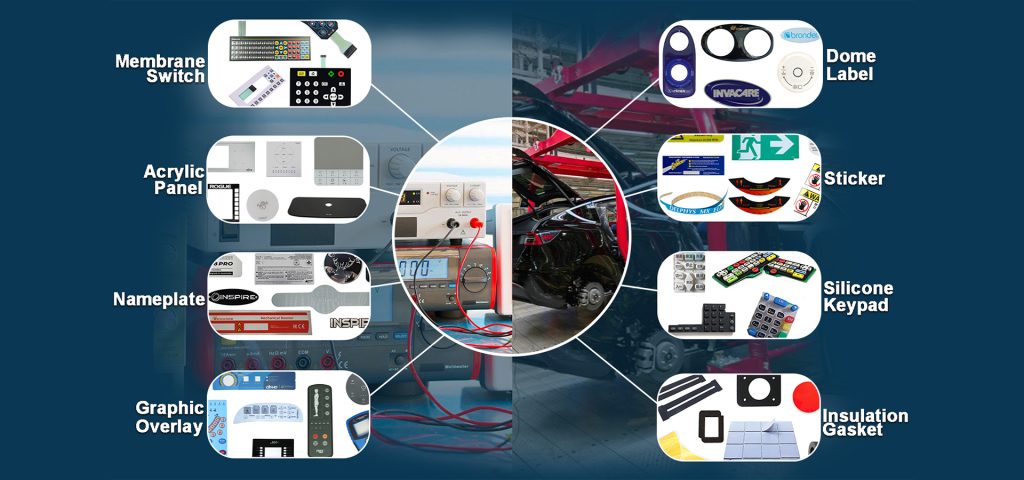
With a focus on both design and manufacturing integration, BX-PANEL supports OEM projects from prototype to mass production.
📧 Email: [email protected]
🌐 Website: www.bx-panel.com