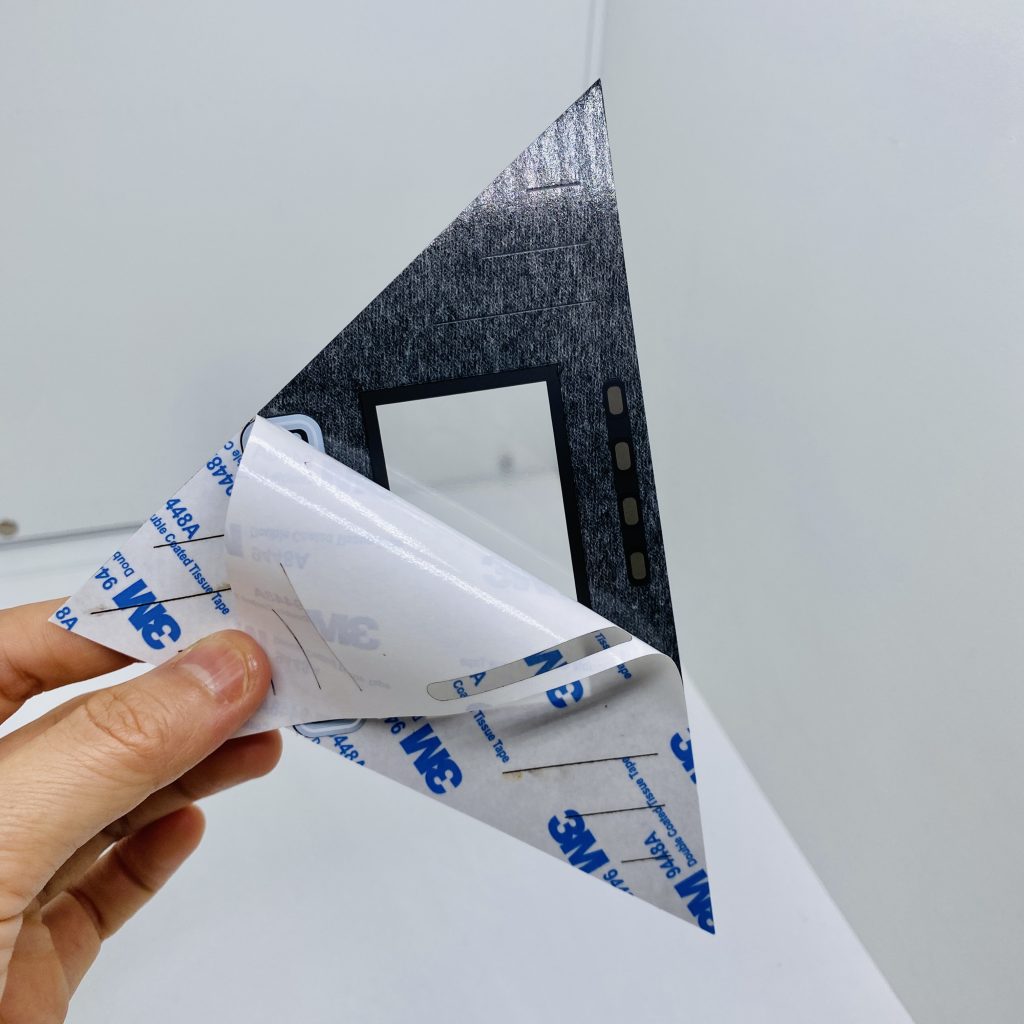
In the hardware manufacturing world, a product recall is the ultimate nightmare scenario. In the autumn of 2023, a prominent European kitchen appliance brand found themselves drafting a press release no engineering team ever wants to publish: a voluntary recall of 15,000 high-end countertop ovens.
The root cause wasn’t a faulty heating element, a software glitch, or a blown capacitor. It was the front graphic overlay—the thin, printed polycarbonate film covering the control panel.
Customers began posting photos on review sites showing the overlay peeling away near the oven’s steam vent. In severe cases, moisture had crept underneath the lifted edges, reaching the sensitive control PCB and causing intermittent power failures and short circuits.
After a frantic internal investigation, the brand traced the problem to a single production lot of overlays. The film simply couldn’t hold up under repeated thermal cycling and light steam exposure. The financial cost of the recall—shipping, replacement, and labor—far exceeded whatever fraction of a cent the procurement team had saved on the overlay contract. The damage to the brand’s reputation was incalculable.
For veteran engineers in the electronic printing and membrane switch industry, this was not a surprise. It was a highly predictable, painfully familiar pattern.
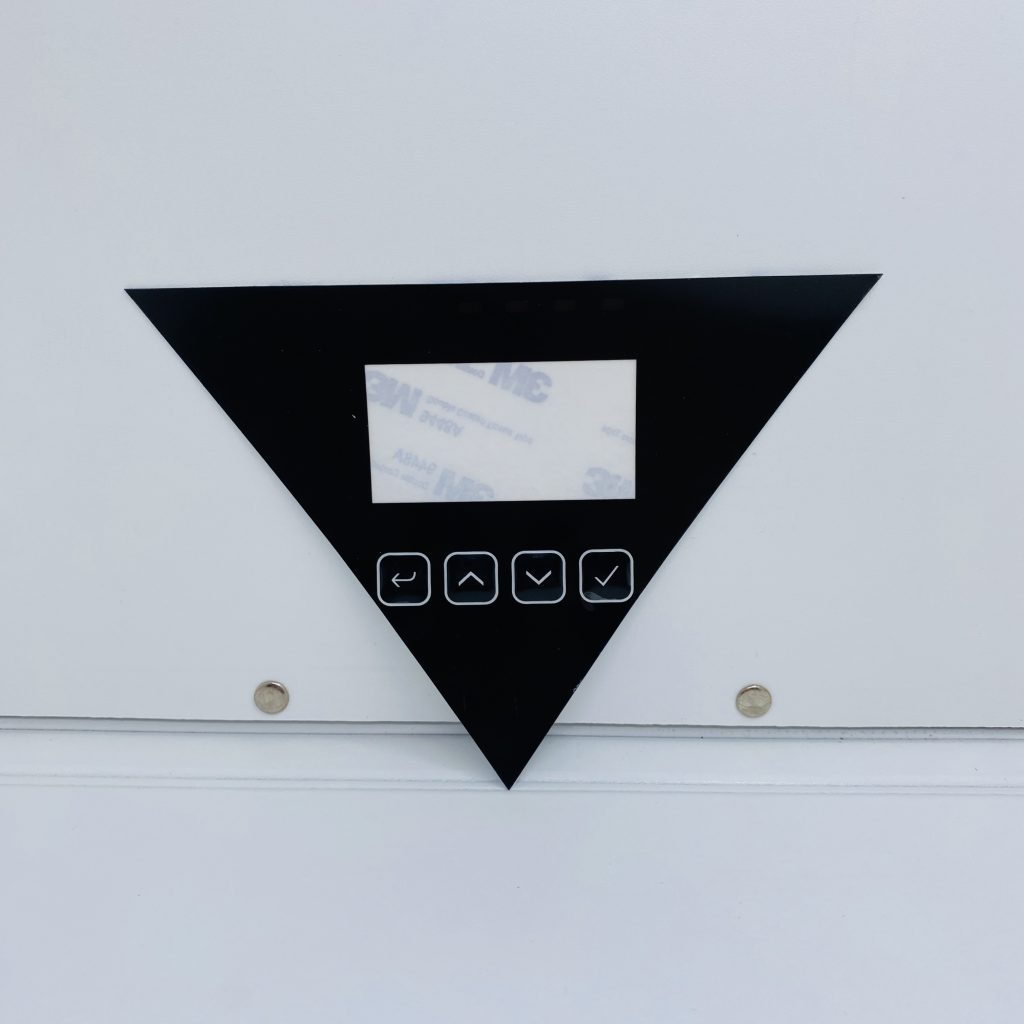
Autopsy of an Overlay Failure: What Actually Happened?
A graphic overlay is not a decorative sticker; it is a critical, multi-layered engineered barrier. When the OEM’s engineering team reverse-engineered the failed samples, they uncovered three fatal flaws that are systemic in price-driven, outsourced manufacturing:
1. The Thermal Adhesive Mismatch
The Pressure-Sensitive Adhesive (PSA) chosen for the lamination process had excellent initial tack at room temperature. However, its shear strength plummeted at 70°C. The area near the oven vent regularly hit 85°C. When exposed to heat and moisture, the adhesive simply liquefied, resulting in rapid edge lifting within weeks of use.
2. Tooling Drift and Die-Cutting Tolerances
The overlay tooling was not built or maintained in-house. As the steel-rule die aged at a third-party subcontractor, the cutting edges dulled. This caused the edge clearances to widen slightly, creating microscopic gaps that gave steam a direct, unsealed path underneath the protective film.
3. Sub-Surface Ink Degradation
The function legends were printed with a standard UV-curable ink that had never been validated for the specific environmental cocktail of heat, cooking oil mist, and repeated wiping with harsh household degreasers. After a few months, the ink began to delaminate from the substrate, leaving users unable to read the control panel.
None of these fatal defects could have been caught by a simple visual inspection at the final assembly plant. They were ticking time bombs that only revealed themselves in the field.
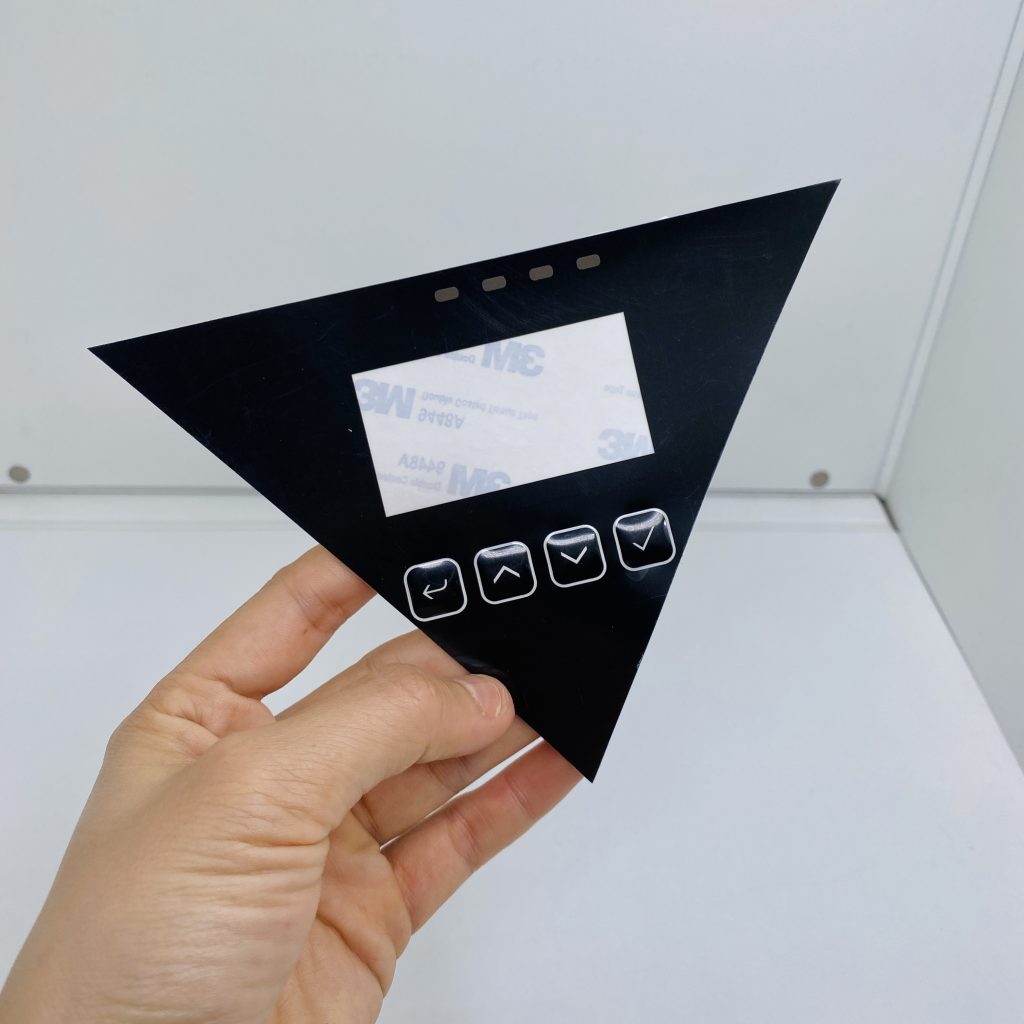
The Illusion of the “Cheap” Overlay
Walk onto any production floor building medical devices, industrial PLCs, or premium appliances, and the reality is obvious: the graphic overlay is the absolute first thing the customer touches, and the last line of defense against dust and moisture. When an overlay peels or cracks, the entire machine is perceived as broken—even if the internal electronics are perfectly functional.
This is exactly why sophisticated OEMs are abandoning fragmented supply chains. Relying on trading companies that outsource the screen printing to one workshop, the die-cutting to another, and the adhesive lamination to a third makes traceability impossible. You cannot build a reliable waterproof seal when three different factories are pointing fingers at each other over dimensional tolerances.
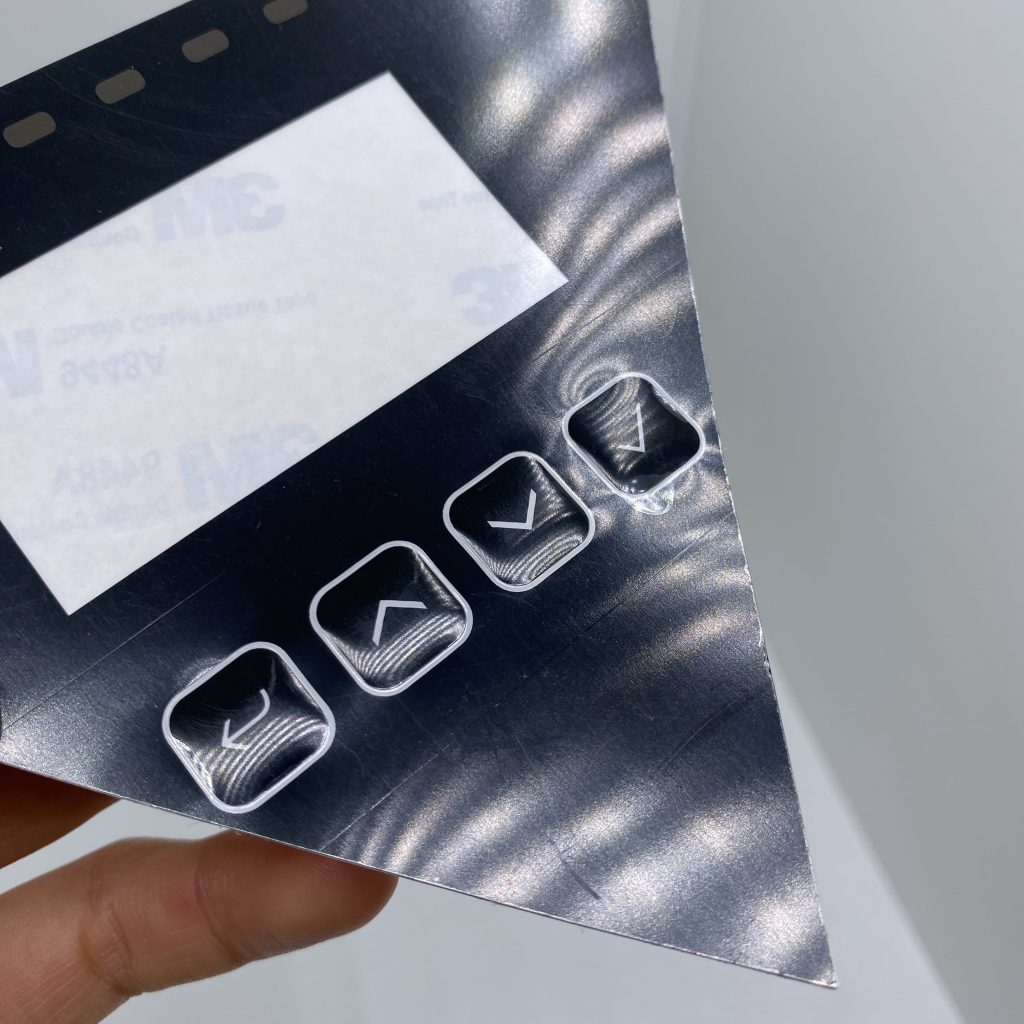
The Source-Factory Advantage: How BX-PANEL Engineers Reliability
Xiamen XINBIXI Electronic Technology Co., Ltd. (BX-PANEL) operates on a fundamentally different manufacturing philosophy. With over a decade of deep expertise in graphic overlay and membrane switch production, we operate a massive, self-owned industrial facility in Xiamen. Hundreds of full-time workers manage every critical step of the stack-up under one roof.
This vertical integration isn’t just about lead times—it is a non-negotiable quality guarantee.
Our screen printing lines, cleanroom adhesive lamination facilities, CNC die-cutting stations, and environmental test labs all share the same floor. When a production batch moves from printing to final inspection, there is no communication gap. The technician printing the sub-surface legends can instantly verify the cross-hatch adhesion test results with the lab on the very same shift.
Material science dictates our process. We do not guess; we validate. We routinely pair high-performance 3M adhesive systems with European-grade polycarbonate (PC) and polyester (PET) films based entirely on the end-use environment.
- For an outdoor industrial panel, our lab runs accelerated UV degradation and salt-spray tests.
- For an in-home device exposed to kitchen humidity, the overlay design undergoes brutal thermal shock cycling (from -20°C to 85°C) before a single sheet leaves the factory.
Our goal is simple: the overlay must outlast the machine it protects.
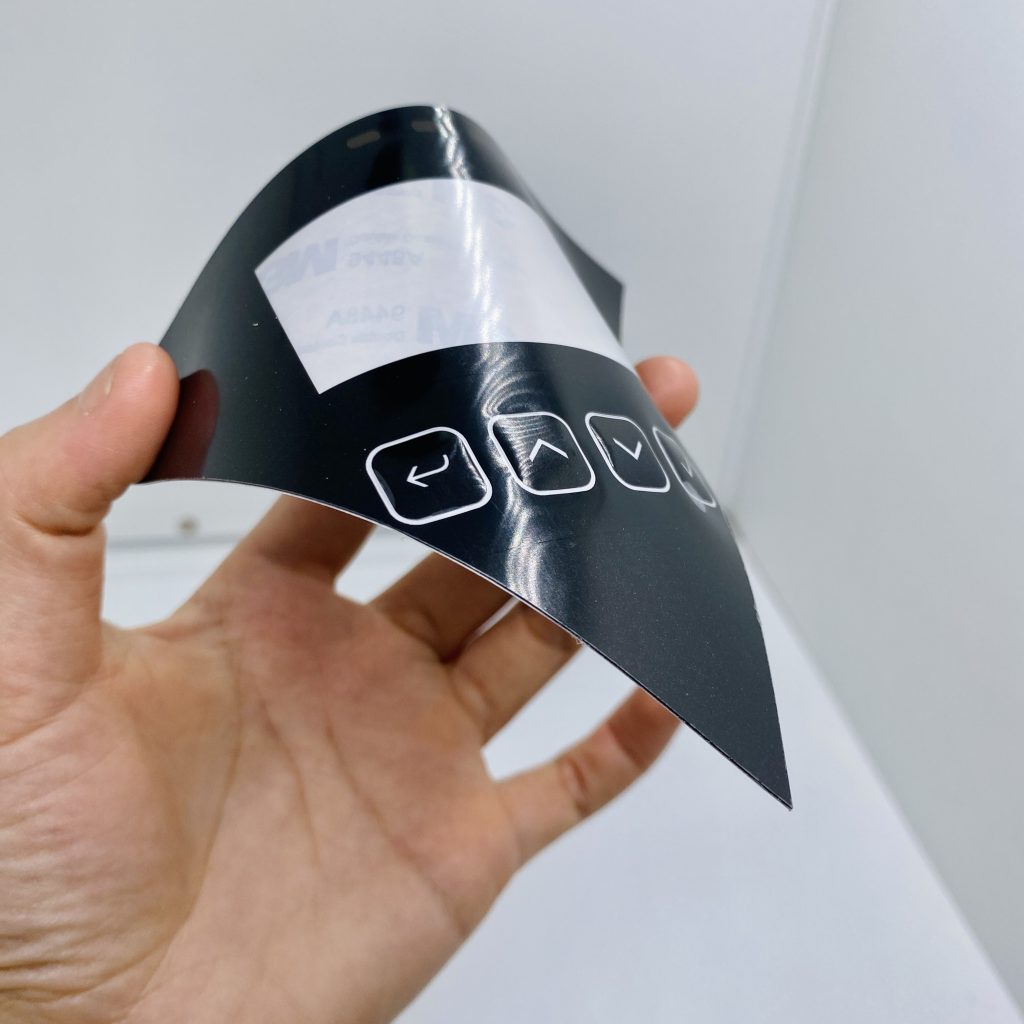
Catching Failures Before They Leave the Gate
The hundreds of skilled workers on the BX-PANEL floor aren’t just machine operators; they are trained quality-control gates. They know how to spot the microscopic early warning signs that lead to field failures—uneven adhesive wet-out, a 0.1mm registration shift in backlit display windows, or a micro-bubble that will inevitably expand under heat.
Catching those details at the factory gate costs minutes. Catching them after a product recall costs millions.
The kitchen oven recall was entirely preventable. It happens when brands treat a precision-engineered interface like a commodity sticker. When you source from a true manufacturer with physical infrastructure, a decade of specialized material knowledge, and a workforce dedicated to rigorous process control, the risk of field failure drops to near zero.
For hardware brands that live or die on consumer trust, that difference isn’t just subtle. It’s everything.
Partner with an Overlay Manufacturer You Can Trust
Xiamen XINBIXI Electronic Technology Co., Ltd. (BX-PANEL) is a source manufacturer specializing in high-reliability graphic overlays, membrane switches, and functional panel solutions. Serving the medical, industrial control, and automotive electronics sectors worldwide, we engineer interfaces designed to prevent recalls, not cause them.
- 🌐 Website: www.bx-panel.com
- 📧 Engineering Consultation: [email protected]