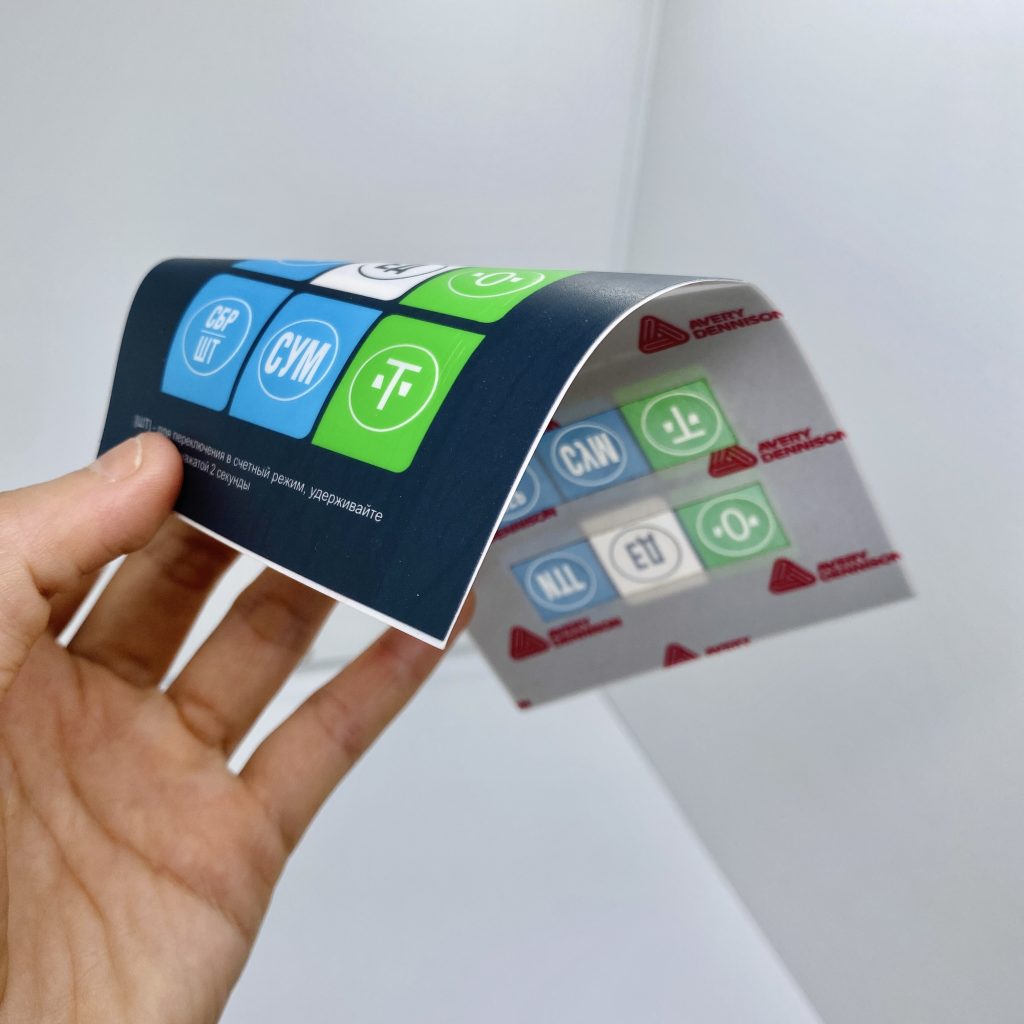
There is a common misconception in hardware engineering that simply slapping a piece of thick plastic over a device, backed by a strong layer of 3M tape, makes it “waterproof.”
In reality, when marine electronics, medical devices, or outdoor industrial equipment are pushed to their environmental limits, the graphic overlay is the absolute first line of defense. When an overlay fails, moisture ingress follows, leading to catastrophic short circuits, corroded metal domes, and costly field replacements.
Designing a truly waterproof graphic overlay requires a meticulous balance of material science, adhesive fluid dynamics, and mechanical edge-sealing. Here is a factory-floor look at the design considerations that separate a standard decorative decal from a robust, long-term sealing solution.
1. Material Science: The Capillary Action Trap
Waterproofing starts at the substrate level, and this is where many OEMs make their first mistake.
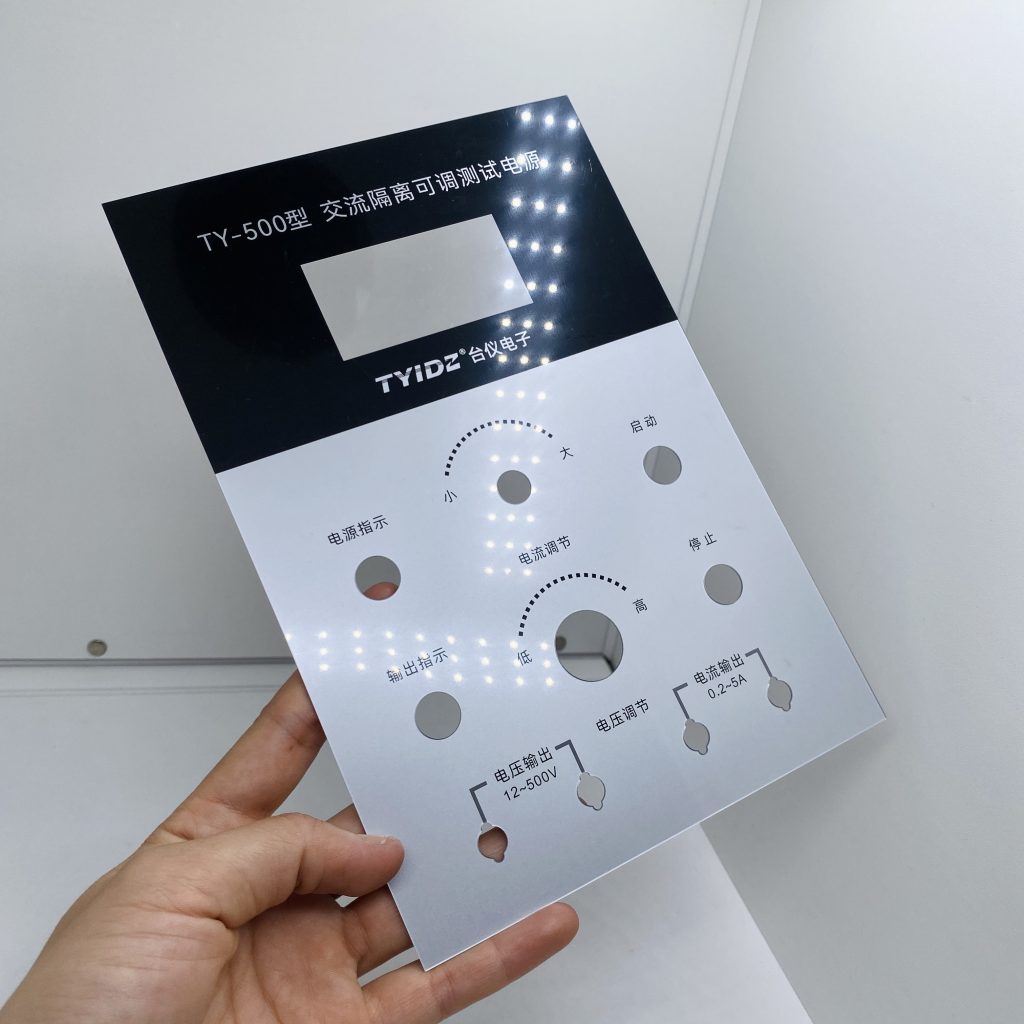
Polycarbonate (PC) is the industry standard for overlays requiring highly embossed buttons and optical clarity. However, raw polycarbonate edges are highly susceptible to stress cracking when exposed to certain industrial cleaners or prolonged high humidity. If water breaches the edge, it will travel.
For flat, non-tactile waterproof panels—or capacitive touch interfaces exposed to harsh saline mist and industrial solvents—Polyester (PET) is often the superior choice. PET boasts exceptional chemical resistance and practically zero moisture absorption, making it the preferred substrate for extreme wet environments.
2. The Invisible Barrier: Adhesives and Edge Geometry
A membrane overlay rarely leaks straight through the top film; it fails at the edges. Capillary action is the enemy.
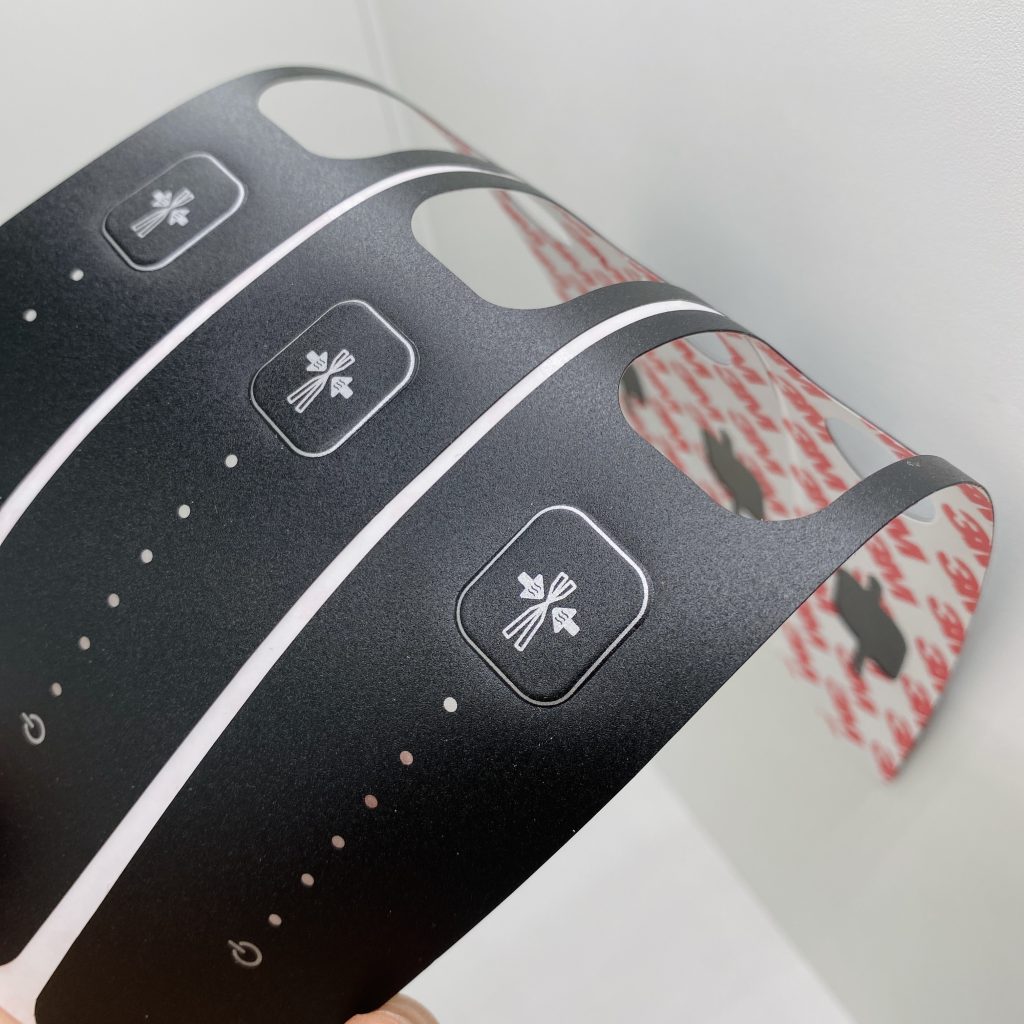
The adhesive layer must achieve Full Wet-Out—meaning it must flow perfectly into the microscopic valleys of the metal or plastic housing, eliminating any microscopic air gaps where water vapor could condense. Standard acrylic adhesives can soften over time, allowing water to slowly creep inward.
To combat this, engineers must specify high-performance pressure-sensitive adhesives (like 3M™ 300LSE or 467MP) formulated specifically for low-surface-energy plastics.
The Edge Geometry Rule: Never design a waterproof overlay with sharp 90-degree corners. Sharp corners create extreme stress concentration points where peeling almost always begins. Utilizing rounded corner radii (minimum R1.5mm) significantly diffuses this stress, preventing the edges from lifting and inviting water attack.
3. The Tactile Dilemma: Venting Air vs. Sealing Water
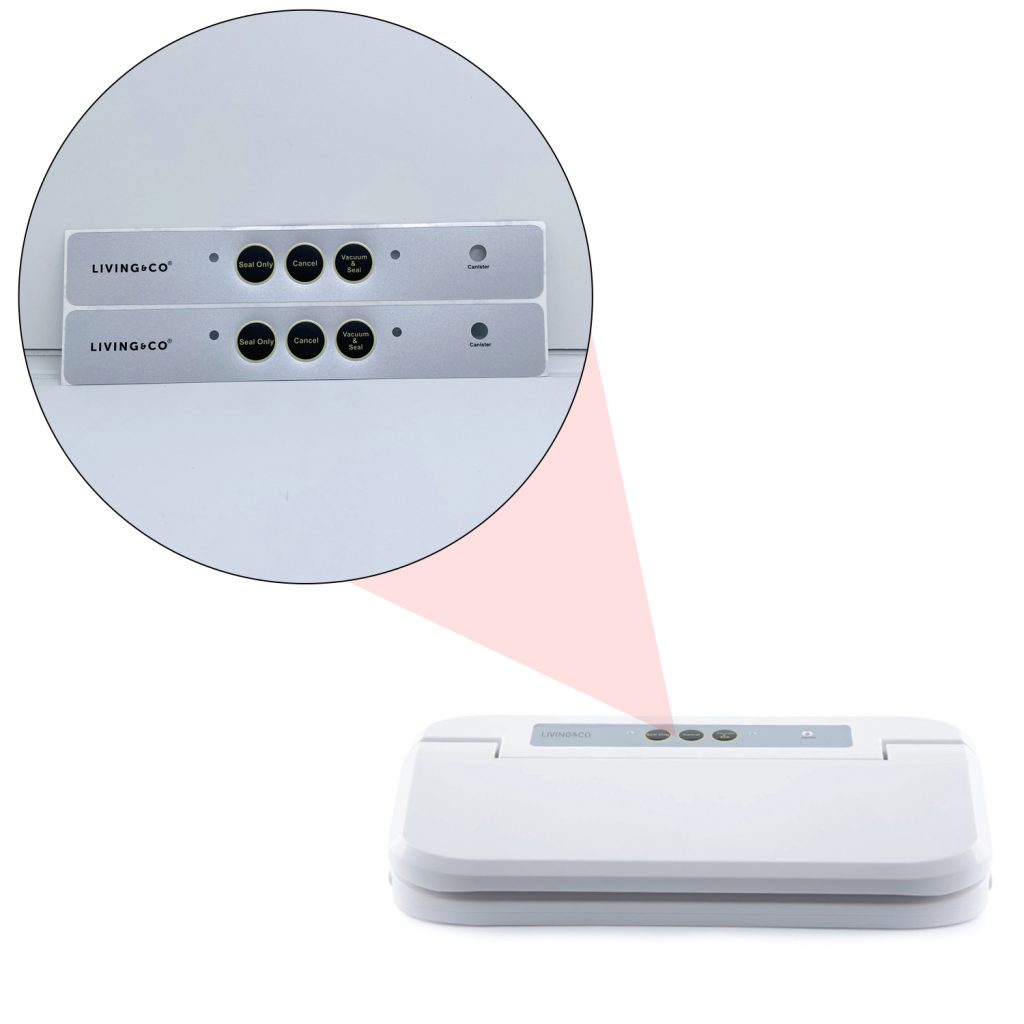
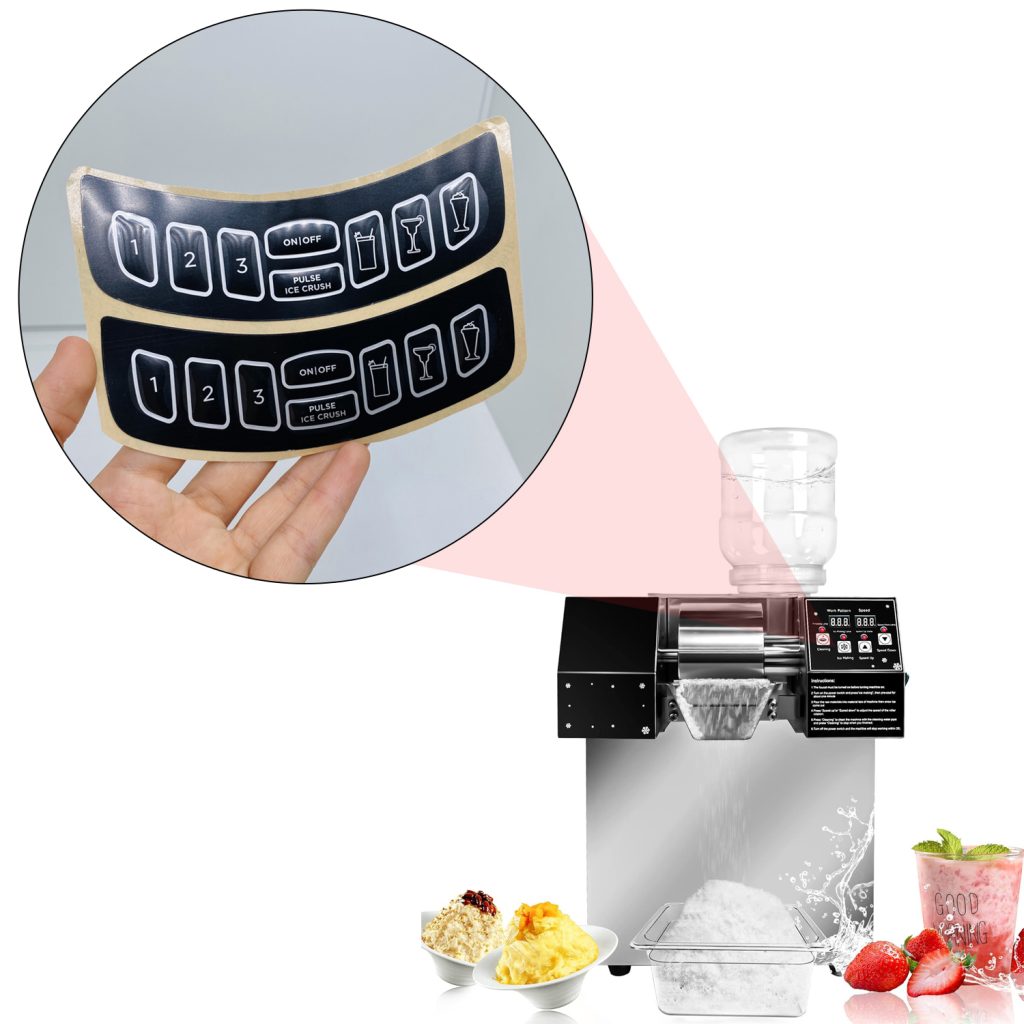
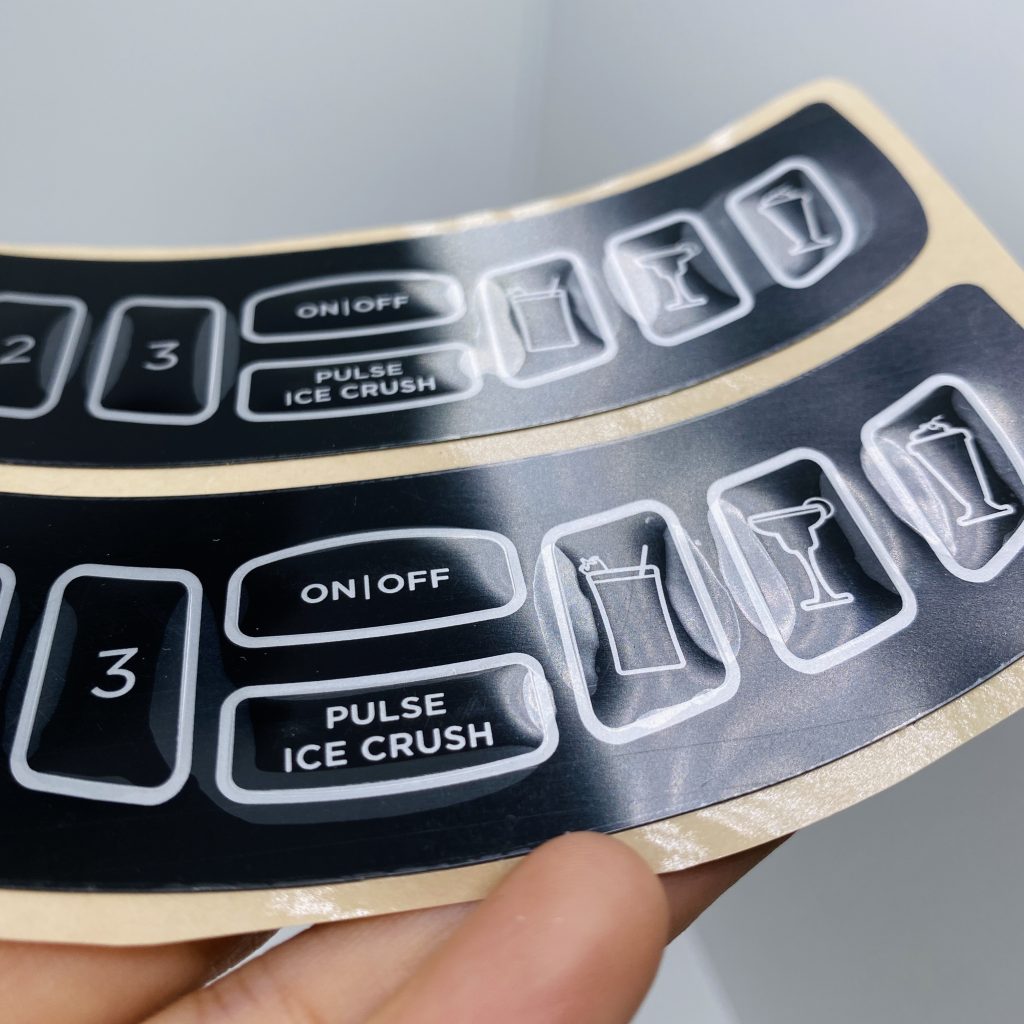
The structural weak points in any waterproof graphic overlay are the cutouts and the tactile buttons.
A tactile switch is essentially a miniature air pump. When a user presses a metal dome, the displaced air needs somewhere to go. If the internal space is completely sealed, the button feels stiff and sluggish. But if you vent the air to the outside, you simultaneously create a pathway for water to enter.
This is solved through Maze Routing (Venting Channels) within the internal spacer adhesive layer. By designing an intricate, closed-loop labyrinth between the keys, the air can be distributed internally across the panel without ever breaking the outer waterproof seal.
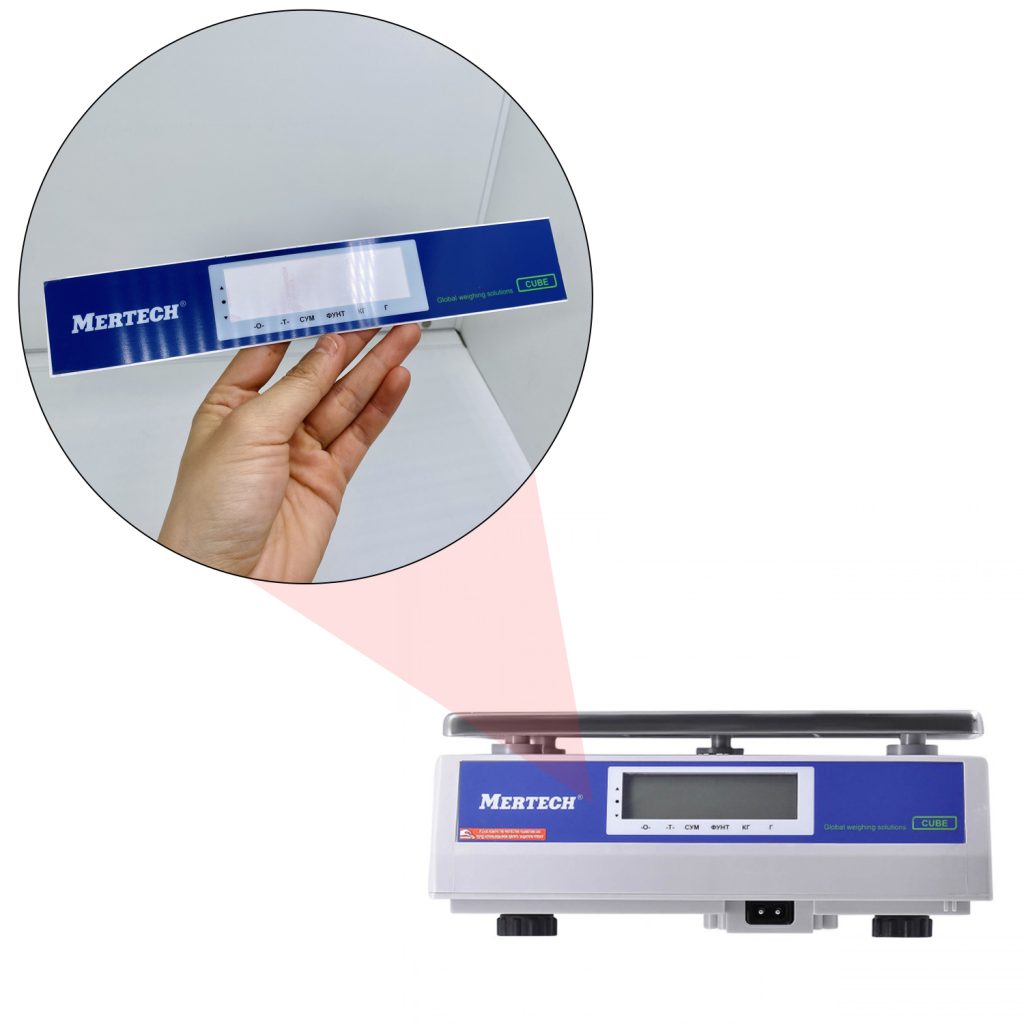
Furthermore, display windows cannot simply be cut out. Effective sealing requires either a recessed pocket in the overlay or the use of Liquid Optically Clear Adhesive (LOCA) to seamlessly bridge the gap between the overlay and the underlying display lens.
4. The Reality of Thermal Shock
Designing on paper is theory; surviving the real world is fact. To legitimately claim a design is waterproof, it must pass rigorous Ingress Protection (IP) standards, such as IP67 (temporary immersion) or IP68 (continuous immersion).
However, many engineers overlook Temperature Shock. If a device running hot under the sun is suddenly submerged in cold water, the rapid cooling creates an internal vacuum. This negative pressure will actively suck water past weak adhesive seals. Addressing this requires integrating specialized venting membranes (like ePTFE) into the housing—a nuance that experienced manufacturers review strictly during the DFM (Design for Manufacturing) stage.
5. Substrate Outgassing and Surface Energy
Even with premium materials, execution errors on the assembly line will ruin the seal.
- Ink Bleed: Using standard screen-printing inks on the underside of a waterproof overlay can react with the adhesive, leading to the dreaded “halo effect” and eventual delamination.
- Housing Outgassing: Plastic device housings (like injection-molded ABS) can release trace gasses over time that slowly lift the overlay adhesive. Pre-treating the housing with plasma or corona treatments ensures the surface energy is high enough to maintain a permanent, watertight molecular bond.
Why Manufacturing Process Control Matters
Translating these complex fluid and mechanical dynamics into a reliable product requires more than a good CAD file; it requires rigorous factory-floor process control.
With over a decade of specialized industry expertise, Xiamen XINBIXI Electronic Technology Co., Ltd. (BX-PANEL) operates a full-scale physical manufacturing facility. We are not a trading company routing your files to the lowest bidder. From maintaining tight tolerances on our die-cutting presses to executing in-house IP testing, our hundreds of skilled workers ensure your overlays are built exactly to spec.
The true value of a waterproof graphic overlay isn’t just in its appearance—it is measured in the warranty claims and catastrophic failures it prevents.
Is your current equipment struggling with moisture ingress? Bring your blueprints to a team that engineers solutions, not just stickers.
- 🌐 Website: www.bx-panel.com
- 📧 Engineering Consultation: [email protected]
- 🏭 Source Manufacturer: Xiamen XINBIXI Electronic Technology Co., Ltd. (BX-PANEL)