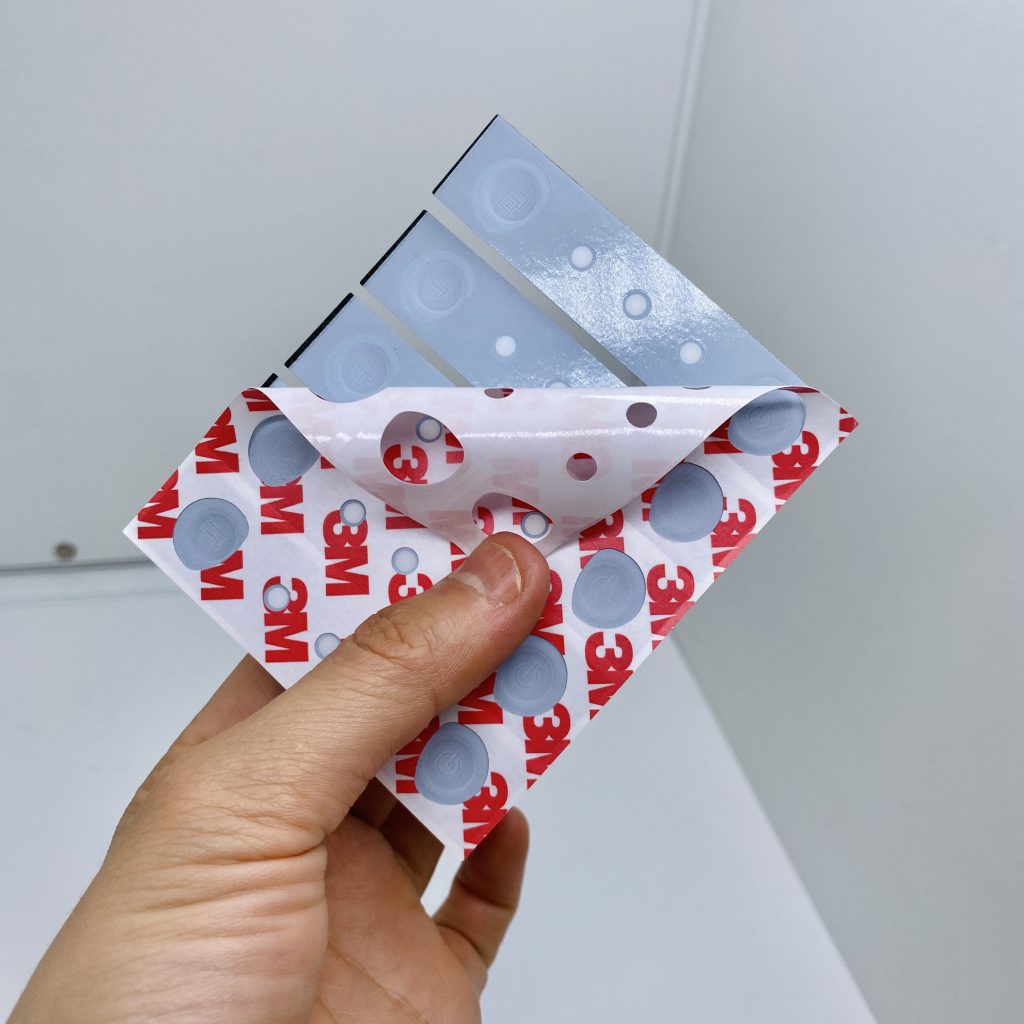



You specified Pantone 186 C on your digital design file. On your computer screen, it looks like a perfect, vibrant red. But when the physical graphic overlay arrives from the factory, the red looks muddy, slightly orange, or completely washed out under your assembly line lighting.
If you are an OEM buyer or product designer, you have likely encountered this frustrating scenario.
Achieving exact color accuracy in custom graphic overlays is not just about pouring the right ink into a printer. It is a complex blend of material science, lighting physics, and printing chemistry. At BX-PANEL (Xiamen XINBIXI Electronic Technology Co., Ltd.), we review hundreds of membrane switch and overlay designs, and color discrepancy is one of the most common issues we help engineering teams solve.
Here is the factory-floor reality of why printed overlays look different from the design file, and the engineering required to fix it.
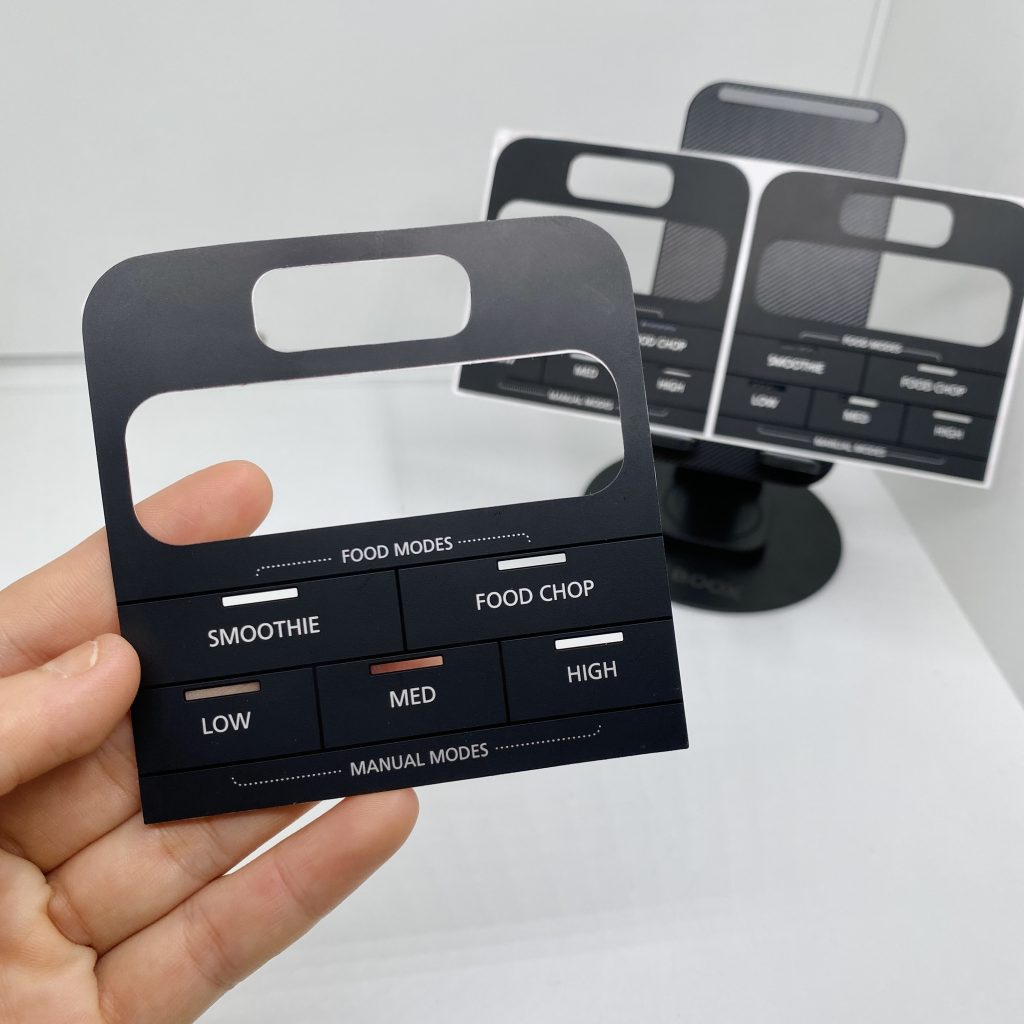
Understanding the Graphic Overlay Stack-Up: It’s Not Paper
The biggest misconception in overlay design is treating the material like paper. Graphic overlays utilize a “sub-surface” printing method.
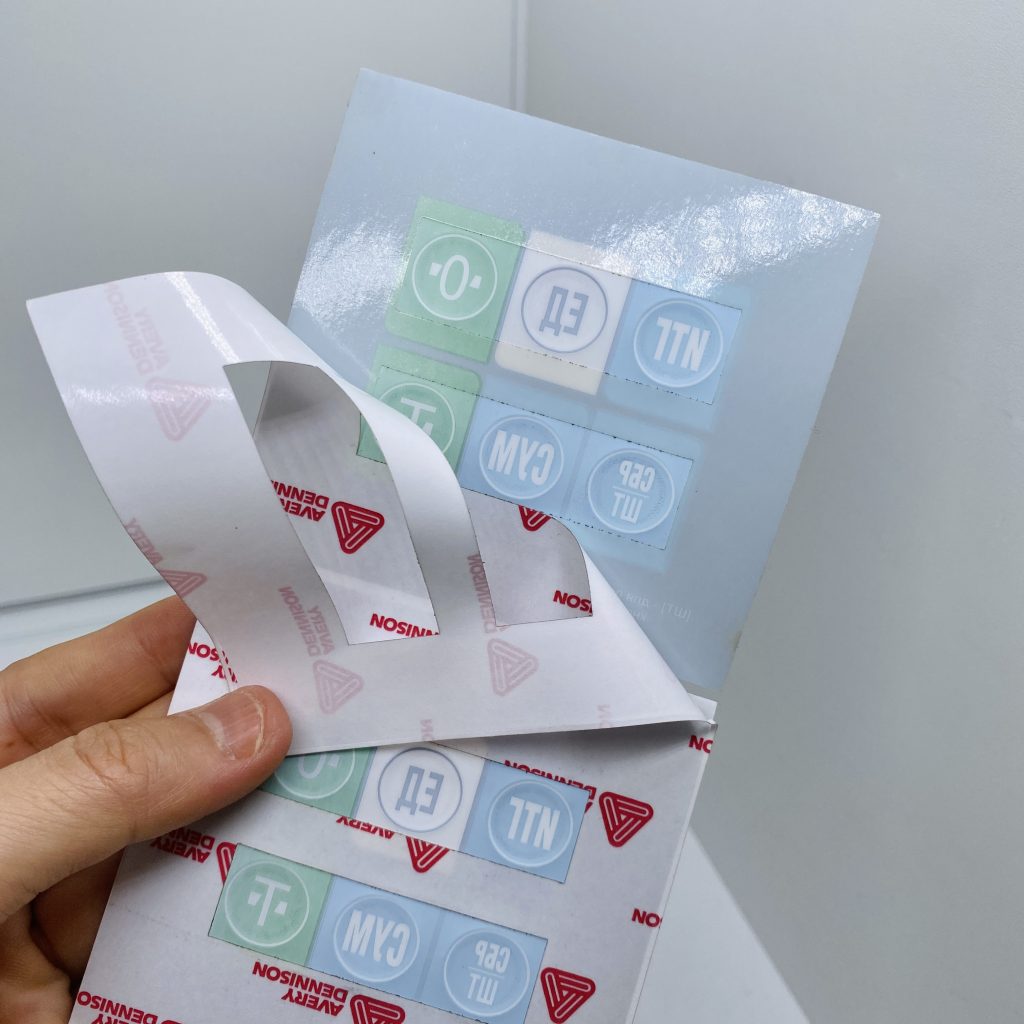
We do not print the ink on top of the plastic. Instead, the ink is printed on the back side of a Polycarbonate (PC) or PET substrate, followed by an opaque background layer and a layer of 3M adhesive. This protects the ink from scratches and chemical wear.
The Key Challenge: You are never looking directly at the ink; you are viewing it through a plastic window. The natural tint and thickness tolerance of a 0.25mm Polycarbonate sheet acts as a subtle filter. This inherent material tint slightly shifts the perceived color value, absorbing certain light frequencies before they ever reach your eye.
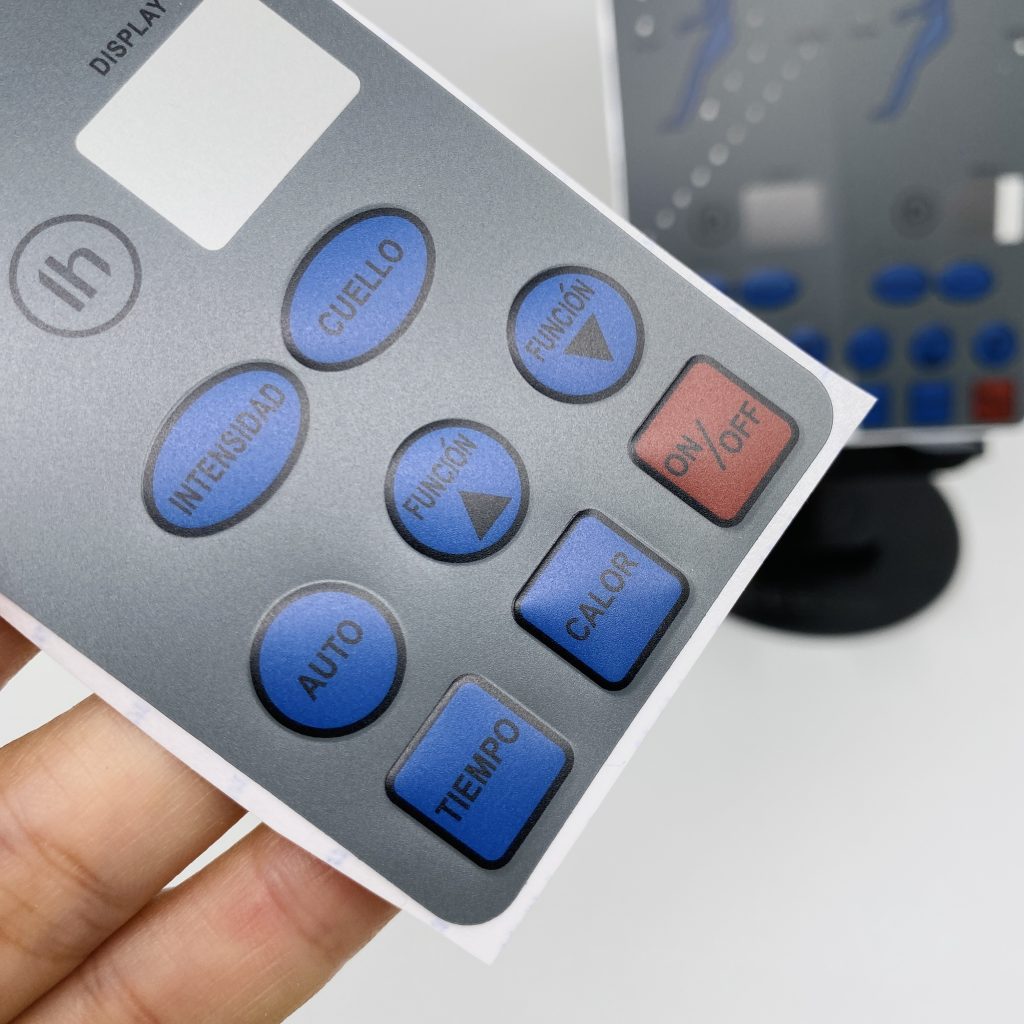
The Three Biggest Enemies of Perfect Color Matching
Even with the highest quality inks, three physical phenomena actively fight against accurate color reproduction.
1. Metamerism: The Lighting Deception
Metamerism is a phenomenon where two colors appear to match perfectly under one lighting condition but look completely different under another. A graphic overlay that perfectly matches your brand standard under the fluorescent lights of our quality control lab might look noticeably different under the warm-white LED lights of your end-user’s facility or under natural sunlight outdoors.
2. Substrate Opacity and Backlighting Windows
Achieving an accurate red printed over a solid, highly opaque white background is standard practice. However, achieving that exact same red on a transparent display window with LED backlighting is a severe physics problem. When an overlay requires a translucent or “deadfront” backlit window, the light transmitting through the ink drastically alters its saturation and hue, making color consistency for backlit membrane switch overlays a highly specialized skill.
3. Ink Adhesion vs. Pigment Load
Industrial graphic overlays must survive harsh environments. They require intense chemical resistance and robust adhesion. To achieve this, specific curing agents, hardeners, and adhesion promoters are mixed into the ink. While these additives ensure the overlay survives industrial cleaning solvents, they can slightly dilute the vibrancy of the pigment, making strict RAL to Pantone conversions incredibly challenging.
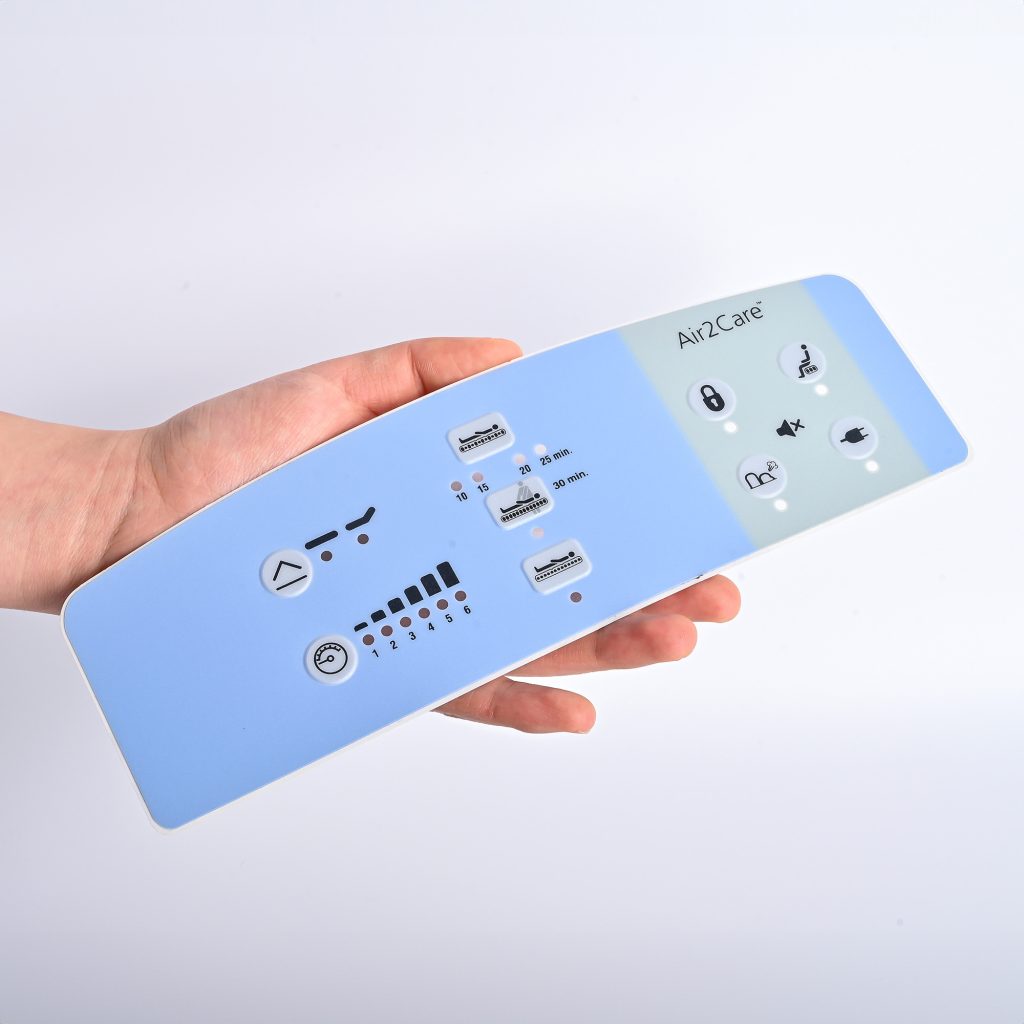
BX-PANEL’s Solution: Engineering Color, Not Just Printing It
At BX-PANEL, we don’t rely on the “eyeball test.” We approach color matching as an exact science to ensure your brand identity remains intact across every production batch.
- Advanced Spectrophotometry & Batch Control: We utilize highly calibrated spectrophotometers to measure color mathematically. By managing the Delta E (ΔE) color tolerance down to the smallest acceptable decimal, we guarantee consistency from prototype to mass production.
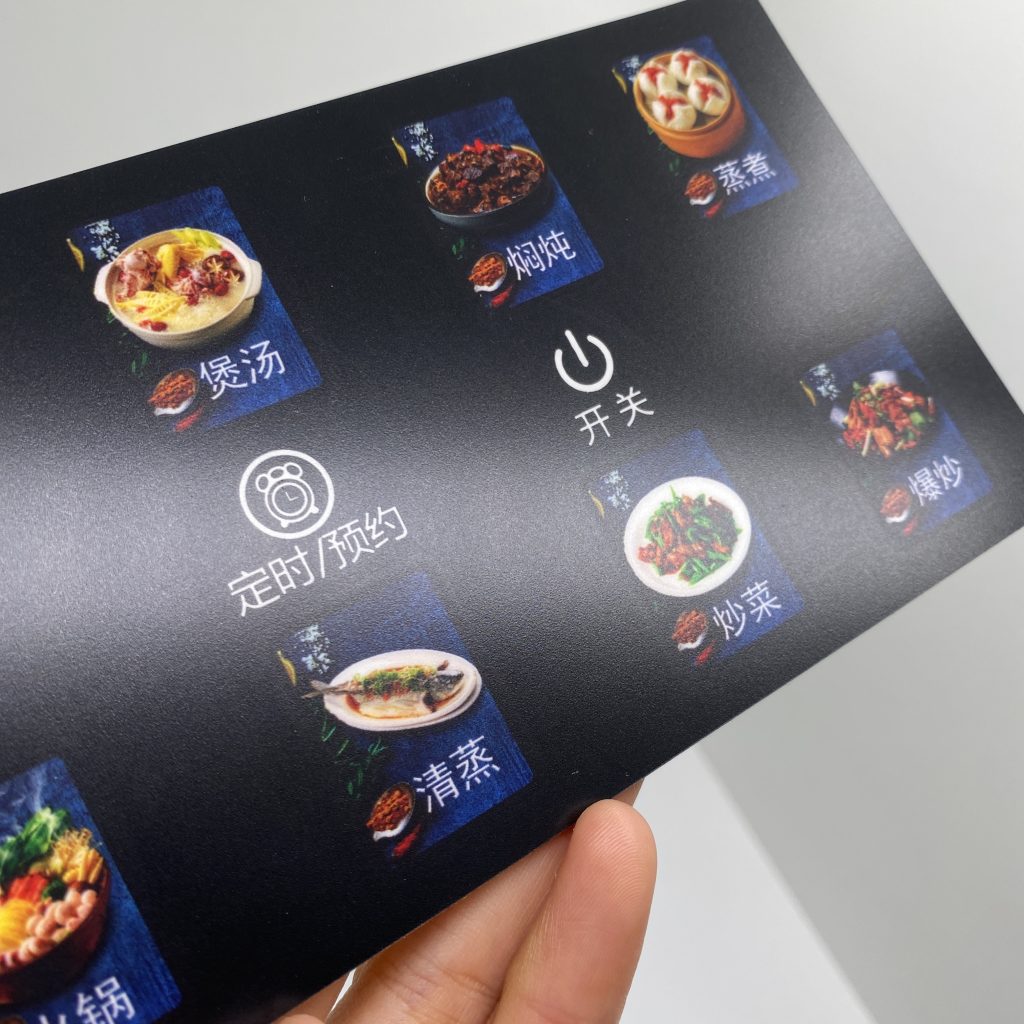
- The Material Library Advantage: As a professional graphic overlay manufacturer with an in-house color lab, we don’t just mix ink; we maintain a massive data library of how specific Pantone formulas behave across different substrates. We know exactly how Pantone 186 C will shift when printed on Velvet Polycarbonate versus Glossy Autoflex PET, and we adjust the base formula before printing to compensate for that shift.
- Digital First Article & Physical Swatches: We eliminate the guesswork by providing low-volume physical color proofs. You approve the actual ink, on the actual substrate, before we ever initiate mass screen printing production.
Best Practices for Designers: How to Request Accurate Overlay Colors
To ensure your manufacturer hits your exact color target on the first try, follow these engineering best practices when submitting your design files:
- Specify Pantone Solid Coated: Never use CMYK or RGB values for spot colors on industrial overlays unless you are willing to accept wider color variations. Always use the Pantone Solid Coated (C) system.
- Provide a Physical Target Sample: If you are trying to match a painted metal chassis or an existing plastic injection-molded part, ship us a physical chip. Ink on plastic will never perfectly match powder-coated metal, but a physical sample gives our lab the exact target to aim for.
- Define the Lighting Condition: Tell us where the product will be used. Do you need the color matched under standard Daylight (D65) or fluorescent store lighting (TL84)?
- Allow for Tolerances on Tinted Windows: Understand that transparent LED windows will always have a slightly different color profile than solid-printed areas.
Secure Your Brand’s Visual Identity
While perfect color matching in custom graphic overlays is a challenge governed by the laws of physics, it is a completely solvable engineering problem when you partner with the right manufacturer.
At BX-PANEL, we don’t just send you a drawing; we send you a color-matched proof engineered for your real-world lighting and environmental conditions.
Struggling with a tricky Pantone match or a backlit display window? Trust the technical manufacturing experts at Xiamen XINBIXI Electronic Technology Co., Ltd. (BX-PANEL).
📧Request a Color Consultation & Sample Swatch: [email protected]
🌐 View Our Capabilities: www.bx-panel.com