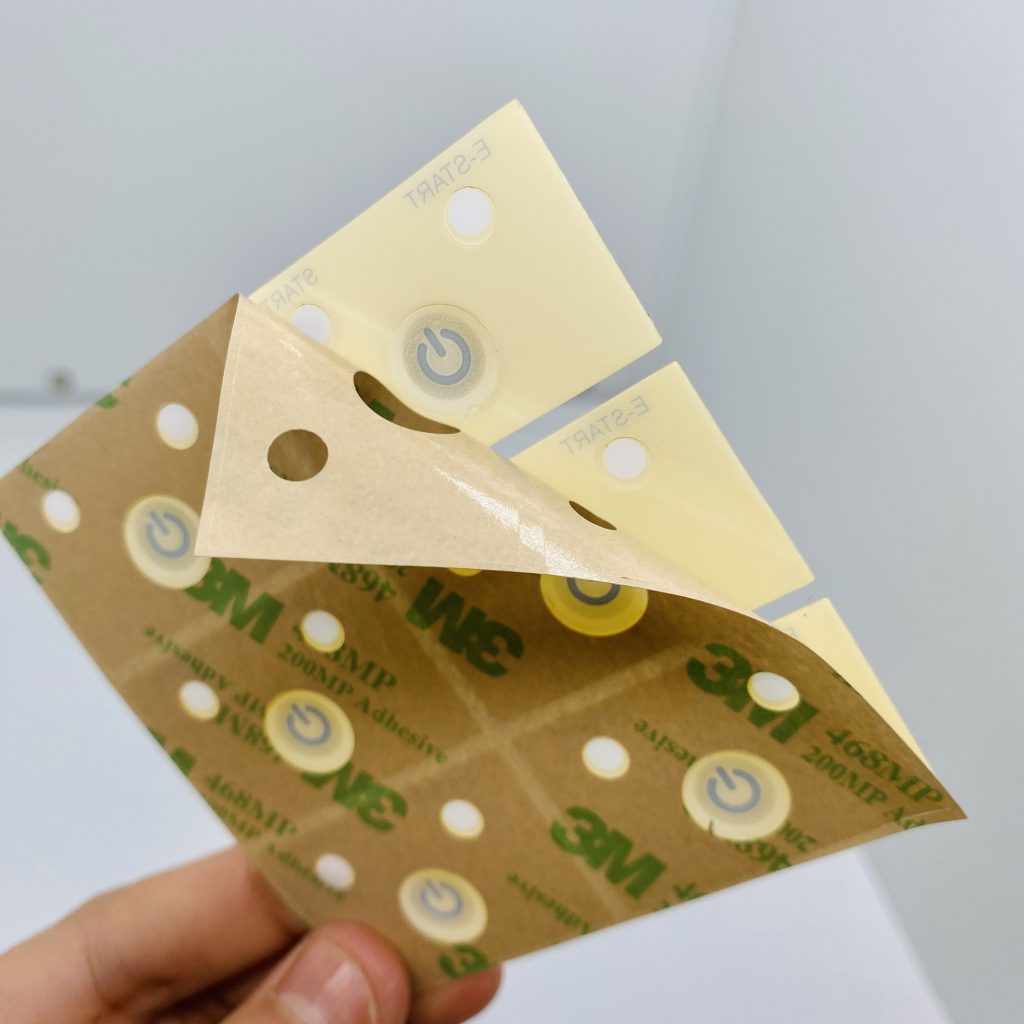



When reviewing technical drawings for custom control panels, the surface finish is rarely just an aesthetic choice—it dictates how the product survives in the real world. For OEM engineers, choosing between a matte, gloss, or textured finish for a graphic overlay determines fingerprint resistance, glare reduction, and long-term mechanical durability.
If you specify the wrong material on your Bill of Materials (BOM), you risk premature field failures or poor user experience. Here is a factory-floor breakdown of these three distinct finishes to help you lock in the right manufacturing specs for your next project.
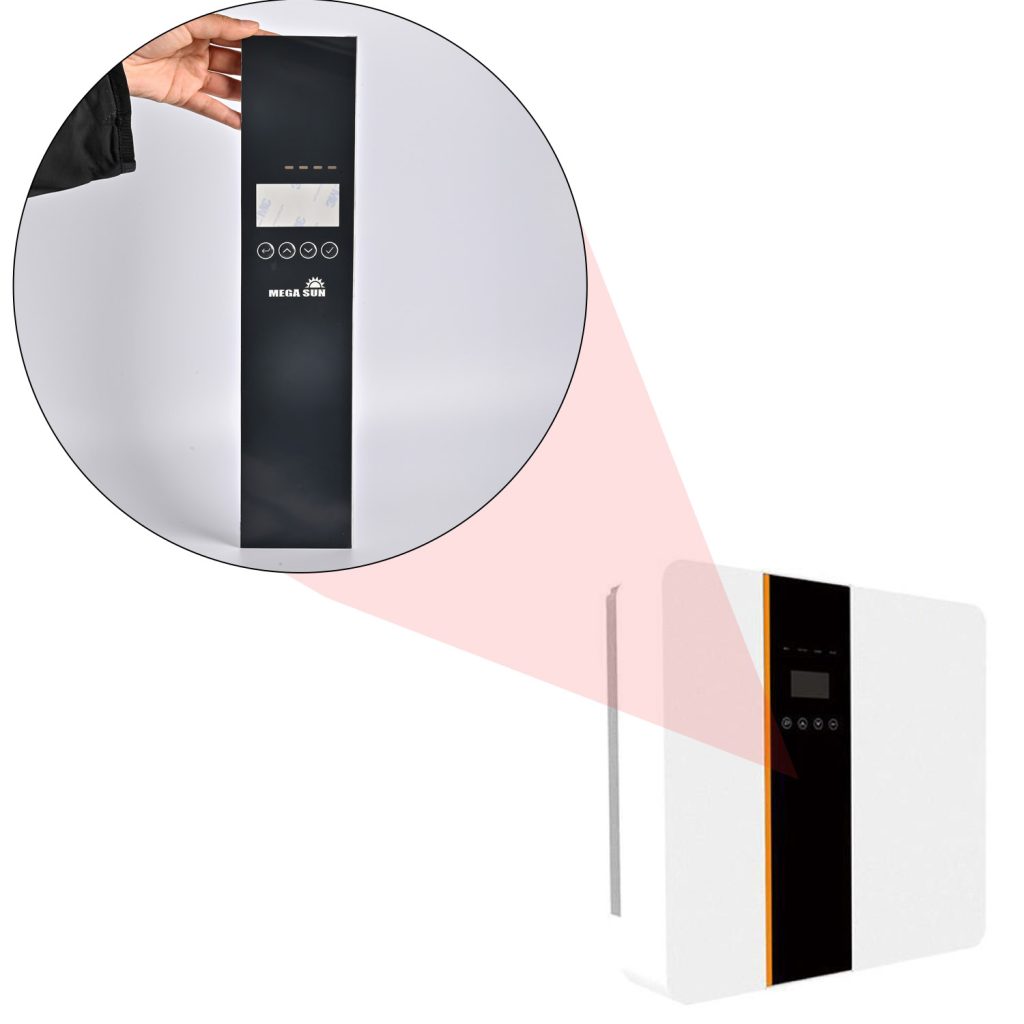
1. Matte Finish: The Anti-Glare Standard
What is a Matte Finish?
A matte finish scatters light, effectively eliminating harsh reflections and glare. In the membrane switch industry, this is typically achieved using specialized matte-coated PET or Polycarbonate films.
Factory-Level Pros and Cons
- The Advantage (Anti-Glare & Fingerprint Resistance): A matte surface is incredibly effective at hiding oily fingerprints. This is essential for medical devices or industrial equipment where overhead lighting can cause glaring reflections, rendering control panels unreadable. It also provides a sleek, understated, and highly professional aesthetic.
- The Trade-Off (Clarity Reduction): Because a matte finish scatters light, placing it directly over a high-resolution LCD display window will cause the screen to look slightly hazy or frosted.
2. Gloss Finish: The Optical Champion
What is a Gloss Finish?
A gloss finish is highly polished and glass-like. Because the surface is microscopically smooth, it offers maximum light transmission and absolute optical clarity, allowing light waves to pass through without distortion.
Factory-Level Pros and Cons
- The Advantage (Maximum Clarity & Vibrancy): Gloss is the absolute standard for transparent LED or LCD display windows on equipment interfaces. It ensures zero visual distortion and delivers the sharpest, deepest color saturation for sub-surface printed graphics.
- The Trade-Off (Vulnerable to Wear): Glossy surfaces are fingerprint magnets and highly susceptible to micro-scratches. Without a specialized UV hard-coat applied during manufacturing, a raw glossy Polycarbonate overlay will quickly show wear and tear from daily wiping and handling.

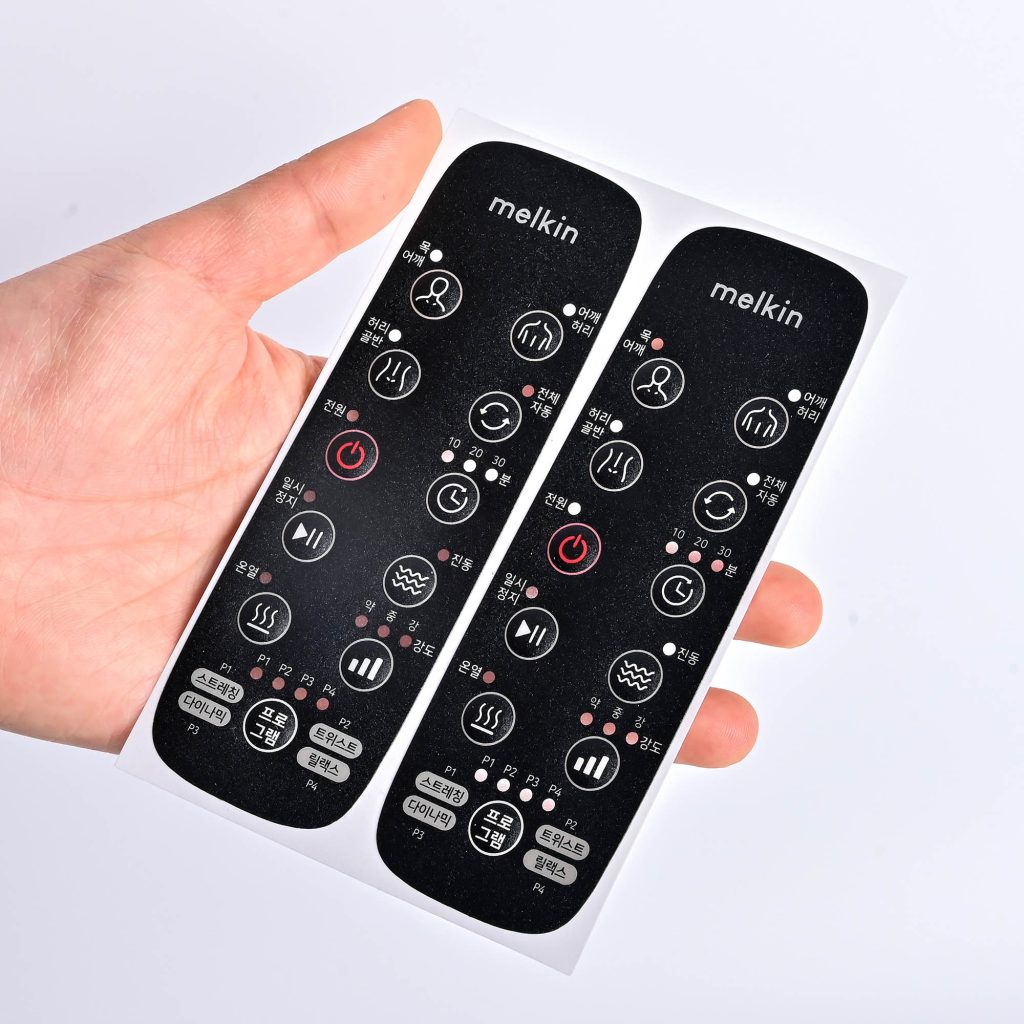
3. Textured Finish: Heavy-Duty Durability
What is a Textured Finish?
Textured finishes—often referred to as velvet or sand finishes in the overlay industry—feature a deliberate micro-grain surface. This is usually an inherent property of the raw film material (such as Autotex PET) or achieved via specialized screen-printable texture varnishes.
Factory-Level Pros and Cons
- The Advantage (Extreme Durability & Tactile Feedback): Texture is the ultimate defense against scratches. It brilliantly disguises daily wear and tear in heavy-duty environments like CNC machine shops or outdoor kiosks. Furthermore, it provides an excellent tactile feel for membrane switch keypads, ensuring slip-free operation even when users are wearing heavy work gloves.
- The Trade-Off (Cleaning Difficulty): If the texture grain specified is too coarse, the micro-crevices can trap dirt, dust, and industrial oils, making the panel slightly harder to sanitize than a perfectly flat surface.
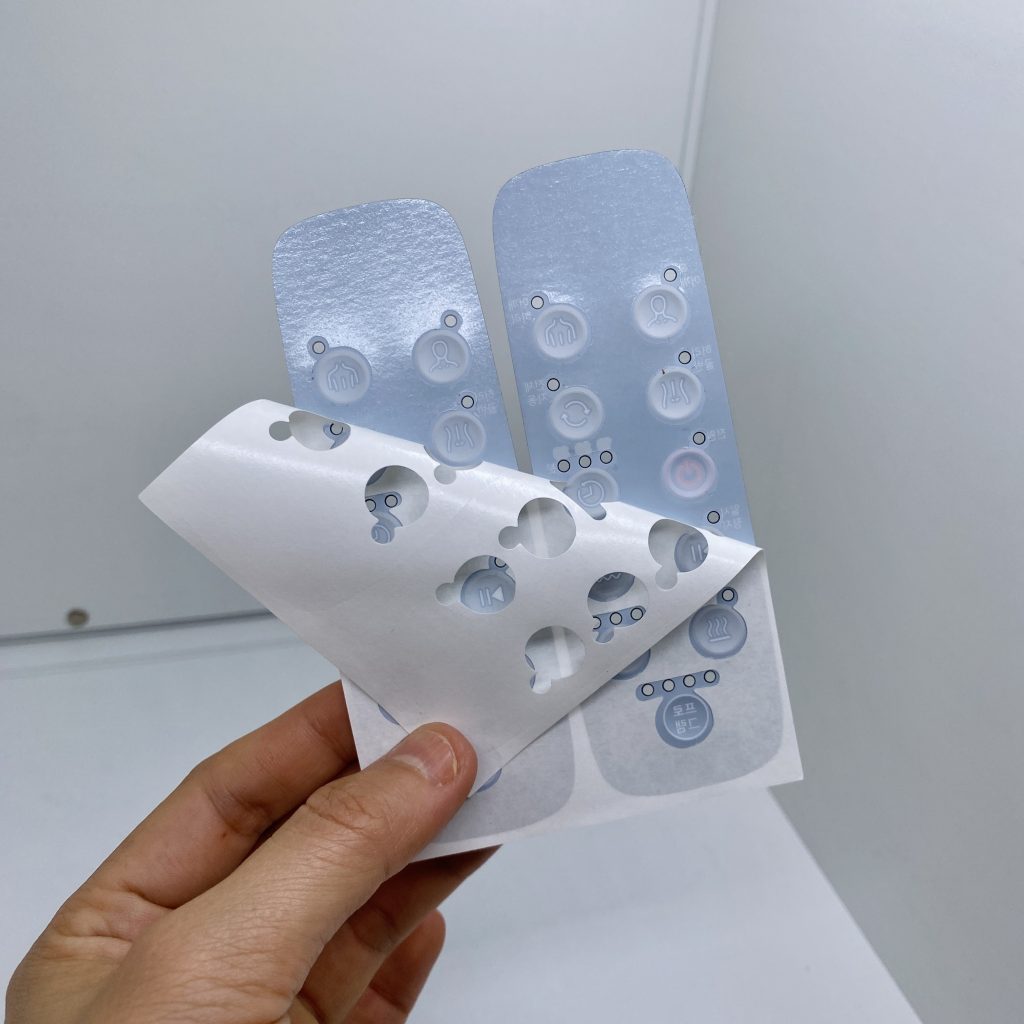
4. The Hybrid Approach: Selective Texturing
The choice of finish depends strictly on your application environment. However, modern manufacturing capabilities mean you do not always have to compromise.
Many high-end control panels utilize Selective Texturing. In this process, the manufacturer applies a rugged, textured finish across the main background of the overlay for maximum durability, while leaving specific transparent windows completely glossy for LCD displays. This hybrid approach gives you the best of both worlds on a single, seamless interface.
5. Manufacturing Precision at BX-PANEL
At Xiamen XINBIXI Electronic Technology Co., Ltd. (BX-PANEL), we don’t just print your designs; we engineer them to survive the real world.
With nearly a decade of OEM experience and a dedicated facility of hundreds of skilled workers, our engineering team strictly reviews your BOM to ensure the surface finish perfectly matches your product’s operational environment.
Whether your blueprints call for complex selective texturing, UV hard-coated gloss windows, or anti-glare matte finishes, our cleanroom facilities deliver precise, repeatable results for every single production batch. Bring us your toughest material requirements and strict dimensional tolerances—we are ready to build it.
Ready to optimize your next graphic overlay project?
📧 Email us for a blueprint review: [email protected]
🌐 Explore our manufacturing capabilities: www.bx-panel.com