



Walk the floor of an elevator machine room, an offshore platform control room, or a medical device assembly facility, and you will find metal nameplates. Not because someone specified them as a premium option — because the regulatory framework left no room for anything else.
Five industries have effectively removed material selection from the nameplate decision. What follows is why each one got there.
1. Elevator and Vertical Transportation Equipment
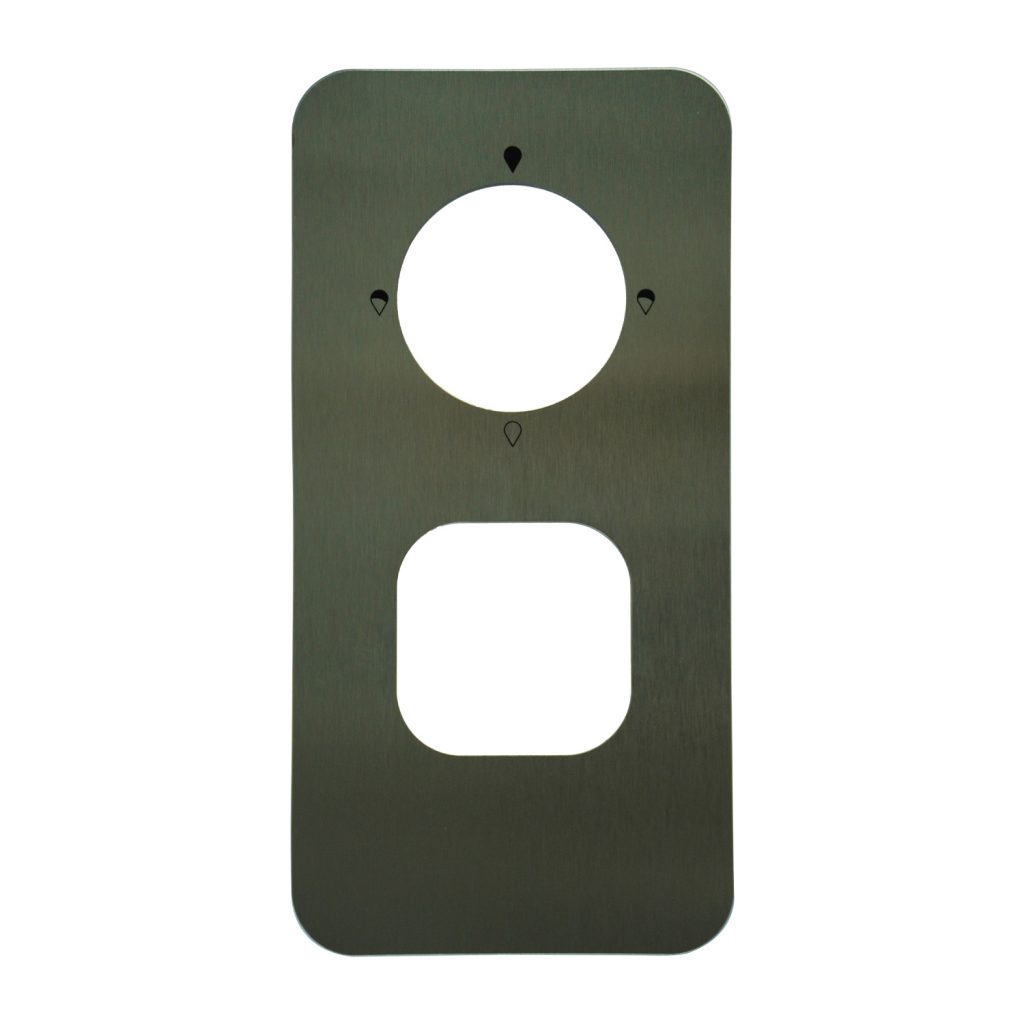
ASME A17.1 — the North American Safety Code for Elevators and Escalators — requires specific compliance plates inside elevator machine rooms and car enclosures. These plates carry AHJ registration numbers, installation dates, alteration records, load ratings, and emergency contact information. Jurisdictional inspectors check them during annual safety audits. A plate that is missing, damaged, or no longer legible is a compliance failure that can pull the elevator from service until the deficiency is corrected.
Commercial elevator installations run twenty to thirty years. Machine rooms run hot, accumulate oil vapor, vibrate continuously, and get cleaned on maintenance schedules. The write-on zones where technicians record inspection dates and service data need to accept handwriting and hold it legibly for the life of the installation. Anodized aluminum with screen-printed text and brushed silver fill zones is the standard format across North American elevator compliance plates — not because it is the cheapest option, but because it is the one that survives the environment and satisfies the audit.
In Europe, EN 81 series standards cover the same ground under different terminology. Elevator OEMs and service contractors supplying both markets need nameplate production capable of meeting both frameworks from the same supplier.
2. Industrial Electrical Equipment
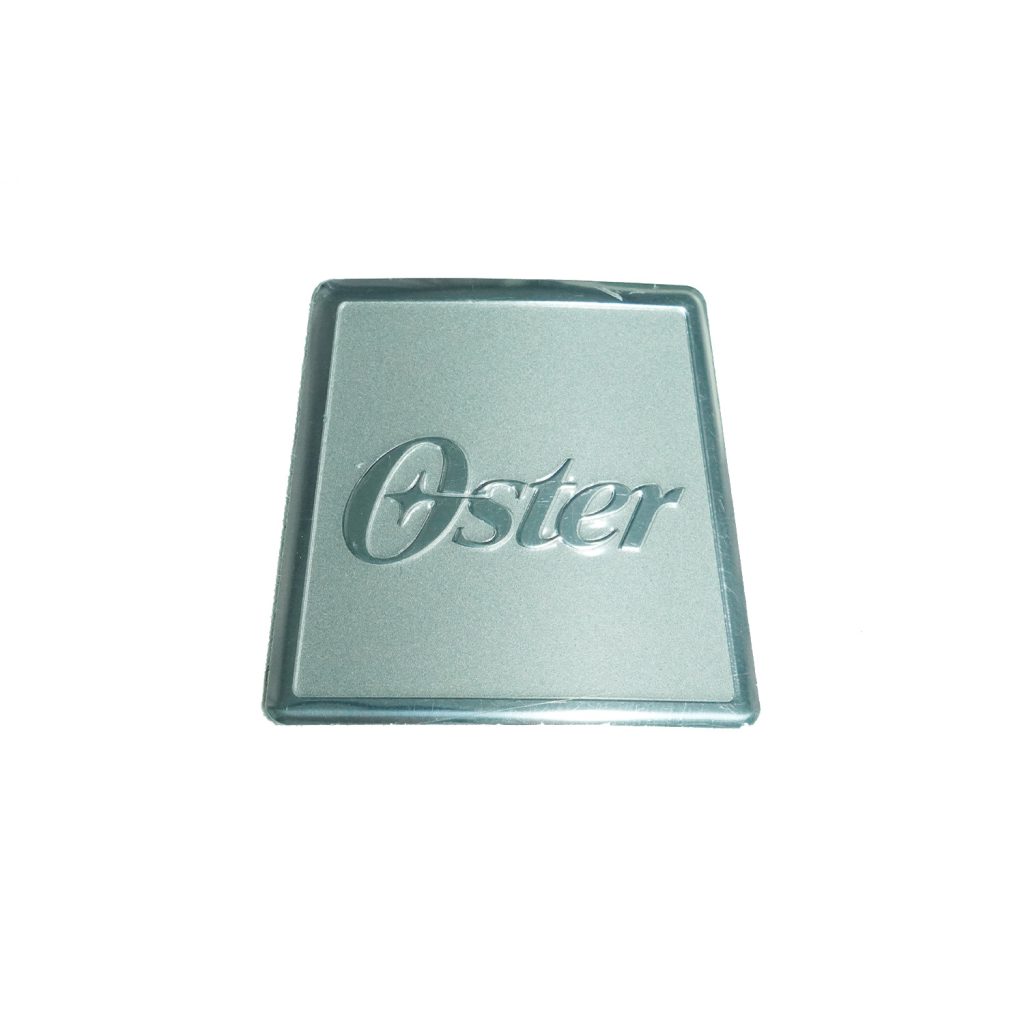
A UL listing, a CE mark, or an equivalent certification requires that specific information appear permanently on the product: voltage and current ratings, frequency, power, IP protection class, certifying body mark, model number, serial number. These marks must remain legible for the service life of the equipment — which, for industrial electrical gear, is typically ten to twenty years in a real operating environment.
A motor drive in an automotive assembly plant runs two shifts. It gets cleaned with solvent-based degreasers on a maintenance schedule. The surface temperature of the housing cycles with every production run. The technician who troubleshoots it fifteen years after installation needs to read the nameplate to identify the unit and pull the correct service documentation. A label that has faded, lifted at a corner, or lost text to abrasion is a compliance failure and a service problem simultaneously.
Laser-engraved anodized aluminum handles most electrical equipment nameplate requirements within standard industrial environments. Equipment going into food processing, chemical plants, or outdoor coastal installations gets stainless steel — the environment determines the grade.
3. Medical Devices and Healthcare Equipment
The environmental demands on a medical device nameplate are sometimes lower than on industrial equipment. A diagnostic imaging system in a hospital radiology suite is not being pressure-washed with caustic chemistry. But the traceability requirements are more stringent than in most other sectors, and the consequences of identification failure are different in kind.
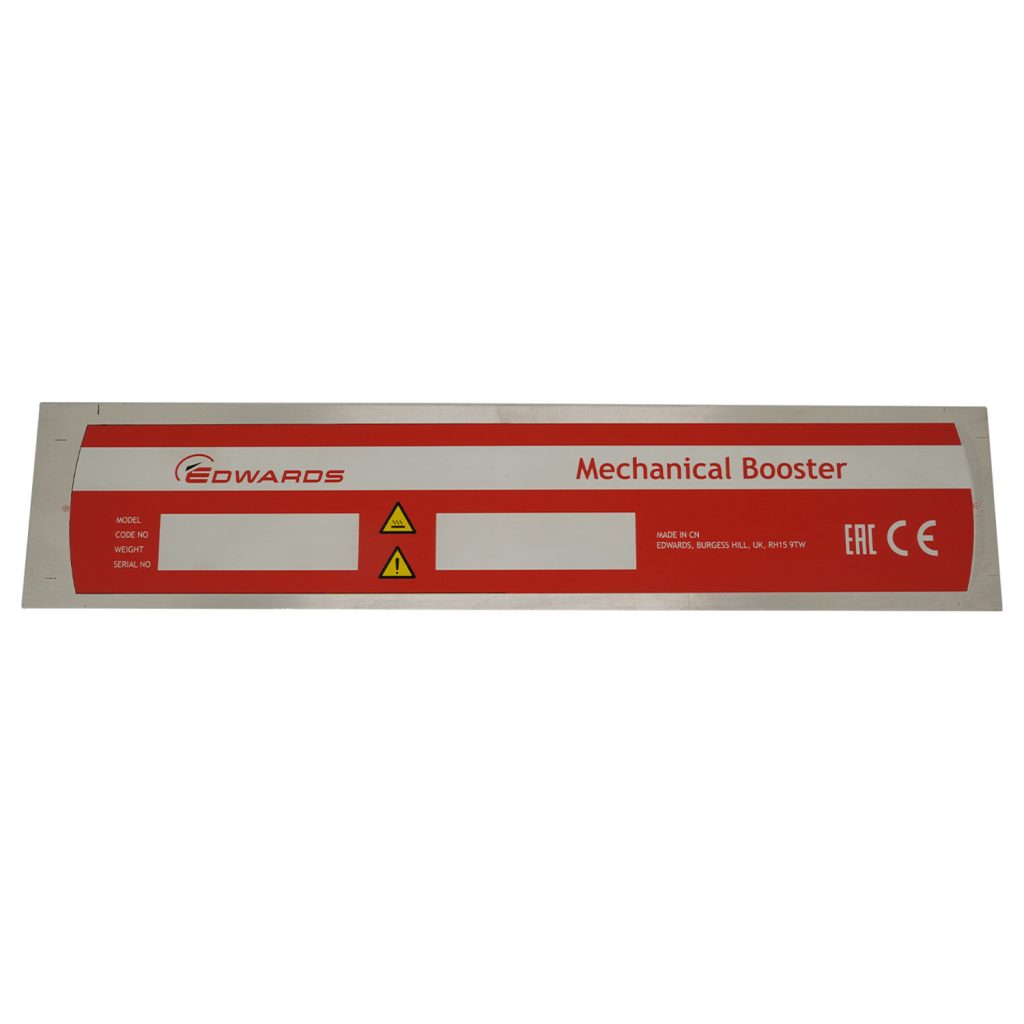
FDA 21 CFR Part 801 and EU MDR 2017/745 both require permanent device identification: manufacturer name and address, model and serial number, applicable regulatory marks. UDI requirements for Class II and Class III devices add specific formatting and encoding requirements for the identification data. The nameplate has to carry this information in a format that survives the full service life of the device — including repeated disinfection, autoclaving in some cases, and handling across multiple service intervals by multiple technicians.
Material traceability requirements push the supply chain toward manufacturers with documented quality management. The film lot number and the anodization specification used to produce the nameplate need to be on file and producible when a regulatory audit asks for them. This is not optional for medical device OEMs — it is part of their own compliance documentation.
Anodized aluminum with laser engraving is standard. The precision aesthetic fits the visual requirements of medical equipment, where surface finish is part of how clinical staff and patients read product quality.
4. Oil, Gas, and Industrial Process Equipment
Petrochemical plants, offshore platforms, and process facilities run conditions that destroy most identification materials within months: hydrocarbon exposure, H2S atmospheres, high-pressure steam cleaning, UV loading, and temperature swings from sub-zero to several hundred degrees Celsius depending on the process stream and ambient conditions.
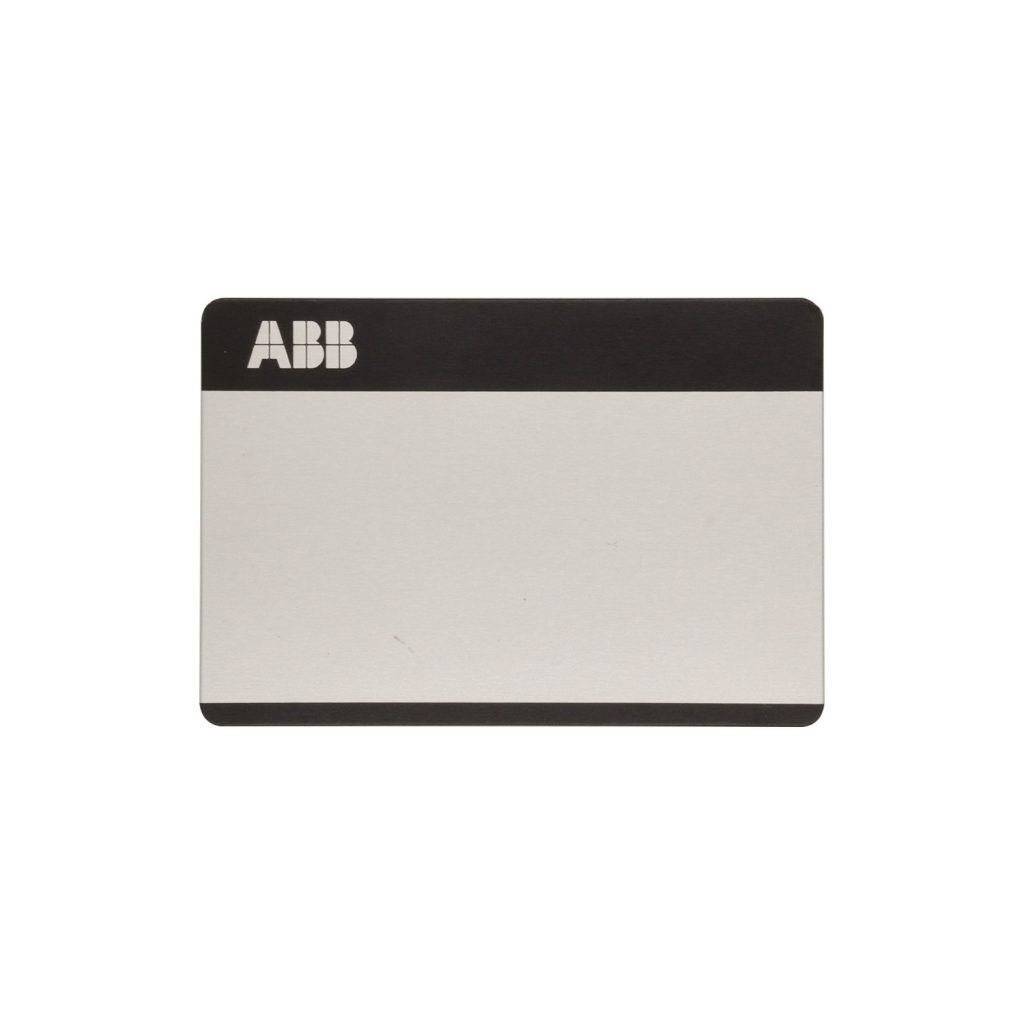
ATEX certification in Europe and NEC Class/Division ratings in North America require that nameplates on explosion-proof and intrinsically safe equipment carry specific hazardous area classification markings. These marks have to be legible after the equipment has been exposed to the environment it was certified for — which is a higher bar than most industrial applications.
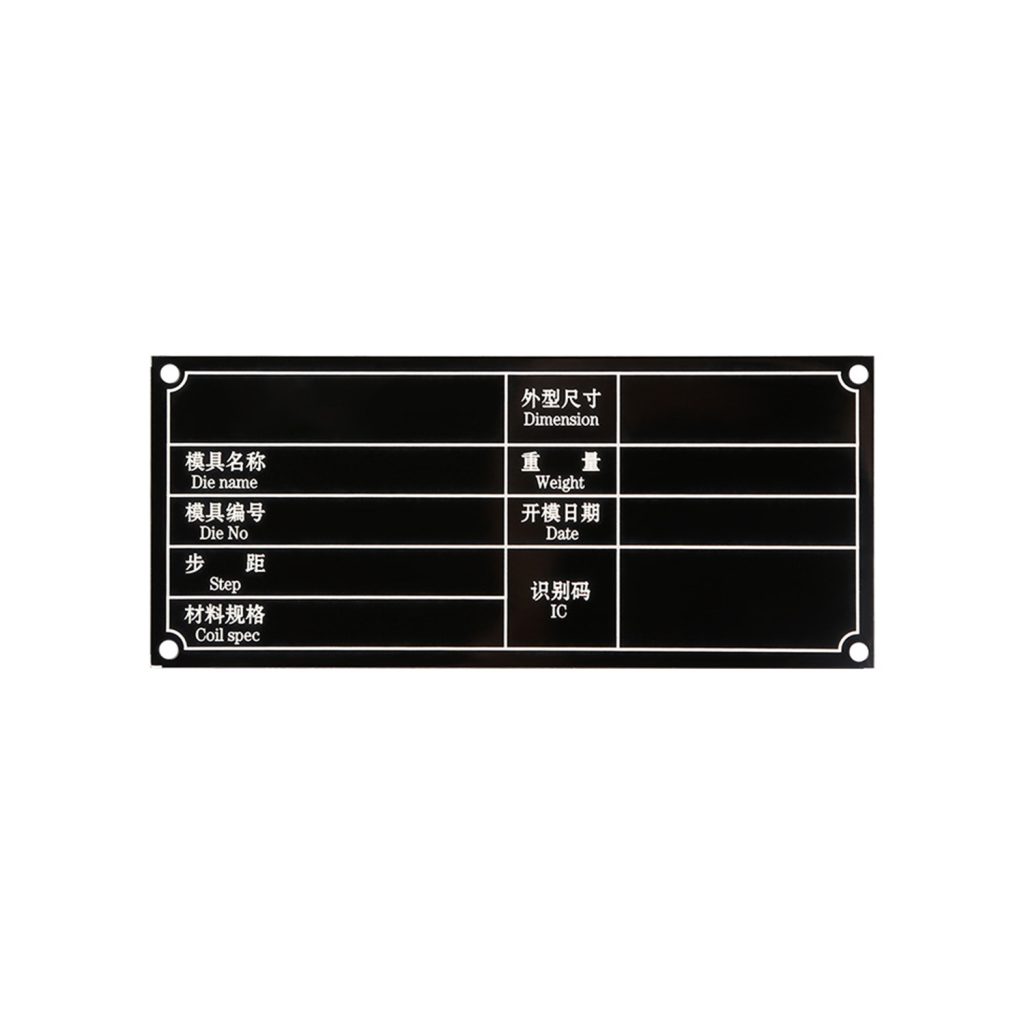
316 stainless steel is the working standard for oil and gas nameplate applications. The molybdenum content closes the chloride corrosion gap that limits 304 stainless in marine and offshore environments. Chemical etching or laser engraving on 316 produces marks integral to the substrate — there is no surface layer to attack, no adhesive to undercut, nothing the process chemistry can remove without visibly damaging the plate itself.
For subsea and extreme chemical applications, titanium or Hastelloy alloys come into the picture. These are a small fraction of total nameplate volume, but they require a manufacturing partner with material handling capability outside the standard aluminum and stainless range.
5. Aerospace and Defense Equipment
MIL-DTL-18717 governs equipment identification plates for aerospace and defense applications — material specification, marking method, dimensional tolerances, and environmental resistance requirements defined in more detail than most commercial industries see in their entire product development process.
Commercial aircraft airframes have service lives measured in decades. Every flight cycles the airframe between ground conditions and high-altitude temperature and pressure. Vibration is continuous. Aviation-specific cleaning solvents contact every accessible surface on a maintenance schedule. Identification marks that were applied at manufacture need to be readable at the aircraft’s twentieth year of service.
Stainless steel and MIL-spec aluminum alloys are standard materials. Marking methods must survive salt spray testing per ASTM B117, humidity cycling, and chemical resistance testing to the applicable standard. Electrochemical etching and laser engraving on stainless are the accepted methods for primary identification — painted or printed marks are not.
Defense ground equipment extends the requirements further: wider temperature ranges, ballistic environments, and field service conditions that are hard to specify in advance. MIL-SPEC compliance requires material traceability documentation and production quality records that parallel what is required for other defense components — not just a nameplate that passes the visual check at incoming inspection.
A Common Thread
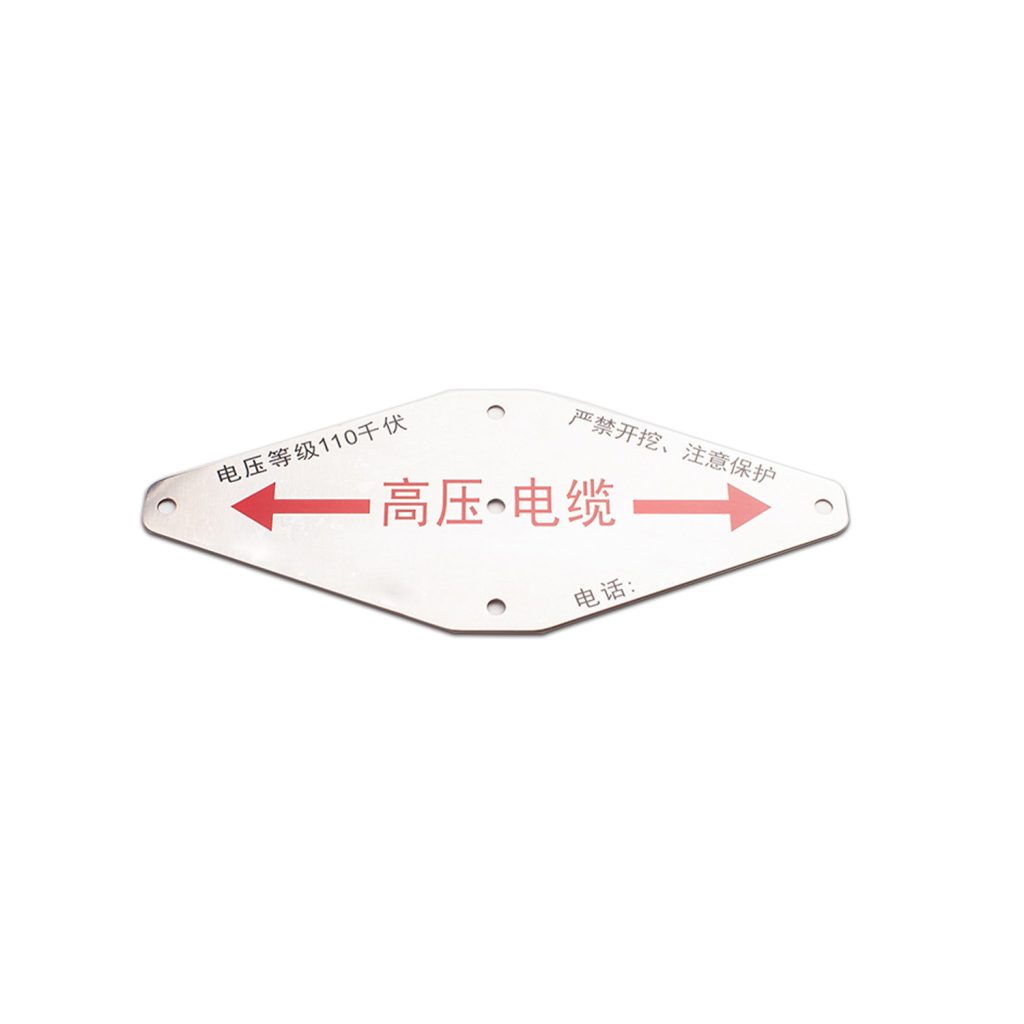
These five sectors arrived at metal nameplates through different regulatory paths, but the underlying logic is the same in each case: the equipment has a long service life, the operating environment is demanding, the identification mark is load-bearing in a regulatory sense, and failure of that mark has consequences beyond the nameplate itself.
In our experience at BX-PANEL, customers from these sectors come to us with different incoming documentation than general industrial buyers. Drawings carry GD&T callouts. RFQs specify anodization class and surface hardness. Production approval requires FAI documentation before volume orders release. These are not unusual requests — they are standard practice for anyone supplying into regulated end markets.
Our Xiamen facility has handled these programs for over 10 years. DFM review runs on every new part. Incoming material is inspected and logged by lot number. FAI records are produced on every production order as a standard deliverable, not a special request. The production process that built the sample is the same one that runs the volume order.
Contact BX-PANEL
BX-PANEL manufactures custom metal nameplates in anodized aluminum, stainless steel, brass, and zinc alloy for industrial, medical, elevator, electrical, and defense applications. All processes run in-house at our Xiamen facility.
- Email: [email protected]
- Website: www.bx-panel.com
- Capabilities: Custom metal nameplate manufacturing, elevator compliance plates, medical device nameplates, ATEX-rated equipment nameplates, MIL-SPEC nameplate production, laser engraving, chemical etching, OEM nameplate supply