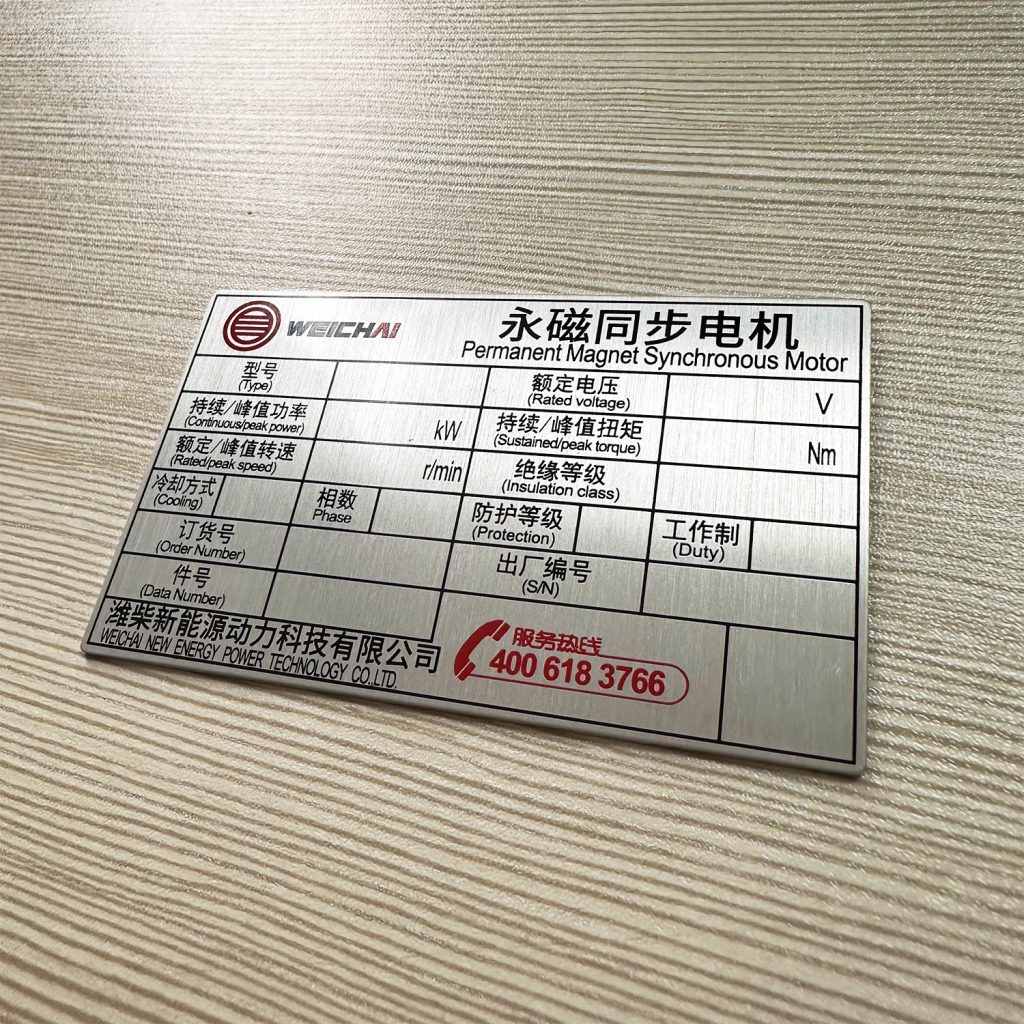



Walk through any industrial RFQ and you will find anodized aluminum nameplates in the material callout. Engineers specify them, buyers repeat them, and drawings carry them forward from one product generation to the next. It is the right specification for most tracking and branding applications — but the reasons why are worth knowing, because they determine what you actually get in service and what you don’t.
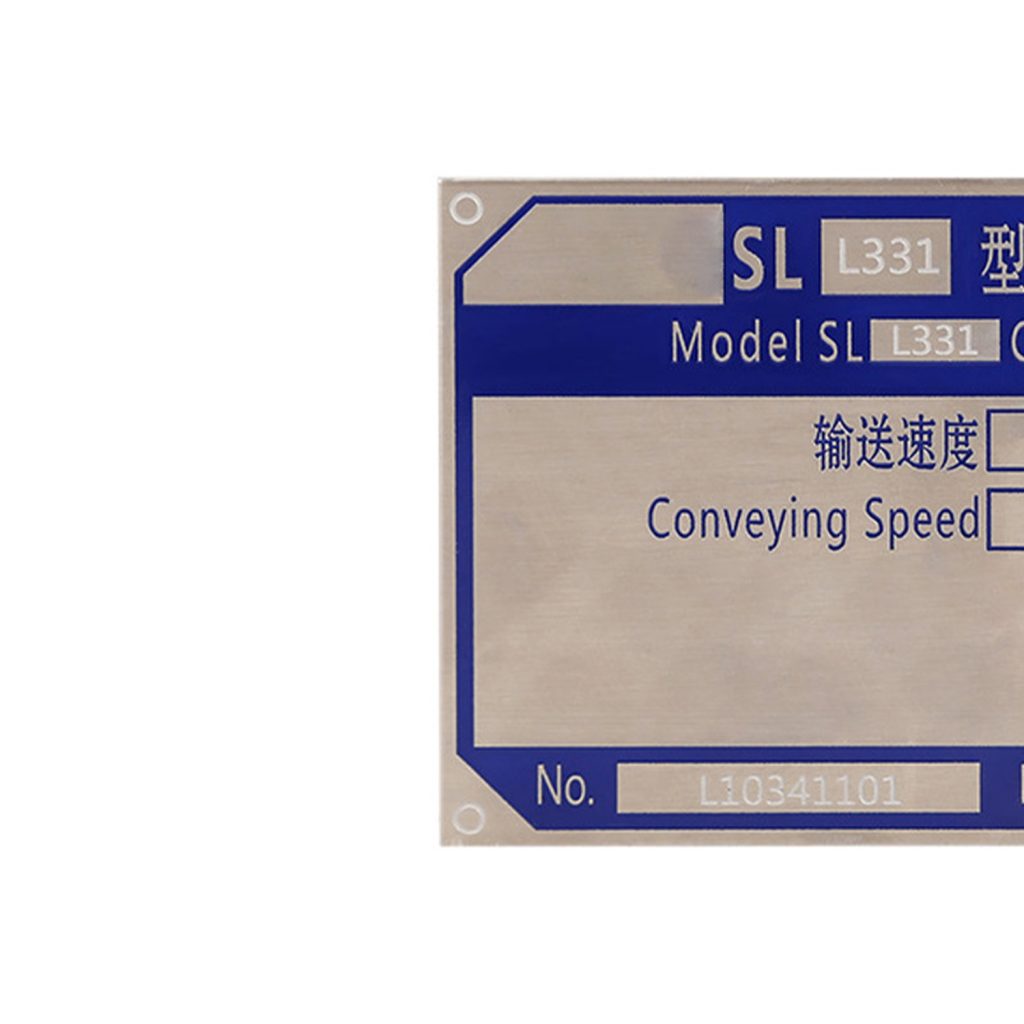
What Anodization Does to the Metal
Bare aluminum exposed to air forms a thin oxide layer naturally — a few nanometers thick, not particularly protective. Anodization runs that same reaction deliberately and at controlled scale using an electrochemical bath.
The aluminum part goes into a sulfuric acid electrolyte and connects as the anode in a DC circuit. Current drives oxygen ions from the bath to combine with aluminum at the surface, forming aluminum oxide. The oxide layer grows both outward from the surface and inward into the base metal — it is converting the aluminum itself, not depositing a new layer on top of it.
That distinction matters. A paint film sits on the surface and has an interface where adhesion can fail. An electroplated coating bonds metallurgically but remains a separate layer. The anodized oxide is the aluminum, chemically converted. There is no interface to delaminate across.
Standard Type II anodization — sulfuric acid process, the specification used for most nameplate applications — produces 5 to 25 microns of oxide depending on process parameters. Type III hard anodization runs 25 to 150 microns and is used where higher abrasion resistance or electrical insulation is required.
Hardness and Scratch Resistance
Aluminum alloys used for nameplates typically run 60 to 150 HV on the Vickers scale. The anodized layer runs 250 to 500 HV — in the range of hardened tool steel — depending on alloy and process conditions.
Run a key across a painted aluminum surface and it cuts through the paint and scores the base metal. Run the same key across anodized aluminum and the oxide layer takes the contact first. Light abrasion leaves no visible mark. Harder contact scratches the oxide surface rather than gouging the soft aluminum underneath.
This is also why anodized aluminum handles cleaning contact better than painted or coated surfaces in industrial service. The hardness advantage is not marginal — it is roughly a factor of three to five compared to the base metal, which is why the surface survives the kind of incidental mechanical contact that industrial equipment accumulates over years of operation.
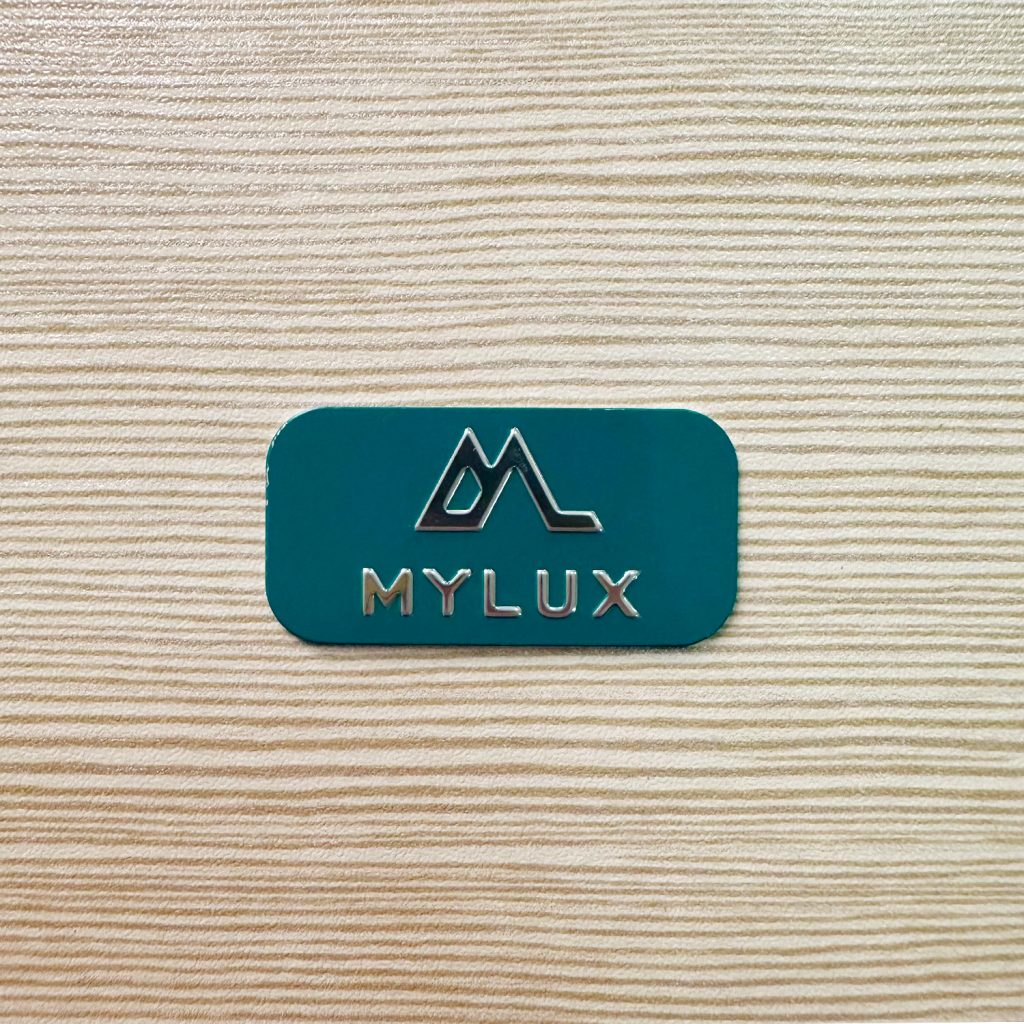
How Color Works in Anodized Aluminum Nameplates
Immediately after anodization, the oxide layer has an open pore structure — columnar cells with channels running perpendicular to the surface. These channels accept dye while they are still open.
Dye molecules enter the pore structure and lodge in the channels. The part then goes through a sealing step — hot deionized water or a nickel acetate bath — which closes the pore openings and locks the dye physically inside the oxide layer. The color is not on the surface. It is inside it.
Paint sits on top and abrades away. Anodized color requires removing the oxide layer itself to remove the color — which means visibly damaging the surface in the process. Under UV loading, anodized dyes hold significantly better than surface-applied coatings, which matters for nameplates on outdoor equipment or anything with prolonged sunlight exposure.
Standard dye anodization covers black, gold, bronze, red, blue, and various grays. Silver — the most common nameplate finish — is natural anodized aluminum with no dye added. Bright white cannot be achieved through standard anodization; white nameplates require white ink over a clear or silver anodized substrate.
Laser Engraving on Anodized Aluminum
Laser engraving on anodized aluminum vaporizes the colored oxide layer in the laser path, exposing the bare aluminum beneath. The mark is the contrast between the removed anodized surface and the aluminum substrate underneath.
On black anodized aluminum, the result is bright silver text on a black background — high contrast, sharp edges, legible at distance. On natural silver anodized aluminum, the laser removes the clear oxide and lightly oxidizes the exposed aluminum surface, producing a matte gray mark against a brighter silver background. Lower contrast than black, but the mark is permanent by the same mechanism: it is a physical change to the surface, not a deposited material.
Mark depth is a few microns — deep enough that surface abrasion cannot remove it without visibly damaging the surrounding oxide, shallow enough that it does not affect the structural integrity of the part. Ink-printed or pad-printed marks on the same surface would not survive the cleaning chemistry, solvent exposure, and mechanical contact that a laser-engraved anodized mark handles without change.
Specification Parameters That Actually Matter
“Anodized aluminum” as a standalone callout leaves significant process latitude to the manufacturer. The parameters that determine field performance are:
Anodization type. Type II covers standard industrial and commercial nameplate applications. Type III is appropriate for mining equipment, heavy construction, and any application with regular hard mechanical contact.
Layer thickness. 10 to 20 microns is standard for Type II nameplate work. Thicker layers improve abrasion and UV resistance; thinner layers minimize dimensional change on parts with tight assembly tolerances.
Alloy. 5052 and 6061 produce consistent, dense oxide layers with reliable dye uptake and are the standard alloys for nameplate production. 2024 and 7075 series anodize inconsistently and are generally avoided for nameplate applications unless a structural requirement forces the choice.
Sealing. Unsealed anodized aluminum has open pores that absorb contaminants and show inconsistent color. A proper seal — hot DI water or nickel acetate — is required for color stability and chemical resistance in service. RFQs that omit sealing leave room for cost-reduction shortcuts that show up as field failures, not incoming inspection failures.
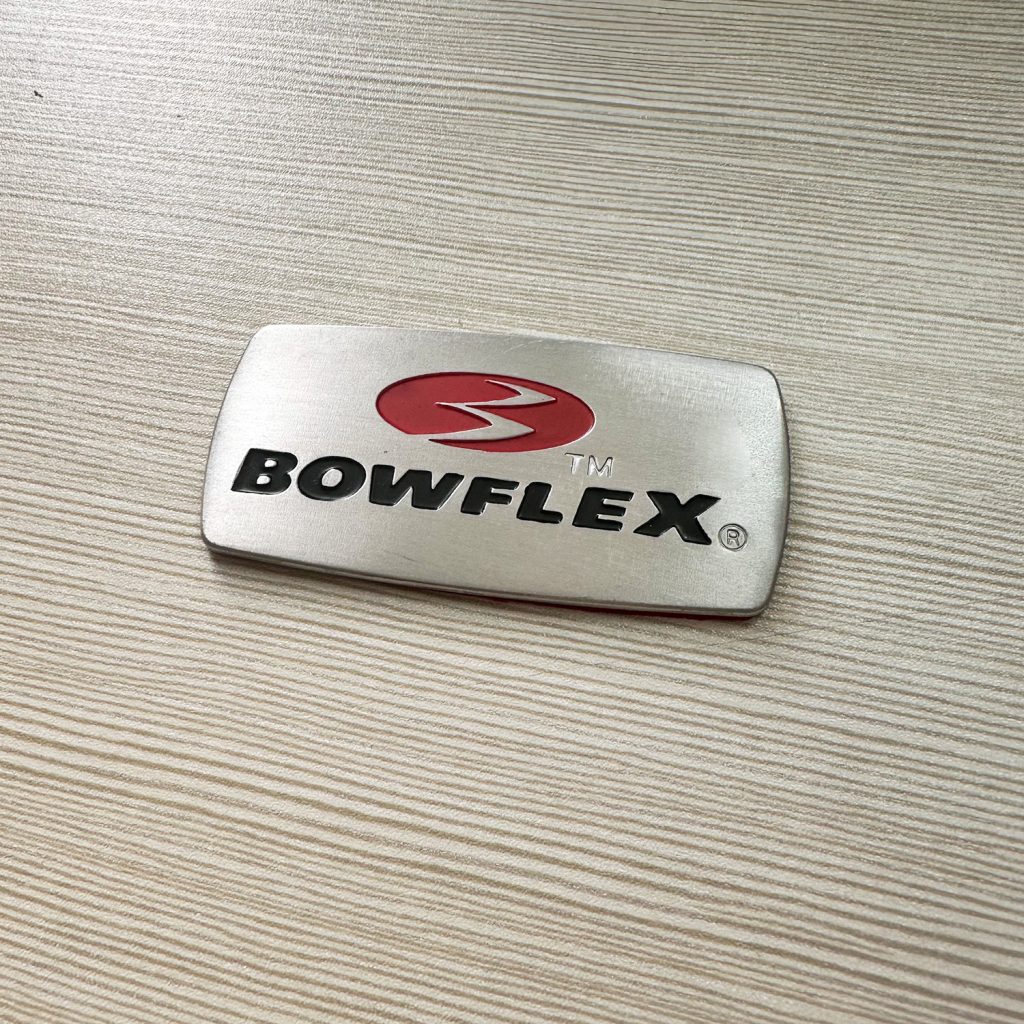
Where It Doesn’t Work
Two conditions push anodized aluminum out of the application:
Alkaline chemistry. NaOH-based degreasers, high-pH sanitizers in food processing, and concrete washdown all attack aluminum oxide progressively. Above roughly pH 9, the anodized layer dissolves over time regardless of thickness or alloy. Stainless steel handles these environments; anodized aluminum does not.
Sustained high temperature. Above approximately 150°C, dimensional stability and surface integrity degrade. Engine compartment identification, exhaust system nameplates, and high-power electrical equipment with hot surfaces are stainless steel applications.
Outside those two conditions, anodized aluminum covers the performance requirement for most industrial and commercial nameplate applications at a cost that stainless steel and brass cannot match.
Incomplete Specifications and Field Failures
A nameplate produced to a loose “anodized aluminum” callout and one produced to a fully parametered specification — alloy, type, thickness, sealing, marking method — can look identical at incoming inspection. The difference shows up at year two or three in service, when one is still legible and the other has visible surface degradation that the procurement team is now being asked to explain.
In our experience at BX-PANEL, the nameplate programs that run cleanly through production and perform consistently in the field are the ones where the specification was complete before the first sample was made. We flag incomplete specifications during DFM review — not to add scope, but because catching a missing sealing callout or an off-spec alloy before sampling costs nothing. Catching it after a production batch ships and fails incoming inspection at the customer’s facility costs considerably more.
Contact BX-PANEL
Xiamen XINBIXI Electronic Technology Co., Ltd. (brand: BX-PANEL) manufactures custom anodized aluminum nameplates, stainless steel nameplates, brass nameplates, and zinc alloy nameplates from our Xiamen facility. Laser engraving, chemical etching, screen printing, embossing, and electroplating all run in-house. Over 10 years of production experience, hundreds of workers across dedicated departments.
- Email: [email protected]
- Website: www.bx-panel.com
- Capabilities: Custom anodized aluminum nameplate manufacturing, laser engraved nameplates, Type II and Type III anodization, hard anodize nameplates, OEM nameplate supply