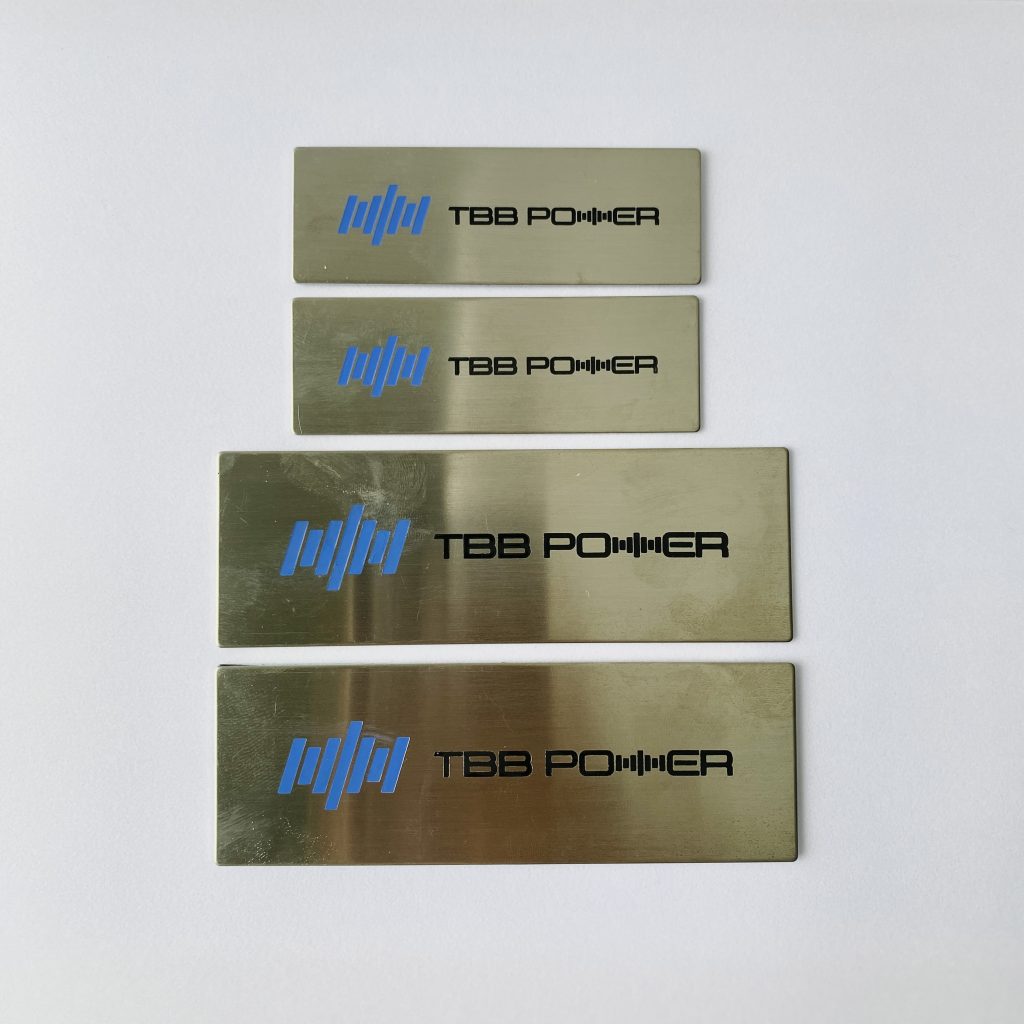



At 50 pieces, almost any metal marking method works. At 50,000 pieces, the wrong process will break your budget and your lead time.
When scaling up industrial metal nameplates, procurement managers inevitably face a hard choice: laser engraving vs chemical etching. Both technologies deliver permanent marks on metal, but their behavior on the factory floor is fundamentally different.
Here is what actually happens to cost, speed, and durability when you push these two processes to high volumes.
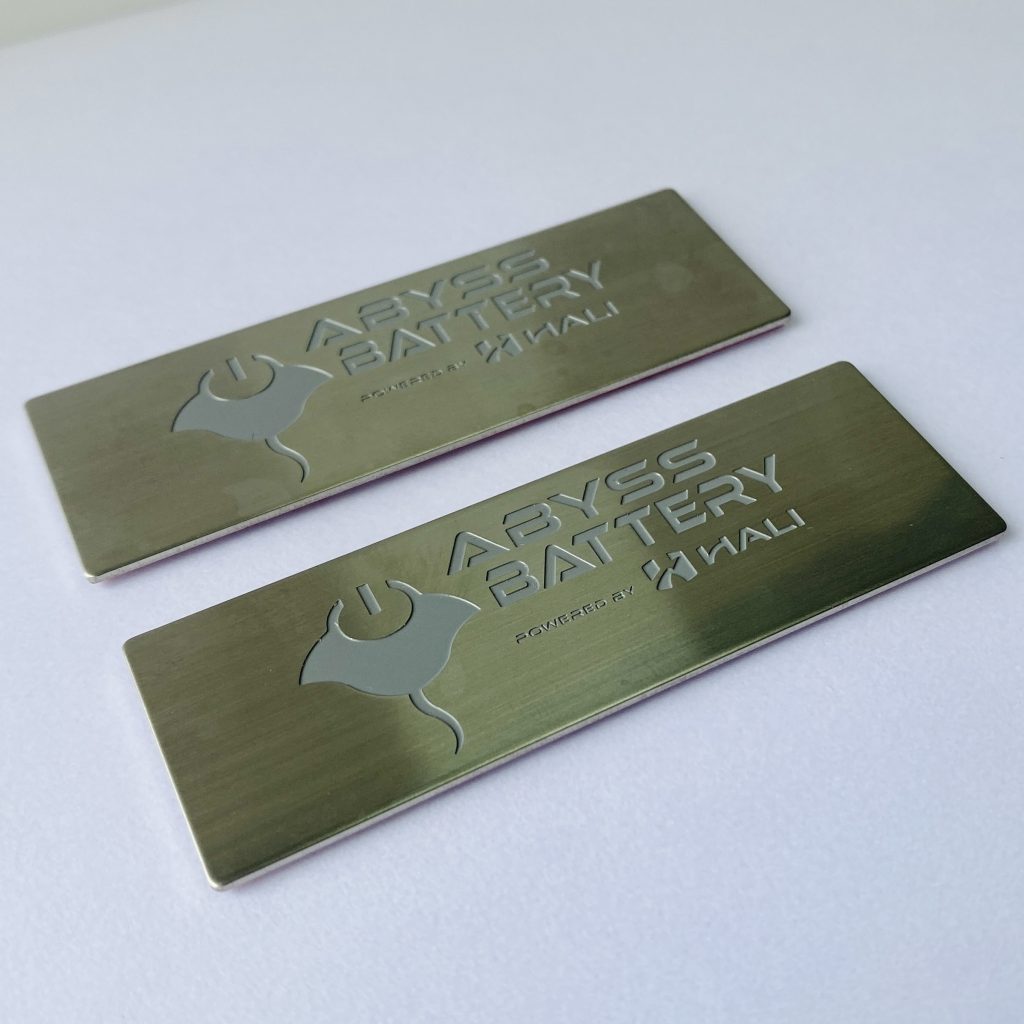
Laser Engraving: The Variable Data Champion
Laser engraving uses a focused beam to vaporize or alter the surface layer of the metal substrate.
The Volume Reality:
Because lasers require zero physical tooling, masks, or films, there is no setup cost. You load the file and start marking. This makes laser engraving the absolute standard for variable data. If an order requires 10,000 nameplates and every single one needs a unique sequential serial number, barcode, or QR code, laser engraving is the only viable option.
The Bottleneck: Laser engraving is a sequential, line-by-line process. The laser head must physically travel across the X/Y axis. A highly complex, graphic-heavy nameplate takes the exact same cycle time whether it is piece number 1 or piece number 10,000. At high volumes, this sequential processing becomes a severe production bottleneck.
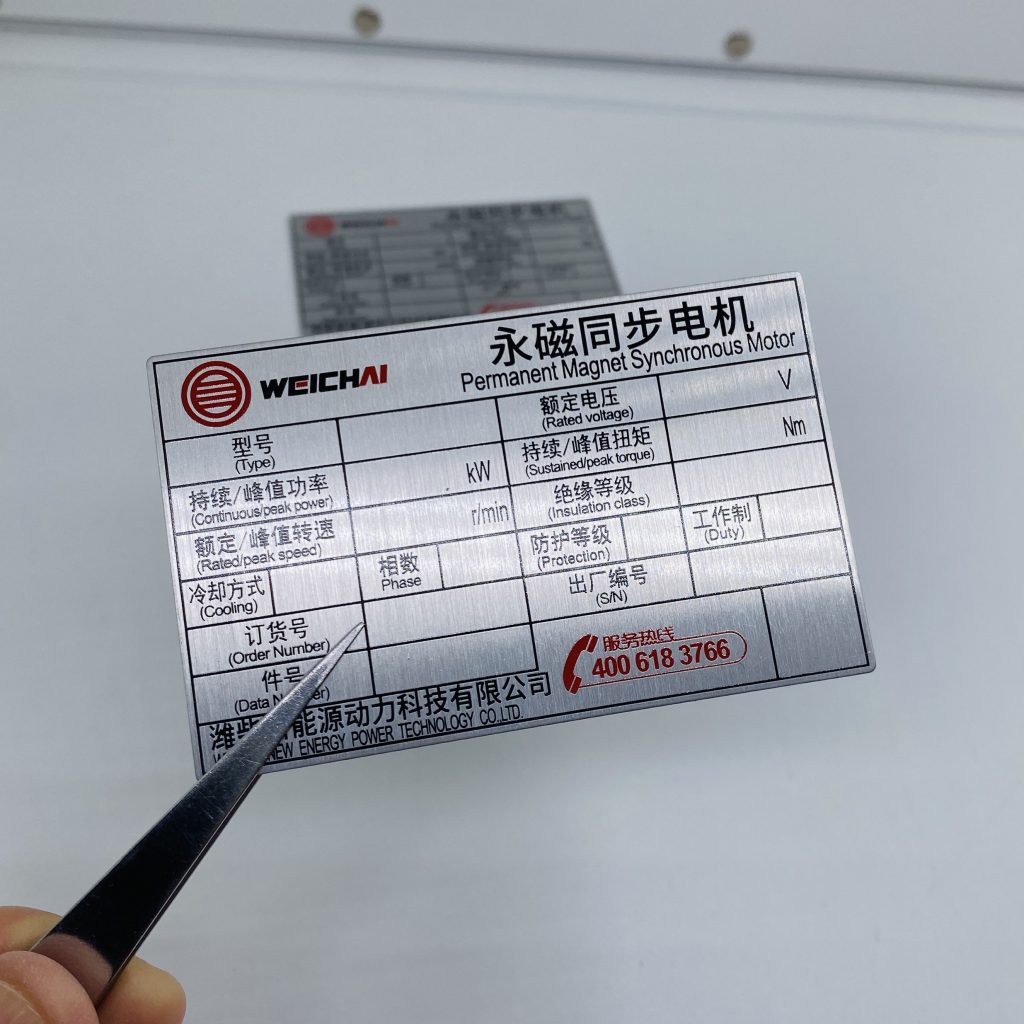
Chemical Etching: The Batch Processing Powerhouse
Chemical etching involves applying a protective mask onto a metal sheet and submerging it in an acid bath. The acid eats away the exposed areas, creating deep recesses that are typically filled with baked enamel paint.
The Volume Reality:
Chemical etching requires heavy upfront preparation: outputting films, exposing screens, and prepping chemical baths. For a 50-piece run, the tooling cost makes it prohibitively expensive. But at scale, it is a batch-processing powerhouse.
An acid bath etches a simple text string and a highly complex electrical schematic at the exact same speed. More importantly, we can process entire metal sheets simultaneously, etching hundreds of units in a single cycle.
The Crossover Point and Field Survival
For most standard-sized industrial nameplates, the cost crossover point typically hits around 1,000 to 1,500 units. Below that, the lack of tooling makes laser cheaper. Above that, the batch speed of chemical etching dramatically lowers the unit cost.
Beyond cost, you must consider the physical environment:
- Laser Marks: Excellent for indoor tracking. However, shallow laser marks can become illegible if the equipment is eventually painted over, scratched, or covered in thick industrial grease.
- Chemical Etched Marks: The acid physically removes metal (typically 0.05mm to 0.1mm deep). Even if the baked enamel paint is completely sandblasted away by years of harsh weather or chemical washdowns, the recessed data remains permanently legible through physical touch and shadow.
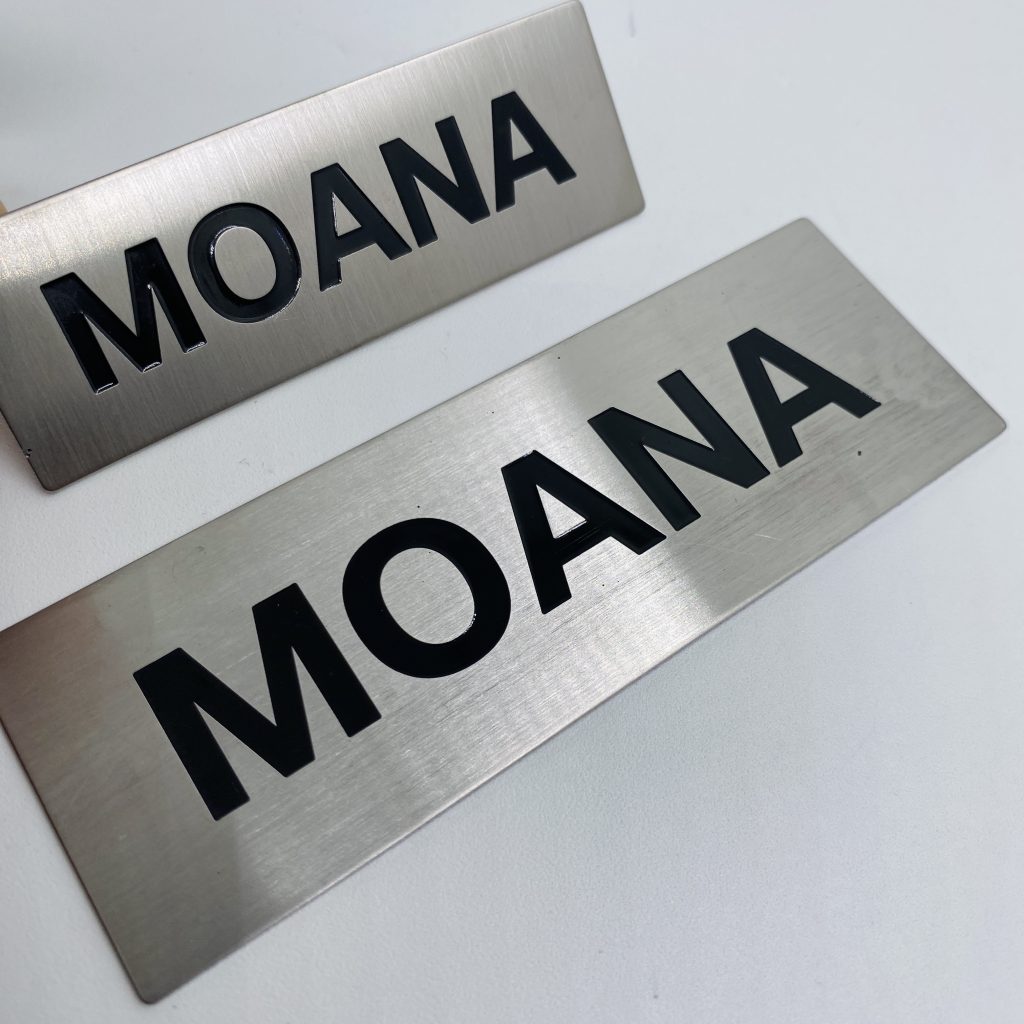
The BX-PANEL Factory Advantage
A true source factory does not force your project into a specific method just because it is the only machine they own.
At Xiamen XINBIXI Electronic Technology Co., Ltd. (BX-PANEL), we run both high-speed laser arrays and full-scale chemical etching lines in-house. Over the past 10 years, our physical facility and hundreds of skilled workers have built robust manufacturing processes to meet strict North American and European OEM standards.
We match the technology to your exact volume, budget, and environmental compliance requirements.
Need to scale your metal nameplate production?
- Email: [email protected]
- Website: www.bx-panel.com
- Capabilities: Custom metal nameplates, chemical etching, laser engraving, anodized aluminum, and global OEM supply.