Why Do Graphic Overlay Windows Get Foggy? 4 Common Causes Explained
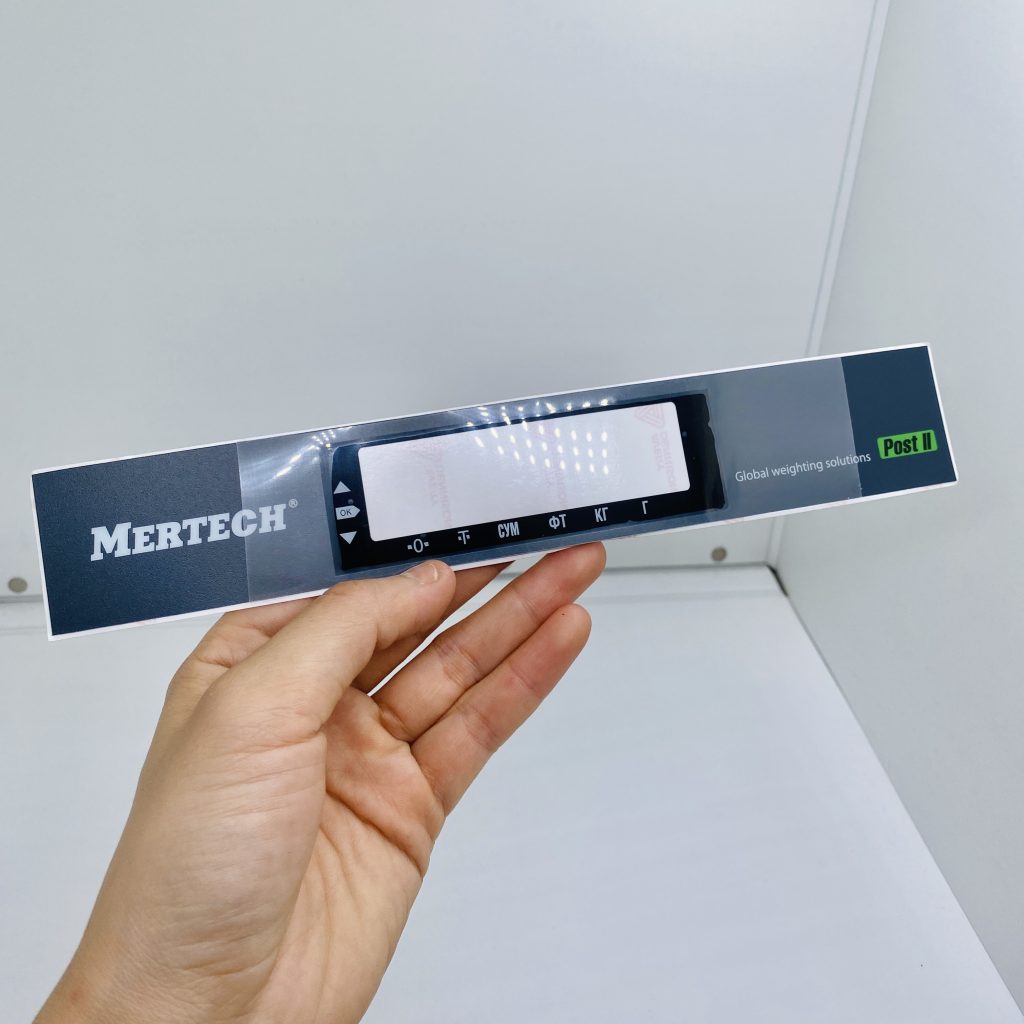
Window fogging (or hazing) is one of the most common appearance complaints regarding graphic overlays.
When customers receive their equipment, they often find the display window looks cloudy and lacks clarity. Their first reaction is usually to suspect printing defects or poor material quality. However, there is more than one cause for window fogging, and different causes require entirely different solutions. Identifying the root cause is the only way to truly solve the problem.
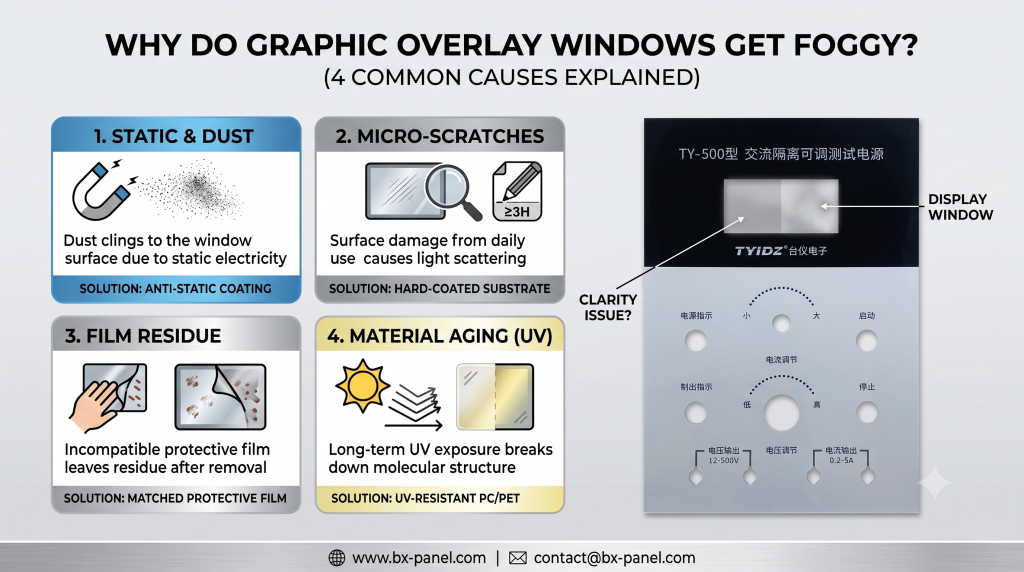
1. Dust Accumulation Due to Static Electricity
Transparent PC (Polycarbonate) and PET (Polyester) materials inherently accumulate static electricity. This static continuously attracts airborne micro-particles—such as dust, fibers, and skin oils—to the window’s surface.
Individually, these particles are transparent or semi-transparent, but when they reach a certain density, the entire window appears hazy. Wiping it can provide temporary relief, but since the static remains, the dust quickly returns.
The Solution: Apply an anti-static coating to the window surface to reduce static accumulation at the source, rather than relying on repeated wiping.
2. Light Scattering Caused by Surface Scratches
If the display window lacks a hard coating, or if the coating’s hardness is insufficient, daily contact with fingers, cleaning cloths, or hard objects will leave micro-scratches on the surface.
A single scratch is almost invisible to the naked eye, but dense micro-scratches cause light to scatter as it passes through the window, making the overall area look foggy. This is very common in equipment that has been in use for an extended period.
The Solution: The window area must use a hard-coated substrate. The surface pencil hardness should be at least 3H, and 5H or higher for highly demanding applications.
3. Poor Protective Film Quality or Substrate Mismatch
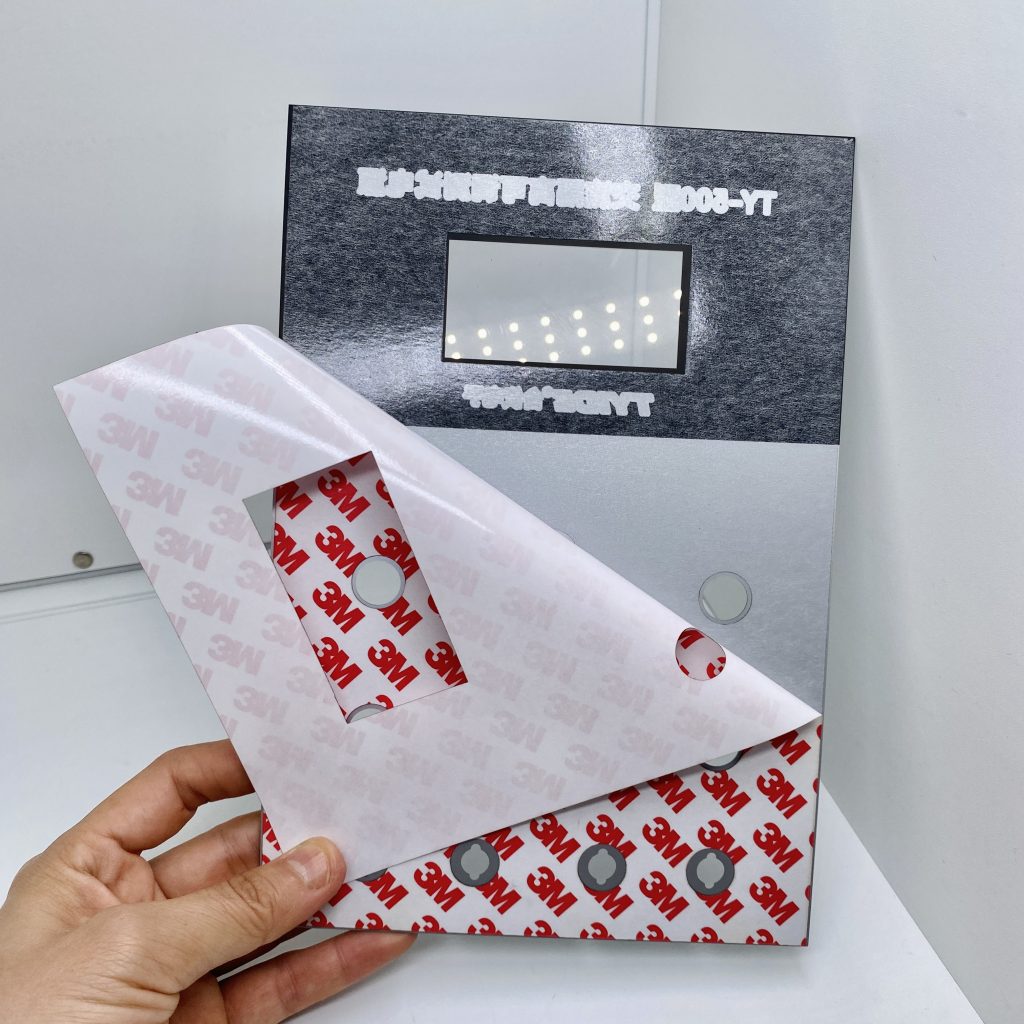
The window surface is typically covered with a protective film to prevent scratches during transit and installation. The issue often arises from the compatibility between the protective film’s adhesive and the window substrate.
If the film’s adhesive formulation does not match the surface energy of the substrate, their adhesion alters with time and temperature changes. After the protective film is peeled off, adhesive residue remains on the window surface, forming irregular foggy marks that are hard to remove with standard wiping. Another scenario is unstable film quality; if the local adhesion is too strong, removing the film might tear off the window’s hard coating, leaving permanent hazy damage.
The Solution: The protective film must strictly match the substrate. PC and PET substrates require different adhesive formulations and cannot be mixed. Additionally, the peel strength must be within a controlled range—the protective film is meant for temporary transit protection, not permanent bonding.
4. Material Aging Leading to Decreased Transmittance
Under long-term ultraviolet (UV) exposure, the molecular structure of standard PC material changes—simply put, the material itself slowly ages.
This process is almost unnoticeable initially, but after accumulating to a certain point, the light transmittance of the PC window drops significantly. The surface begins to yellow and looks as if it is covered by a layer of fog. This problem appears much faster in outdoor equipment or indoor devices placed near windows.
The Solution: For windows in outdoor or high-UV environments, the substrate must be a UV-resistant grade PET or PC with added UV absorbers. Standard transparent PC cannot be used as a substitute.
How to Identify the Root Cause?
Use this simple troubleshooting method to diagnose the issue:
Wipe the window gently with a clean, lint-free cloth: If the clarity improves, it is highly likely a dust/static attraction issue.
If it can’t be wiped off or gets worse with hard wiping: It is likely light scattering from surface scratches.
If the hazy spots are in fixed positions with irregular shapes: It is likely adhesive residue from a mismatched protective film.
If the equipment has been used outdoors for over two years: It is likely material aging.
Identifying the exact cause before taking action saves time and money compared to blindly changing materials or re-applying films.