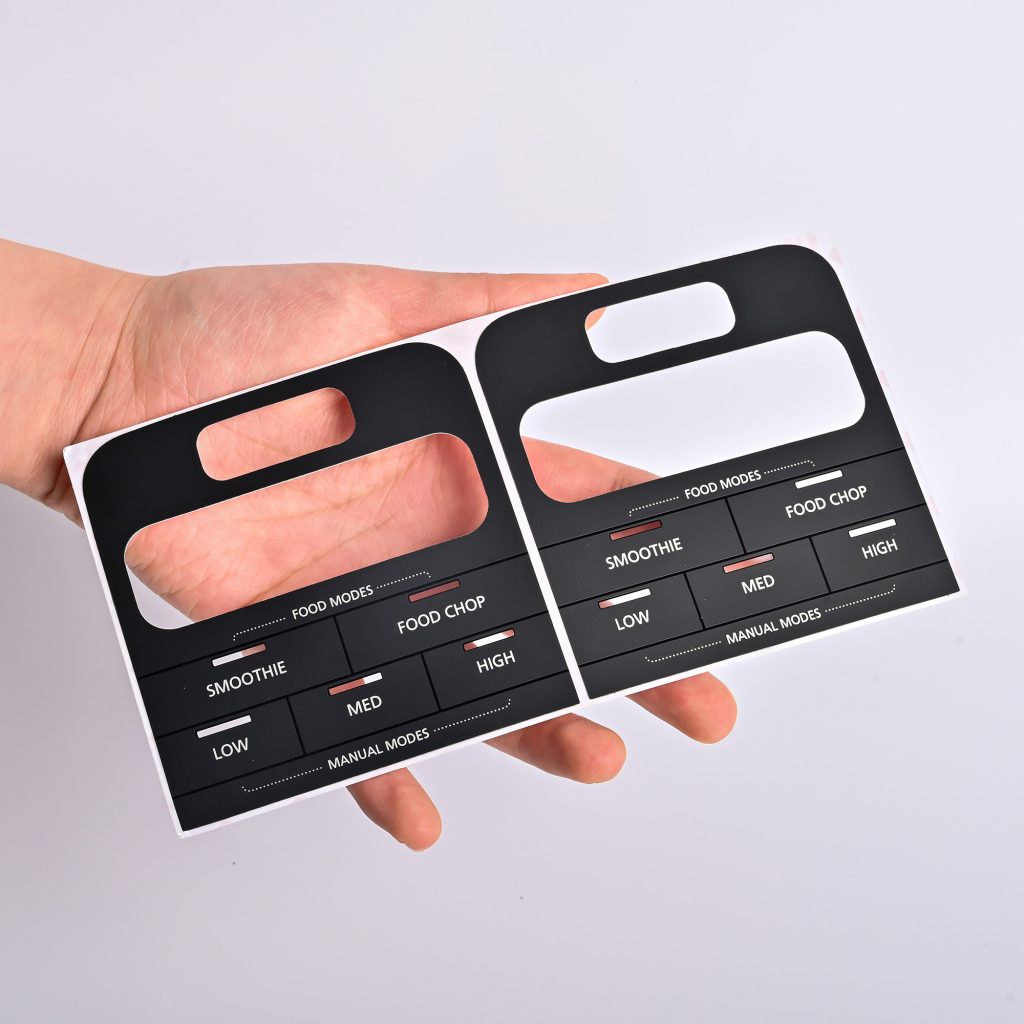



Why Your Interface’s Weakest Link Might Be Hiding in Plain Sight
When evaluating a new graphic overlay, engineering and procurement teams naturally focus on the obvious: color accuracy, tactile response, and surface durability. However, one of the most critical mechanical details is often completely overlooked—graphic overlay edge finishing.
In real-world applications, especially in harsh industrial, medical, or outdoor environments, the edge is exactly where failures begin. Peeling corners, moisture ingress, and premature delamination rarely stem from the center of the panel; they originate from poorly processed perimeters.
For OEM buyers, understanding how edge finishing impacts Environmental Protection (IP rating) and longevity is the first step to eliminating preventable warranty claims.
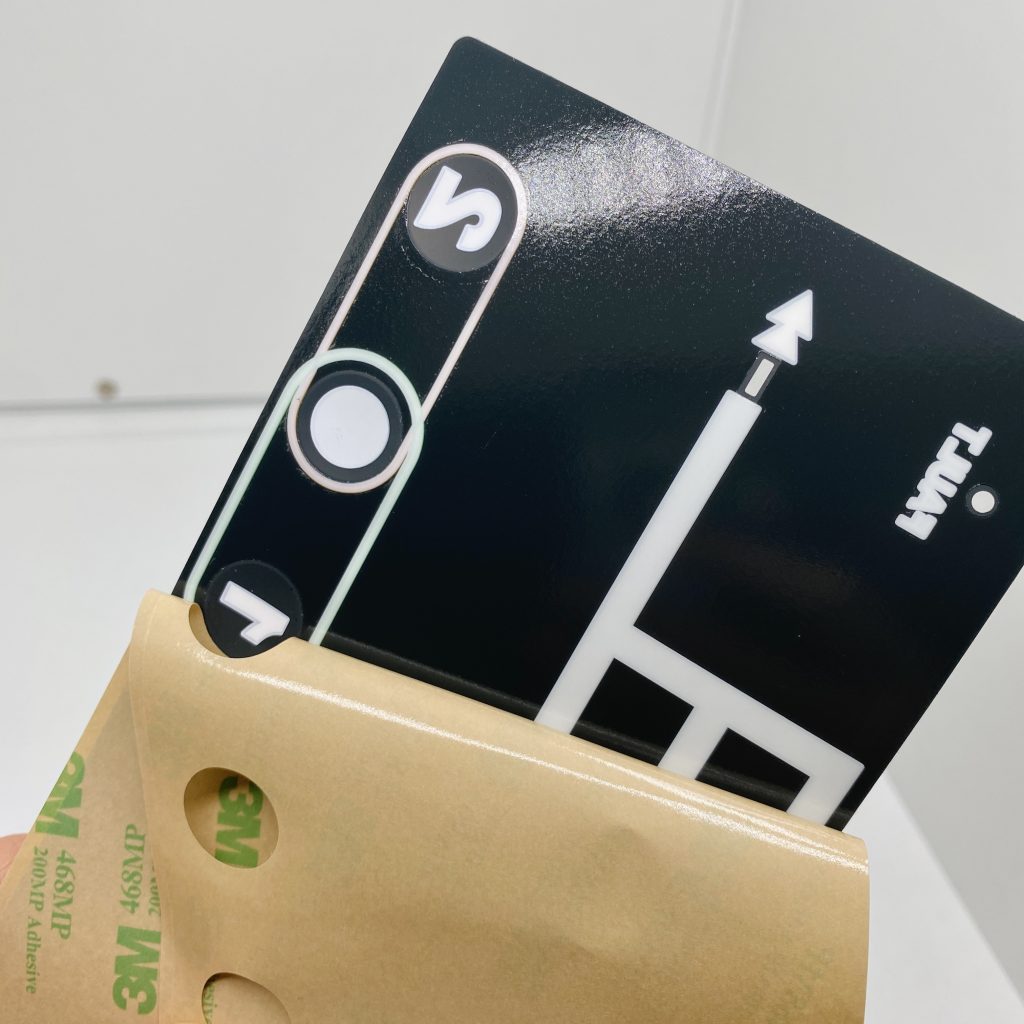
What Is Edge Finishing in Graphic Overlays?
Edge finishing refers to the exact manufacturing processes used to cut, seal, and treat the outer perimeter of a graphic overlay after the printing and lamination stages are complete.
It is the definitive factor controlling:
- Sealing Performance: Blocking microscopic gaps between layers.
- Ingress Protection: Defending against moisture, dust, and chemical solvents.
- Long-Term Adhesion: Preventing edge lifting under thermal expansion.
- Aesthetic Quality: Ensuring clean, burr-free borders that match premium housings.
Even if you specify top-tier Autotype PET and 3M adhesives, an improper edge finish will compromise the entire material stack.
Why Edge Finishing Matters More Than You Think
1. It Dictates the True Sealing Performance
The perimeter is the most vulnerable mechanical point of any membrane switch or overlay. If edges are micro-fractured or inadequately sealed, capillary action will gradually draw moisture and contaminants directly into the electronic circuitry. A precise overlay edge sealing process is mandatory to maintain structural integrity and high IP ratings (like IP65 or IP67).
2. It Prevents Premature Adhesion Failure (Peeling)
Edge lifting is the #1 cosmetic and functional failure in graphic overlays. Rough cuts, dull tooling, or incorrect adhesive offset leave microscopic lips that catch on gloves, cleaning cloths, or just ambient friction. Once corner peeling starts, the mechanical leverage eventually leads to the complete failure of the HMI.
3. It Controls Chemical & Environmental Durability
】In applications requiring frequent sterilization (medical devices) or exposure to harsh weather (outdoor kiosks), the unprotected edges are the first to degrade. Specialized graphic overlay edge finishing seals the internal ink and adhesive layers, preventing chemical attack and UV-induced delamination.

At a Glance: How Edge Processing Affects Common Failures
| Field Failure Observed | Typical Root Cause | Relation to Edge Finishing |
| Edge lifting shortly after installation | Incomplete edge sealing or dull die-cutting. | ✅ Direct |
| Keypad short-circuiting after washdown | Moisture ingress through unsealed perimeters. | ✅ Direct |
| Delamination in outdoor environments | Lack of edge sealing exposing adhesive to UV/humidity. | ✅ Direct |
| Cheap, jagged visual appearance | Wrong cutting method (e.g., fraying from blunt tools). | ✅ Direct |
Precision Edge Finishing Methods: Choosing the Right Tool
Different base materials and operational environments require specific finishing techniques. At BX-PANEL, we deploy three primary methods:
- Precision Die Cutting: The industry standard for high-volume mass production. Using meticulously maintained, custom steel-rule dies, we ensure clean, consistent edges without micro-cracking the substrate.
- Laser Cutting: Ideal for rapid prototyping, high-precision tolerances, or highly complex geometries. It provides incredibly clean edges with zero mechanical stress on the material layers.
- Digital CNC Routing / Kiss Cutting: Deployed when overlays require specific partial-depth cuts, intricate internal windows, or complex multi-layer spacer designs.
How OEM Buyers Can Engineer Edge Failures Out
To ensure rock-solid performance, procurement and design teams should proactively address the edge before the first prototype is made:
- Define the Environment: Clearly specify if the unit faces indoor washdowns, outdoor UV, or industrial solvents.
- Discuss the Cut: Ask your manufacturer which cutting technology they intend to use for your specific material stack.
- Validate the Seal: Ensure the adhesive layer is correctly recessed or sealed to prevent adhesive “ooze” or contamination.
💡 Engineering Tip: Not sure if your current overlay design can survive chemical washdowns or outdoor weathering? We provide comprehensive material and edge sealing evaluations based on your exact application.
The Practical Takeaway
While it may seem like an invisible detail on a technical drawing, graphic overlay edge finishing plays a disproportionate role in the survival of your product. It is the frontline defense for sealing, durability, and long-term brand reliability.
Ignoring the edge is a shortcut that almost always leads to premature field failures.
Need a Bulletproof Interface for Your Next Device?
At Xiamen XINBIXI Electronic Technology Co., Ltd. (BX-PANEL), we don’t just print overlays; we engineer them for survival. We control every stage of production in-house—including precision edge sealing and cutting—to ensure your components perform flawlessly in the real world.
With a 3,000㎡ facility, Class 10,000 cleanrooms, and over 10 years of OEM experience, we help engineering teams mitigate risk and scale production reliably.
Stop worrying about peeling overlays. Let’s optimize your design today.
👉 Website: www.bx-panel.com
👉 Email: [email protected]