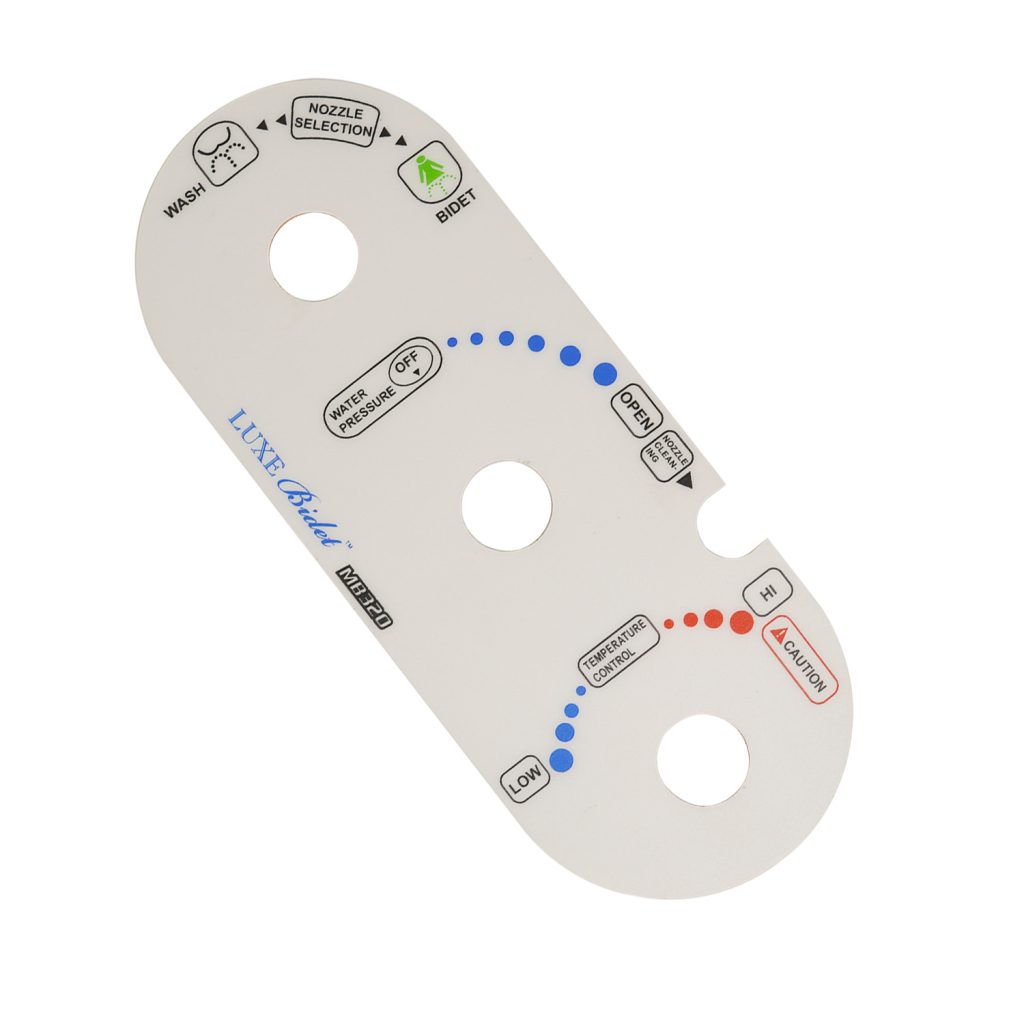



When reviewing custom membrane switch blueprints from OEM clients around the world, one material debate comes up more than any other: PET vs. PC.
While they might look identical on a technical drawing, choosing the wrong substrate for your graphic overlay can lead to premature keypad failure, chemical crazing, or wasted production budgets. As a custom manufacturing facility that processes hundreds of distinct client designs, we see firsthand how these materials perform on the production line and in the field.
Here is a practical breakdown of PET and Polycarbonate to help you finalize your Bill of Materials (BOM) with confidence.
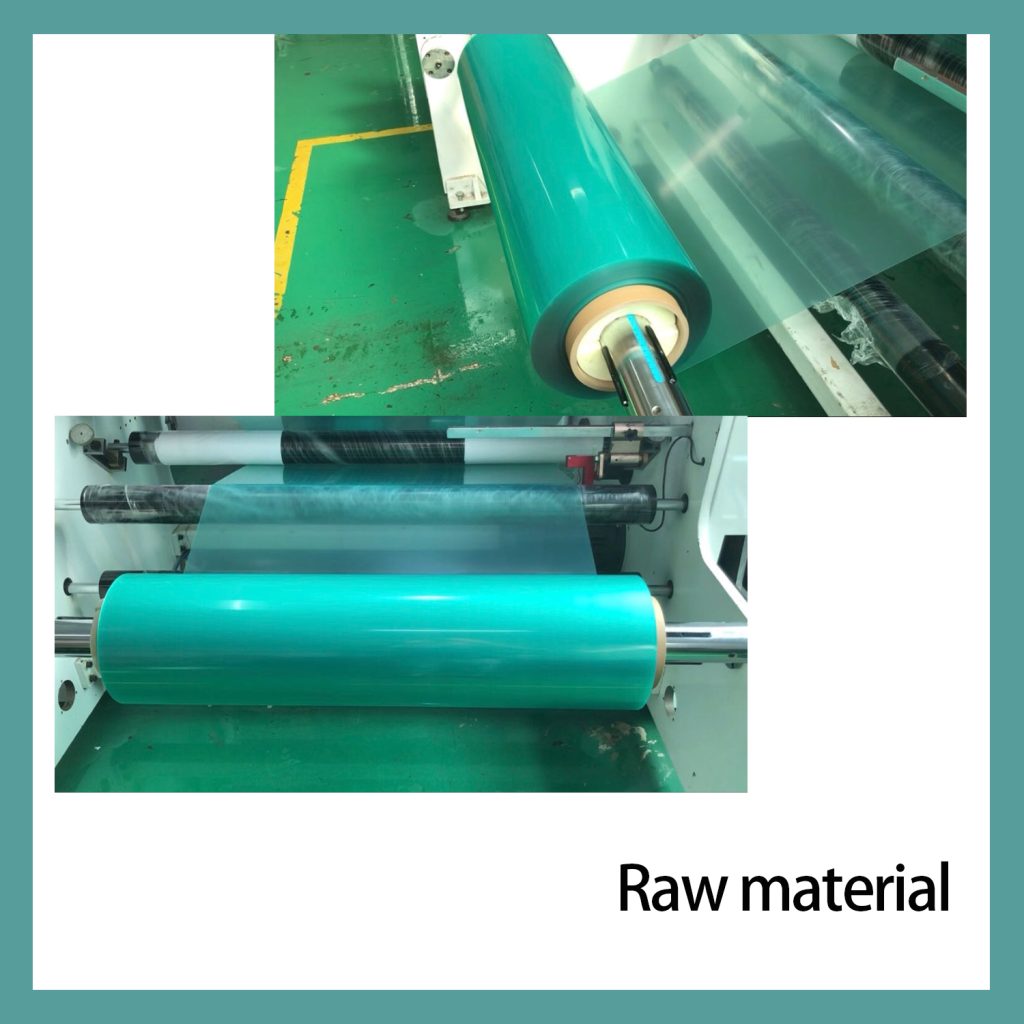
The Core Contenders
Polyethylene Terephthalate(PET): The Champion of Flex
PET is the undisputed industry standard for tactile membrane switches. Its molecular structure gives it incredible fatigue resistance. High-quality PET film can withstand millions of button actuations without cracking at the embossed edges. It is also highly resistant to harsh industrial solvents, making it the go-to choice for medical and heavy-industrial environments.
Polycarbonate (PC): The High-Heat Shield
Polycarbonate is fundamentally tougher against blunt force and extreme heat. It can survive continuous exposure to temperatures up to 130°C and is virtually unbreakable under direct impact. However, PC has a significantly lower flex life than PET, meaning it is better suited for flat-panel overlays (without embossed tactile buttons) or environments where heat and impact are the primary threats.
Head-to-Head: Material Properties
Understanding the mechanical limits of your specified material is crucial for long-term reliability.
| Property | PET | PC |
| Tactile Flex Life | Exceptional. Can exceed 5,000,000 actuations without cracking. Essential for embossed keys. | Limited. Prone to micro-cracking at embossed corners after 100,000 actuations. |
| Chemical Resistance | Superior. Highly resistant to cleaning alcohols, oils, and industrial solvents. | Moderate. Vulnerable to strong solvents, alkalis, and certain industrial cleaners (crazing risk). |
| Temperature Tolerance | Reliable up to ~85°C continuous use. | Superior. Can withstand up to ~130°C continuous use. |
| Impact Strength | Good, but can puncture under sharp, extreme force. | Exceptional. Unbreakable under high-impact conditions. |
| Optical Clarity & UV | naturally resists yellowing over time. | Can yellow under heavy UV exposure unless a specific UV-stabilized PC grade is specified. |
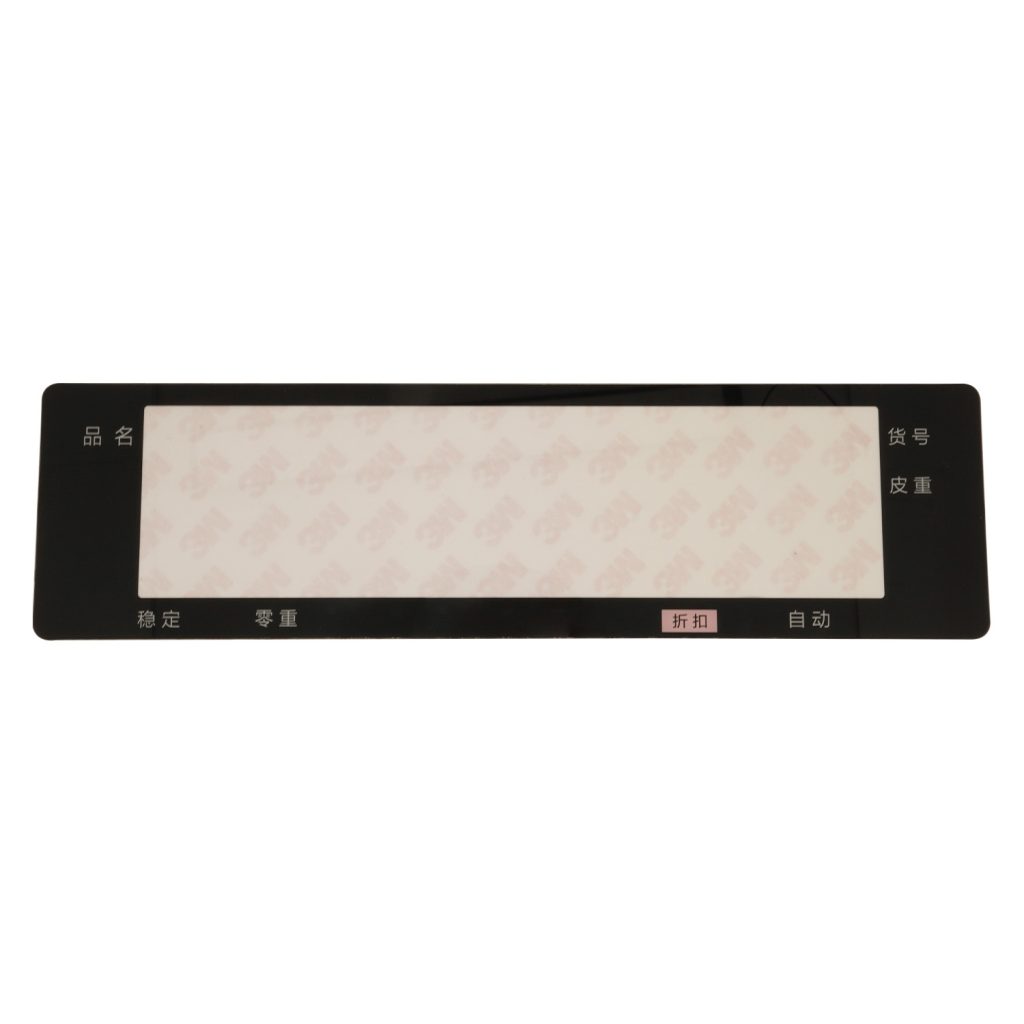
Matching the Spec to the Application
As a custom manufacturer, we execute your vision strictly based on your application environment. Here is how our clients typically allocate these materials:
- Specify PET when: You are designing a medical device requiring frequent harsh wipe-downs, or a machine interface with highly tactile, embossed buttons that will be pressed thousands of times a day.
- Specify Polycarbonate when: You are designing a flat display window for automotive interiors exposed to high cabin heat, or heavy machinery control panels that face constant threat of tool drops and blunt impacts.
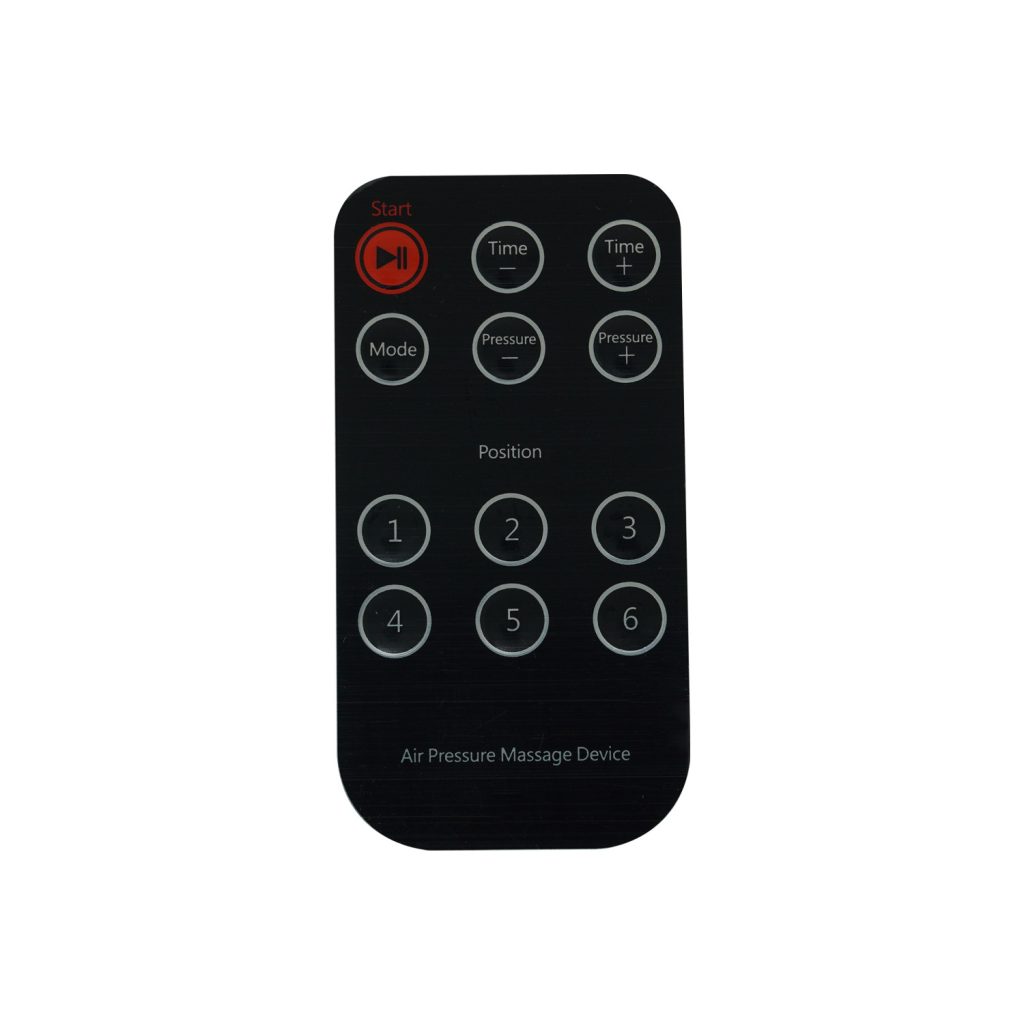
From Blueprint to Reality: Production Case Studies
Case 1: Medical Grade Precision (PET)
A European medical equipment manufacturer submitted designs for a handheld diagnostic terminal. Their specifications required a material that could survive daily sterilization with isopropyl alcohol and featured highly tactile embossed keys.
The Execution: We manufactured the overlays using high-grade 0.15mm textured PET, strictly adhering to their dimensional tolerances and printing specs. The result was a chemically inert, highly durable interface that perfectly matched the client’s rigorous medical standards.
Case 2: Heavy-Duty Industrial HMI (PC)
An industrial automation client provided blueprints for a flat touch-panel overlay used in a high-temperature factory environment (operating at 105°C). There were no embossed buttons, but the panel needed to survive accidental impacts.
The Execution: Following their BOM, we stamped and printed the overlays using 0.38mm UV-stabilized Polycarbonate. Our precision die-cutting ensured perfect alignment for their display windows, resulting in a robust, heat-resistant shield for their expensive internal screens.
Your Blueprint. Our Manufacturing Precision.
Whether your engineering team specifies standard PET for consumer electronics or high-temp Polycarbonate for automotive dashboards, the success of the final product relies on flawless manufacturing execution.
At BX-PANEL (Xiamen XINBIXI Electronic Technology Co., Ltd.), we do not invent products; we are the manufacturing backbone that brings your technical drawings to life. With over 10 years of OEM experience, a massive production facility, and Class 10,000 cleanrooms, we ensure your exact specifications are met with zero compromises—from the first prototype to large-scale mass production.
Bring us your toughest material requirements and strict tolerances. We are ready to build it.
📞 Send us your drawings for a quick capability review and quote:
🌐 Website: www.bx-panel.com
📧 Email: [email protected]